Contributions:
Additional hardware procurement: Ordered the remaining hardware components needed for the next phase of integration, including parts for actuation and lighting/fan control, so we can continue expanding beyond the interim demo setup.
Node compatibility stress testing: Continued testing each ESP32 node under more realistic room level combinations to make sure the hardware choices are compatible before final integration. This includes checking whether multiple sensors can share one ESP32 reliably and whether the same node can also control an additional component without causing wiring or communication issues.
Firmware and hardware validation under combined loads: Extended bringup work from basic one component tests into more integrated node testing so that each room controller can support the intended mix of sensors and actuators. This is helping identify which component combinations are practical for the final house and which require different wiring or purchased hardware.
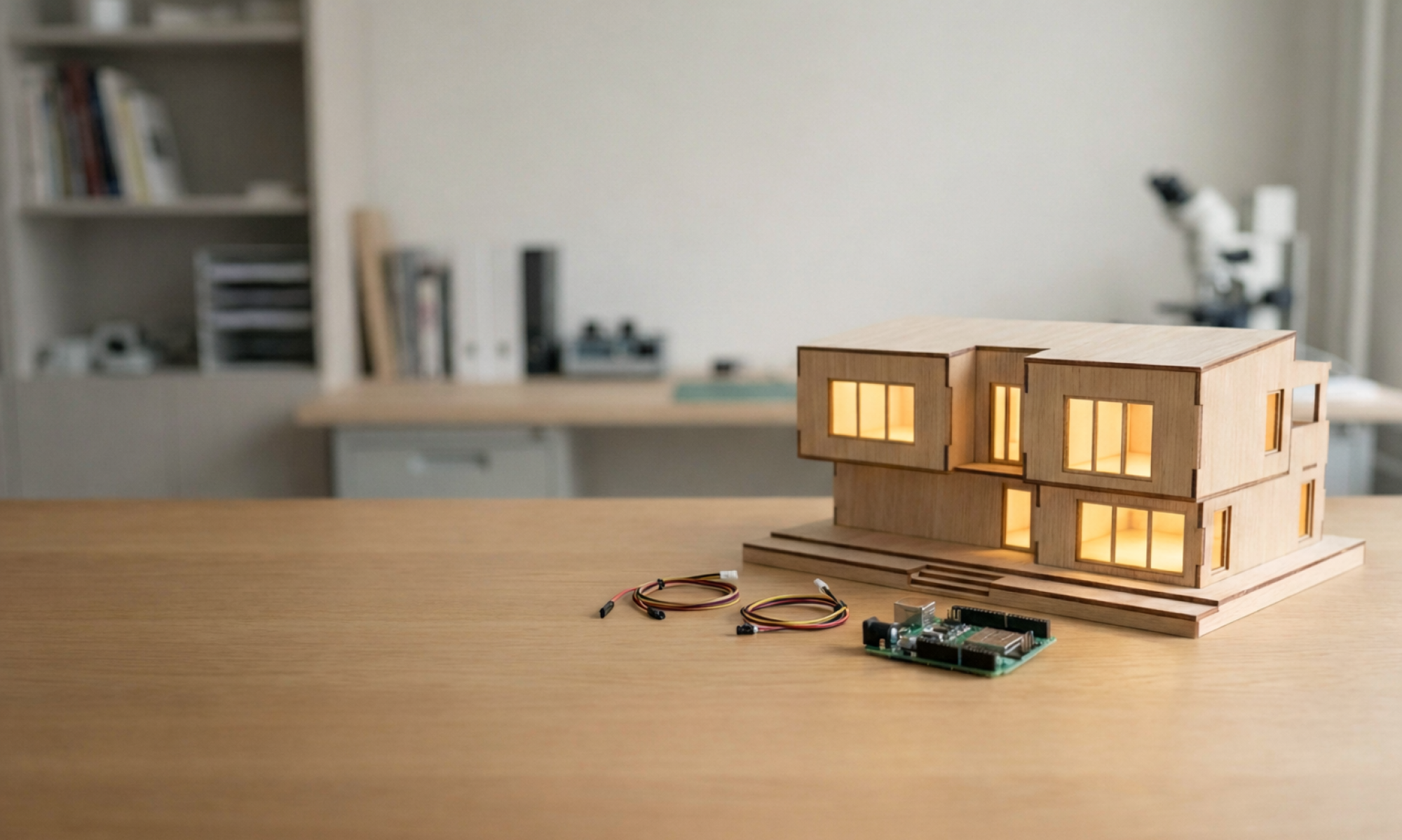
Final demo house fabrication: Continued designing and laser cutting the final version of the demo house so the hardware can be mounted in a cleaner and more realistic room-by-room layout instead of only being tested on the bench. Currently, I am modifying the one room/box shape into a full house design.
MCU packaging and room integration planning: Started organizing how each MCU and its attached wiring will be packaged into a more compact room-level assembly. Because the current wiring and breakout setup is not compact enough to mount neatly in the house, this week’s work also involved planning how to repackage the ESP32 nodes, sensors, and connections into smaller units that can be attached within each room.
Software-hardware integration planning: Reached the stage where the project now needs integration between the working hardware nodes and the software stack. In addition to validating the physical nodes, we are now focused on preparing for integration so the ESP32 room controllers, Raspberry Pi/backend software, and final house hardware all operate together as one system.
Is your progress on schedule or behind?
On schedule for this phase. The interim demo nodes are already functional, and this week’s work has moved the project from isolated prototype testing toward full-house integration. Ordering additional components, validating compatible node configurations, beginning fabrication of the final demo house, and preparing for software-hardware integration all support the transition into the next stage of assembly.
What deliverables do you hope to complete in the next week?
Finish compatibility testing for room nodes: Complete stress testing of which sensors and actuators can reliably share a single ESP32 so the final room node design can be fixed with confidence.
Continue final house fabrication: Finish laser cutting and assembling the final demo house structure so it is ready to receive the hardware.
Package hardware into room-ready modules: Rework the current loose wiring and MCU setups into more compact assemblies that can be mounted cleanly inside each room of the house.
Integrate new hardware components as they arrive: Bring the newly ordered parts into the test setup, verify that they work with the existing ESP32 nodes, and incorporate them into the expanding full house hardware design.
Begin software-hardware integration: Start connecting the tested room nodes to the backend flow so the hardware and software are no longer being validated separately, but instead as one combined system.
