Most Significant Risks & Mitigation
The main risk is delayed progress on the physical demo and firmware. Cindy was set back by post Spring Break travel and illness, so materials sourcing and construction moved more slowly and firmware work was limited. Mario’s work on RPi5 SSH, fan sourcing, CAD reference, and CI keeps backend and tooling on track, but we are still dependent on materials (including replacement fan parts after our previous provider was banned/restricted by CMU through Amazon) and on coordinating with the wood shop for construction. Mitigation: we are splitting work so that Mario drives RPi/backend and CI while Cindy leads materials, wood shop coordination, and once parts arrive sensor/actuator wiring on the ESP32s. We will prioritize getting one subsystem (e.g., access control or one room’s environmental node) wired and talking to the backend so we can validate end-to-end even if full house assembly lags slightly.
Design Changes
No design or scope changes this week. The three-subsystem architecture (access control, environmental/HVAC, lighting), MQTT-based backend, and physical house layout remain as in the Design Report. The new CAD model in FreeCAD is a reference only and does not change the design; it clarifies the intended layout (walls, partitions, windows, door openings) for construction.
Schedule Updates
Cindy is behind schedule due to travel and illness; Mario is on schedule with infrastructure and CI. As a team we are slightly behind on physical construction and firmware bring-up but ahead on backend tooling and coverage. The Gantt and milestones are unchanged; we will reassess after the wood shop discussion and once replacement fan parts and sensor/actuator orders arrive. Next two weeks: complete RPi5 backend install and first ESP32 communication tests (Mario), secure materials and wood shop support and begin wiring when parts are in hand (Cindy).
Progress & Technical Highlights
- Raspberry Pi 5 SSH: Mario set up headless SSH access for the RPi5 so the team can install and test the backend (FastAPI, MQTT broker, TimescaleDB) and run communication tests with ESP32 nodes without a monitor/keyboard.
- Fan and procurement: Mario identified replacement sources for the 30×30×10 mm 5 V brushless fans and related items after the previous provider was banned/restricted by CMU through Amazon, keeping HVAC and physical demo procurement on track.
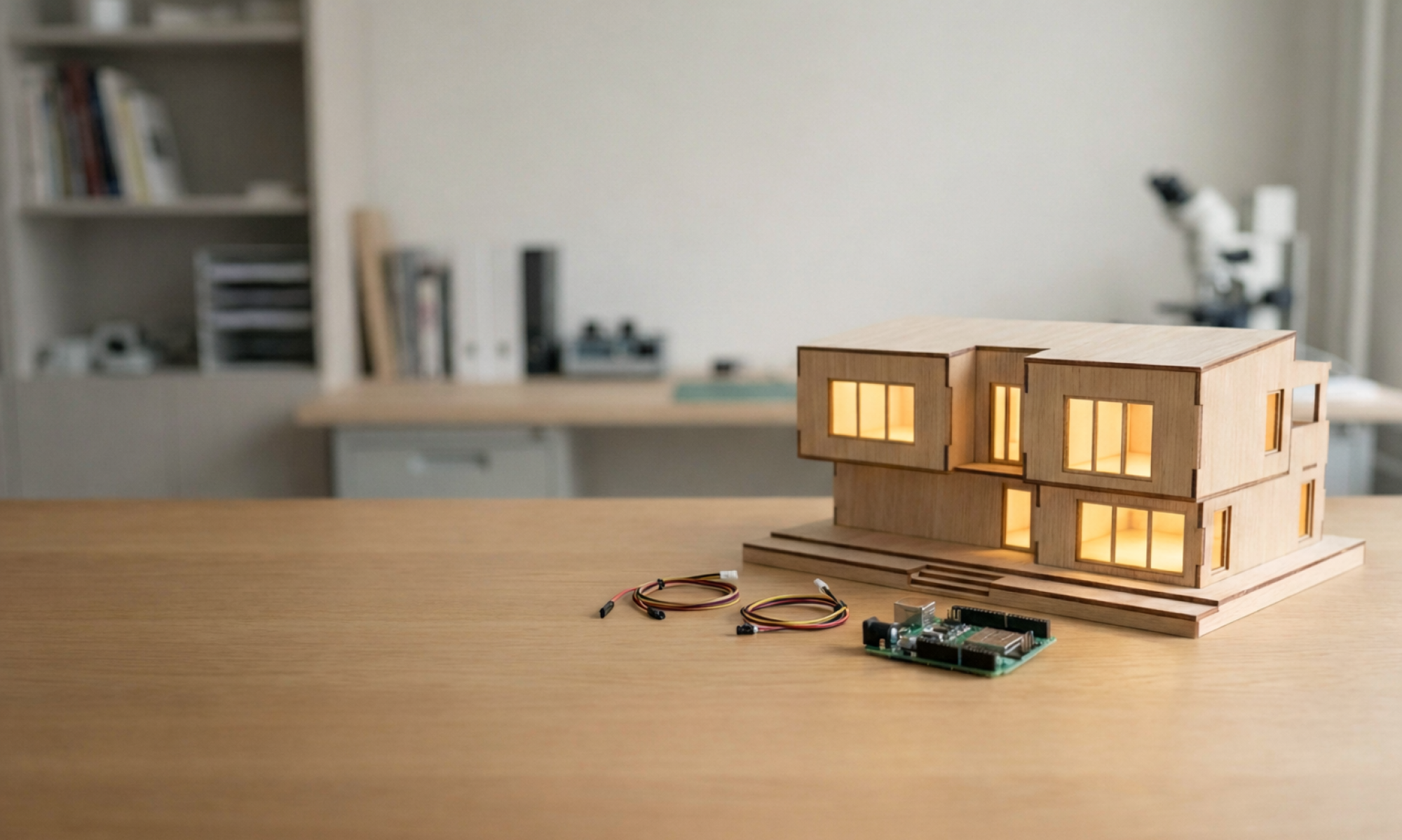
- CAD reference for house model: Mario produced a FreeCAD model of the house structure (exterior walls, internal partitions, window and door openings) as a construction reference. FreeCAD had a steep learning curve, so the model is intentionally basic; further CAD refinement is deprioritized in favor of building and wiring the physical model.
- CI pipeline and code coverage: Mario completed the GitHub Actions CI pipeline for the repo and reached the target of >50% code coverage, with backend linting and tests in place to catch regressions during integration.
- Materials and physical demo: Cindy obtained potential material for room walls from TechSpark and is planning to coordinate with the wood shop to build the house structure. Progress was limited by post–Spring Break travel and illness; next step is to confirm wood shop support and, once sensor/actuator parts arrive, to hook them up to the ESP32s and begin subsystem validation.

Mario’s basic CAD model for the demo structure