Most Significant Risks & Mitigation
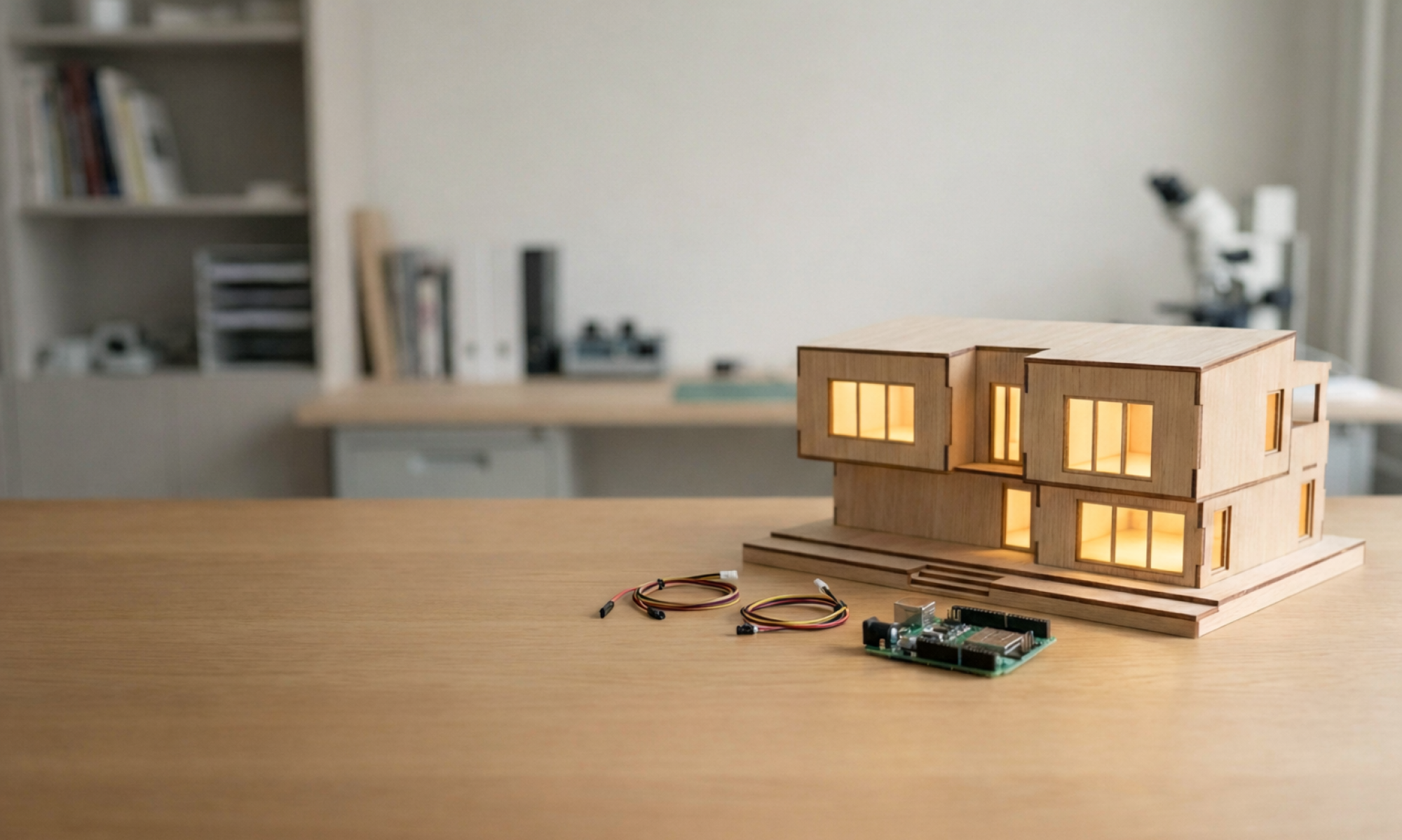
The main risk is that end-to-end validation is still blocked on a stable backend on the Raspberry Pi 5. Cindy has brought up the room-node firmware path (smartHome/firmware/room-node) and reviewed the C++ for sensor init, Wi‑Fi/WebSocket connectivity, telemetry, and dimmer/fan/relay commands, but full functionality cannot be confirmed until Mario finishes dependency setup and we run hardware plus integration tests against the live stack. Mario has been stabilizing the Python venv and requirements.txt installs on the RPi so installs don’t fail or crash, mitigation for environment fragility. A second risk is physical demo fit and materials: construction follows the CAD/specs (18×18 in footprint, three rooms, defined door/window/clearances); the window glazing is still TBD. Cindy plans to order acrylic sheets for visibility rather than a realistic window. Mitigation: order acrylic early and dry-fit the living room node on the structure before final glue/screws.
Design Changes
No change to the overall three-subsystem architecture (access, environmental/HVAC, lighting) or to the room-node’s intended role. Physical dimensions and openings are now documented explicitly (overall size, room splits, wire holes, lock zone, window/door ranges) so construction and electronics stay aligned. Code changes on Mario’s side are refactors and README updates to match the current use case, not a scope change.
Schedule Updates
Mario is on track, RPi venv/requirements.txt work, materials received and sorted, repo refactor and README updates. Cindy reports she’s catching up after earlier slips where hardware bring-up for one room node and demo construction are advancing. Joint milestone remains: backend running reliably on the Pi, then room-node ↔ backend integration and living room wired first for fit check on the demo. For next week, prioritize RPi backend smoke tests and first room wiring on the structure.
Progress & Technical Highlights
- Raspberry Pi 5 environment (Mario): Worked through Python
venvsetup sopip install -r requirements.txtcompletes without failures/crashes, aiming for a smooth, repeatable path to FastAPI, DB clients, MQTT-related packages, and the rest of the backend stack on the Pi. - Materials (Mario): Picked up deliveries at the front office and sorted inventory for build-out and wiring.
- Codebase and docs (Mario): Refactored a large portion of the codebase for the current web-first building-control use case; improved structure/readability where touched; README updated to match how to run and configure the project today.
- Room-node firmware (Cindy): Focus on
firmware/room-node: reviewed/iterated on C++ that initializes environmental and light sensors, manages Wi‑Fi and WebSocket connectivity, sends periodic room telemetry, and handles incoming commands for dimmer, fan, and relays. Full validation awaits Pi backend readiness and bench/integration testing. - Physical demo (Cindy): Continued construction from the CAD design with locked dimensions (e.g., 18.0 in x 18.0 in footprint, 10 in wall height, three rooms with listed sizes, door/window and wiring hole specs, lock mounting zone). For the window material, plan to use ordered acrylic for a clear view into the model. Next: wire living room sensors/parts to the ESP32 first, then mount to the demo for fit and adjustment.