Most Significant Risks & Mitigation
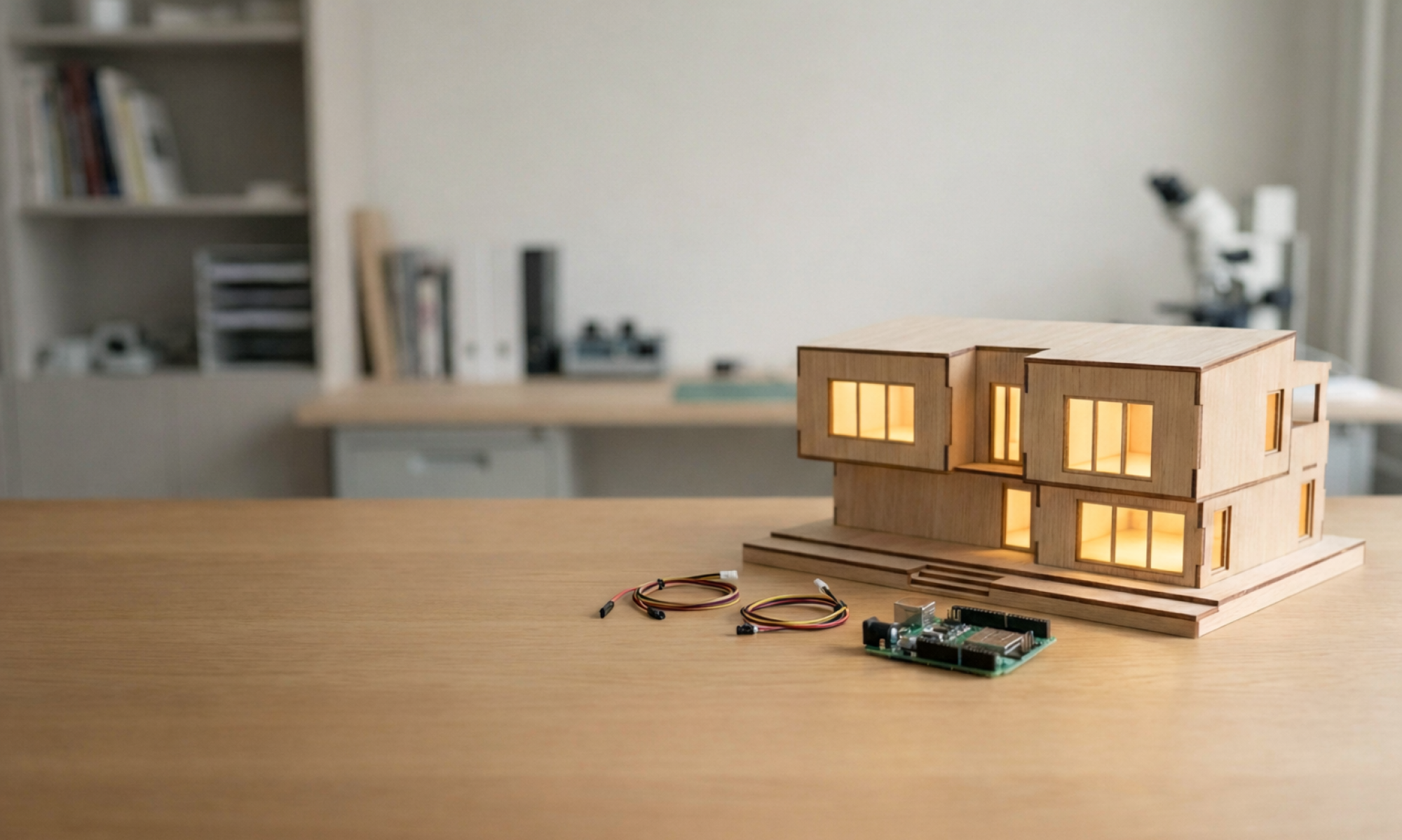
The most significant risk we’re worried about is the timely construction of the physical demo structure. Spring break and exam schedules delayed some progress, and there’s uncertainty regarding the sourcing of wood panels needed to assemble the house frame. To mitigate this, we’re just going to advance as far as possible with subsystem wiring, CAD/paper layout, and simulation testing if structural materials remain delayed. Additionally, we remain ready to fall back on a more modular demo setup (individual sensor boards and actuators on breadboards) if assembly cannot be completed on time. Another managed risk is adapting the communication protocol as we transition fully to MQTT from Redis; extensive documentation and incremental backend code changes ensure we can revert or patch as needed without service downtime.
Design Changes
A notable change this week was the migration of our backend communication method from Redis streams to MQTT, prompted by reassessment of system complexity and scalability. This reduces architectural overhead and improves reliability, but requires updates to documentation and firmware integration. Cindy also formalized the addition of PID-based HVAC temperature regulation, expanding the temperature subsystem to actively control environmental comfort, not just passive sensing. These design shifts (reflected in the team Design Report and Gantt chart) incur temporary setup costs, additional research, code adjustment, and test cases, but are mitigated by the modularity of our codebase and the incremental implementation process that allows feature toggling and isolated system testing.
Schedule Updates
We remain on schedule relative to our original plan, with adjustments for spring break and exam periods reflected in the revised Gantt chart. The updated schedule now includes dedicated blocks for procurement of demo materials, CAD modeling and layout, backend MQTT migration, and integration of PID regulation control. Next week’s focus will be finalizing the house structure, beginning frame construction, and ramping up code coverage and automated CI/CD tests. Key milestones for sensor and actuator wiring, Raspberry Pi backend verification, and software stack documentation are also updated.
Progress & Technical Highlights
- Design Report Completion: Both Mario and Cindy contributed to the team Design Report (
docs/Team_A4_Belmonte_Chen_design_report.pdf), with Mario focusing on Implementation, Testing, Buy List, and scheduling; Cindy on architecture, requirements, and trade studies. Documentation now clearly describes subsystem interaction through MQTT and backend integration, as well as justifies design trade-offs. - Buy List & Sourcing: Mario compiled a complete buy list and pricing plan for physical demo components, and began vendor research/contact for panel materials and electronics.
- CAD & Demo Prep: Cindy started CAD modeling for the house but shifted to detailed paper layouts after facing software challenges, ensuring continued progress on demo structure planning. Efforts are underway to source wood panels and begin assembly.
- Schedule Management: Mario revised the Gantt chart for updated phase breakdowns and integration milestones, accounting for timeline adjustments imposed by spring break.
- Parts Handling: RFID modules and the new Raspberry Pi 5 were secured in Hamerschlag lab, ensuring early safeguard of key hardware.
- Communication Migration: Backend protocol shifted to MQTT for streamlined message delivery and future scalability.
- Documentation: Major architectural decisions, software trade-offs, and system implementation details are now formalized both in the GitHub repo and the team Design Report.
Part A (Cindy): Global Factors
The smart building platform we are developing addresses needs that extend beyond a local academic setting by providing centralized monitoring and control of access, lighting, and environmental conditions through a web-based interface. Building management and access control are global challenges faced by organizations such as offices, residential complexes, and shared workspaces. In many parts of the world, building infrastructure contain multiple systems that are difficult to manage, alter, or upgrade. Our design emphasizes adaptive hardware nodes and a web-based control system so that similar architectures could be deployed in different environments/rooms without requiring specialized local software installations. Also, because the system uses widely available components such as Wi-Fi-enabled microcontrollers and standard web technologies, it can be adapted for use in buildings across different geographic regions where centralized control and remote monitoring are desirable.
Global considerations also include differences in user expertise and infrastructure reliability. Our design prioritizes a web-based dashboard that can be accessed from common devices such as smartphones or laptops, reducing the need for specialized training or technical knowledge. Additionally, the use of lightweight communication protocols and distributed sensing nodes allows the system to function even in environments where computing resources are limited. Features such as automated lighting control and temperature regulation also support global energy conservation goals by reducing unnecessary power consumption.
Part B (Mario): Cultural Factors
Cultural considerations play somewhat of a role in the system design. Recognizing the diversity of beliefs, practices, and social expectations around privacy and communal living, the system features flexible access policies and transparent event logging. For example, the dashboard can be localized or adapted for users from different language backgrounds, and our policy management allows for nuanced permissions in households, dorms, or co-working spaces. Our open-source documentation supports cultural adaptation, allowing communities to modify security and comfort parameters to suit local customs. Additionally, we took special care to ensure the audit log of access events is visible to users, not just administrators, fostering a sense of shared trust and responsibility, which aligns with community-driven values.
Part C (Mario): Environmental Factors
Environmental impacts are a core design consideration. The lighting control subsystem employs daylight harvesting and PID temperature regulation to optimize energy use, reducing electricity consumption by dimming artificial lights when ambient sunlight is sufficient and maintaining thermal comfort with minimal HVAC usage. The system’s modular architecture promotes upgradeability and longevity. This means components can be replaced rather than entire units discarded, minimizing e-waste. Documentation encourages users to calibrate energy-saving features in diverse ecological settings and provides tools for analyzing environmental data, to support sustainability both locally and globally.