This week, my main focus was bringing up the hardware for one room node (under github: smartHome/firmware/room-node). With the specifications, I reviewed the cpp code, which initializes the environmental and light sensors, manages Wi-Fi and WebSocket connectivity, periodically transmits room telemetry, and processes incoming control commands for the dimmer, fan, and relays. Full functionality still needs to be confirmed through hardware and integration testing when we finish backend set up on the Raspberry Pi.
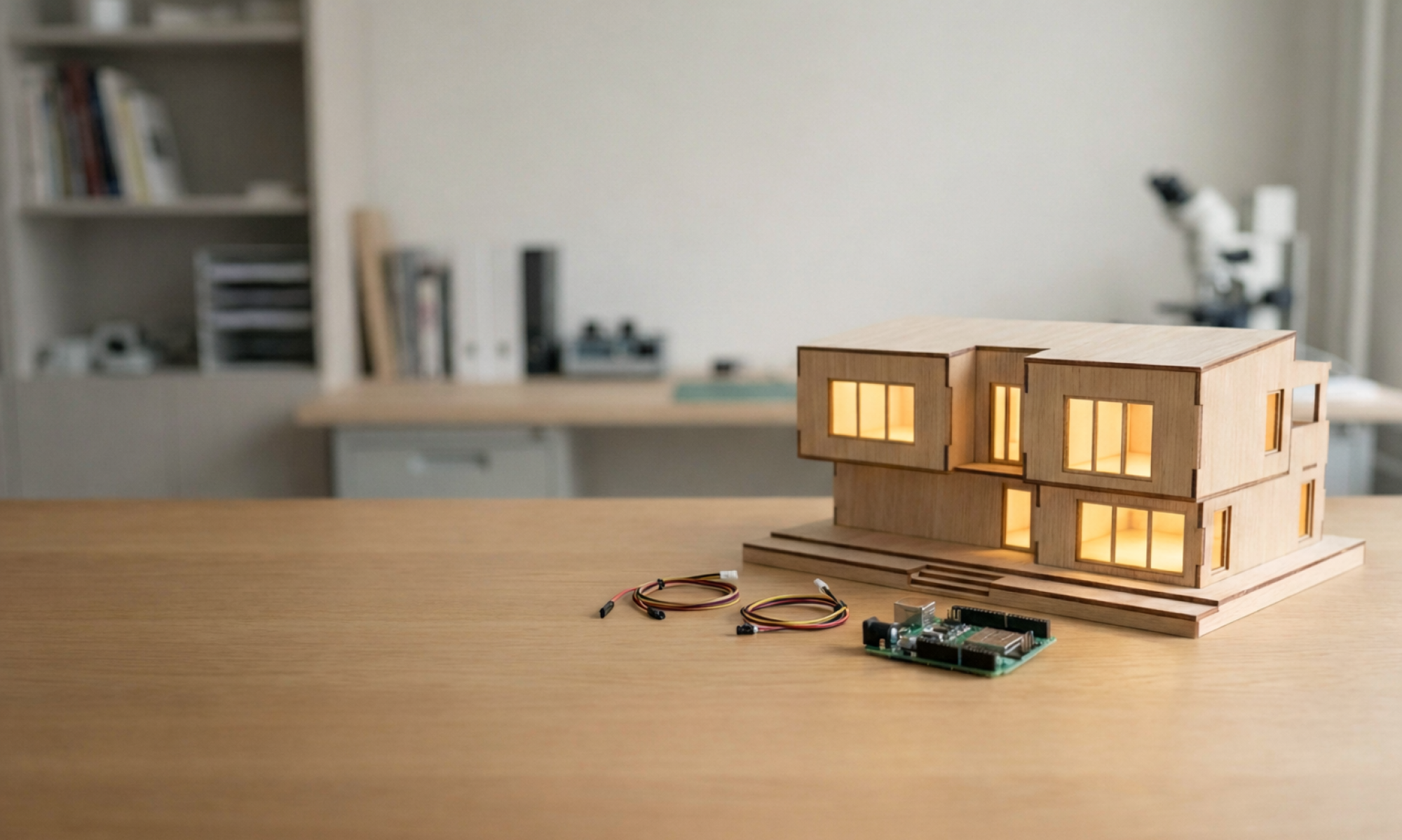
Additionally, I continued working on the construction of our demo from the CAD design. Here are the specifications and parts (found/using + still need to purchase):
Overall Dimension
- Overall exterior footprint: 18.0 in × 18.0 in
- Wall height: 10.0 in
- Maximum overall height: about 12.0 in
- Outer wall thickness: 0.25 in
- Inner wall thickness: 0.25 in
- Base thickness: 0.375 in to 0.50 in
- Interior clear footprint: 17.5 in × 17.5 in
Room Dimensions
- Living Room: 9.0 in × 17.5 in
- Kitchen: 8.25 in × 8.5 in
- Bedroom: 8.25 in × 8.75 in
Window Dimensions
- Viewing opening width: 2.5 in to 3.0 in
- Viewing opening height: 8.5 in to 9.0 in
- Bottom clearance from floor: 0.5 in to 0.75 in
- Top structural margin: 0.5 in to 1.0 in
Door and Lock Dimensions
- Door opening: 3.0 in × 5.0 in
- Door leaf: 3.25 in × 5.25 in
- Reserved lock mounting zone: at least 4.0 in wide
- Door lock size reference: about 2.1 in to 2.6 in long, 1.65 in to 1.7 in wide, and 1.1 in deep
Electronics / Wiring Clearance
- Small wire-routing holes: 0.25 in diameter
- Main service hole: 0.5 in diameter
- Optional under-base cavity: 1.0 in to 1.5 in
The “window” will be the only part of the physical model that I still currently cannot find materials for, and I plan to order acrylic sheets that provide a clear view into the demo house rather than function as a realistic window.
I am currently on schedule/catching up from next week, and I hope to have the living room sensors/parts wired to the ESP32 first, then attached to the actual demo to check for fit and determine if anything needs adjusting.