Contributions:
Demo MCU wiring and bring-up: Wired the interim demo ESP32 nodes and verified the hardware connections for both subsystems. One ESP32 was set up as the environmental node with the BME280 and BH1750 sensors, and a second ESP32 was set up as the access-control node with the RC522 RFID reader, relay, and solenoid lock.
Firmware testing and validation: Wrote and uploaded test programs for each stage of bring-up to isolate problems safely. This included I2C scanner and sensor-read code for the BME280/BH1750 node, RC522 only test code for the RFID node, relay-only test code, and a combined RFID + lock control program using authorized card UIDs.
Hardware debugging and troubleshooting: Worked through wiring and boot issues during bring-up, including identifying incorrect or unstable breadboard/sensor connections, verifying the correct ESP32-S3 pin usage, confirming relay operation before attaching the lock, and testing the lock with proper relay switching and protective diode placement.
Interim demo assembly: Brought the demo hardware to a working state so that both main node types are now functioning: the sensor node successfully reads environmental data, and the door node successfully reads authorized RFID cards and actuates the lock.
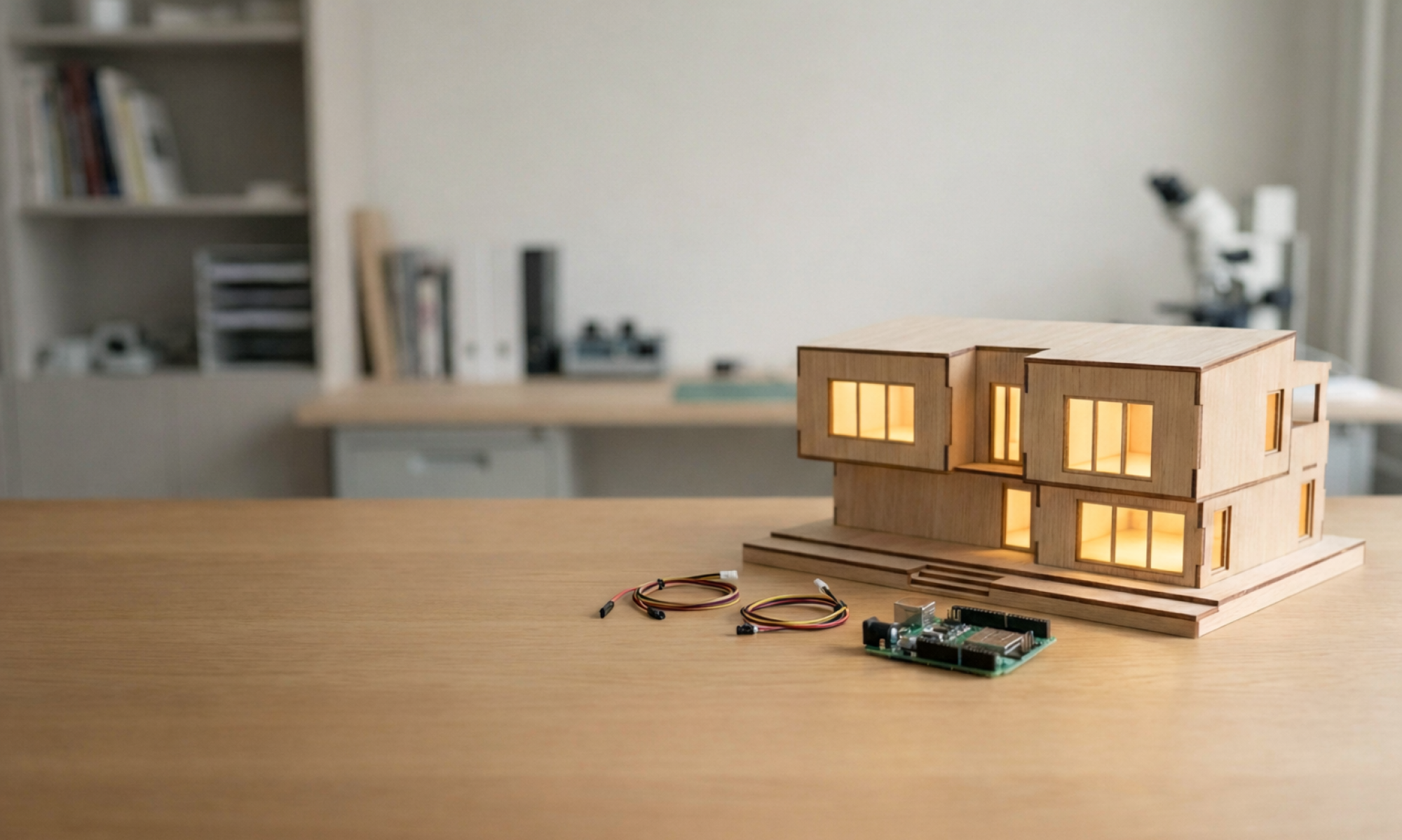
Physical model construction: Built the model house structure for the project demo and prepared it as the physical platform for integrating the working nodes.
Planning for expansion: Continued organizing how the rest of the hardware will be extended across additional rooms so the remaining sensors, controls, and room-level components can be added consistently to the full house system.
Is your progress on schedule or behind?
On schedule for this phase. The interim demo hardware is now functioning, both ESP32 nodes have been wired and tested successfully, and the model house has been built. That puts the project in a good position to move from isolated bench testing into broader physical integration across the house layout.
What deliverables do you hope to complete in the next week?
Continue hardware integration for additional rooms: Expand beyond the current demo nodes by wiring and testing more room hardware so the system better reflects the final multi-room design.
Complete the full house build-out: Finish the remaining physical house construction and integrate the electronics cleanly into the full model.
Refine and extend firmware bring-up: Adapt the working demo code into a more complete multi-node setup and verify that the same testing approach works reliably as more devices are added.
Document repeatable hardware setup: Record the final wiring, power, and configuration choices used for the demo nodes so the team can reproduce them safely while finishing the rest of the house.