Team Status Report for 4/25/26

The most significant risk is the full integration of the FSR with the housing tip, and tuning the CPI in software, but these are being addressed with consistent testing and iteration. There were no significant changes made to the design, and our schedule is unchanged.

With our timing module tests, we found that our overall optical sensor to drawing latency is ~46ms, well within our 80ms requirement. Our CPI accuracy test yielded that a 45 degree tilt in sensor orientation from a horizontal orientation is within a 1% margin of error of the CPI with horizontal orientation. Our total weight, while not final yet, is ~40g, which is higher than our projected maximum of 30g, but this was a tradeoff for usability with more complex components. Measuring the current draw of our sensor combined with the MCU and battery resulted in an average active current draw of 23mA and an estimated battery life of 4.35hrs, well above our requirement of 2hrs.

Team Status Report for 4/18/26

I think the biggest risk we are facing right now is figuring out the best way to integrate the force sensitive resistor (FSR) inside of the pen to allow for easier surface touch and liftoff detection. These risks are being managed by constantly integrating and revisiting the housing design to ensure we get the design for the FSR correct. The contingency plans we have so far is just use a button or two since these are easy to integrate or use the optical flow sensor and IMU together to figure out liftoff detection.

No new changes made to the design and our schedule remains the same.

Team Status Report for 4/4/26

After completing the interim demo, we are finishing up the major development portion of our project and moving primarily into testing and verification. The main parts of the project we still need to include are the force-sensitive resistor (FSR) to simulate a pen writing when pressure is applied, and our optical flow sensor, which should be ready integrate with our new PCB.

For testing and verification, our primary tests to run are for latency, accuracy, battery, and weight + housing. For latency, we will have timing modules as data moves through our system, with end-to-end and round-time travel measured. Housing & weight will be gathered from user feedback during and outside of lab time. Once we have finished incorporating the (FSR) and optical sensor, we will conduct writing sessions to measure battery. We should be in a good place to incorporate any feedback from stakeholders.

Team Status Report for 3/28/26

The most significant risk right now is that we have to reorder our PCB for our optical sensor. Changes to the PCB are currently being made, and the risk is being managed by shifting our focus towards integrating our parts from the top down rather than bottom up from the sensor. This way, we can ensure our integration flow is working well and the sensor can be easily integrated once our new PCB is in.

No large scale changes have been made to the design of the system, just small scale optimizations and fixes.

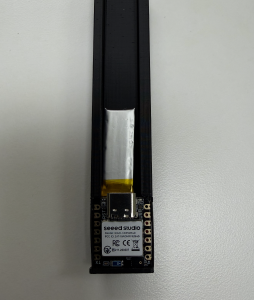
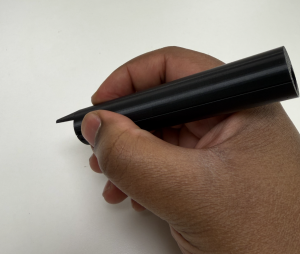
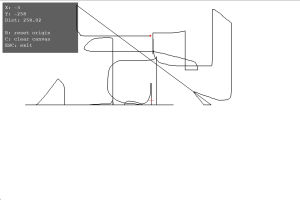
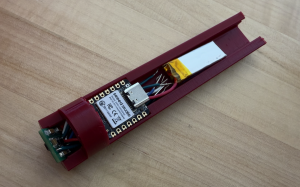
Here is a picture of our current physical stylus with the MCU and battery integrated, and a screenshot of how writing on our canvas currently looks with using dummy data from the IMU rather than optical sensor data.

Team Status Report for 3/21/26

The most significant risk at the moment is the time needed to integrate and test all of our components when our sensor PCB gets in. The rest of our component functionality more or less depends on how well the optical sensor works, and we still need to receive and bring up the PCB. Once this is done though, we should be able to make significantly more progress in the next week and be ready for the interim demo. As stated before our contingency plan is that we have multiple components for our sensor and MCU, and should something not go as planned, we will at least have basic functionality by the interim demo, and time after that to address any issues.

No design changes or schedule updates have been made since last week.

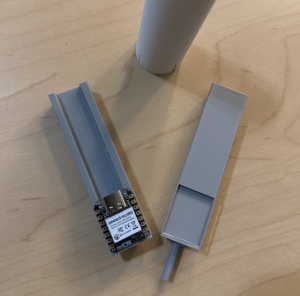
Here are a couple iterations for our stylus housing and MCU fit that we are still iterating.

Team Status Report for 3/14/26

At the moment the most significant risk for our project is correctly integrating all of the parts into our 3D pen case and making sure we mount the optical flow sensor correctly onto the tip of the pen. If any of this is implemented or positioned incorrectly we could lose out on a lot of accuracy with our surface tracking. These risks are being managed by constantly going through different pen case iterations to see which one works the best for our design and overall just doing a lot of testing of the individual components and the components altogether in order to perfect our tuning of the design. The contingency plan we have is plenty of backup components like MCUs and optical flow sensors just in case something breaks and we also left a good amount of time for testing just in case we need to make small design pivots.

The only design changes we’re considering is replacing our initial button integration with a pressure sensor. This allows us to eliminate the need for a user to continually press a button to change between move and draw modes, but rather use pressure thresholds, which feels closer to natural writing. Our schedule remains the same.

Here are some progress pics:


Team Status Report for 3/7/26

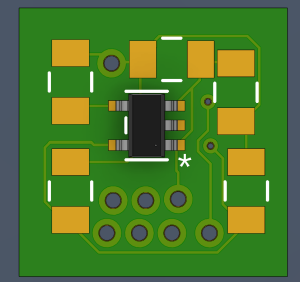
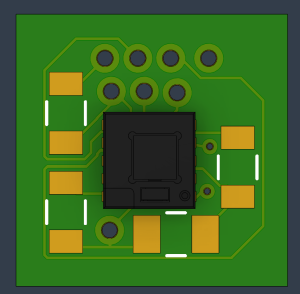
Previously our most significant risk was actually getting the motion sensor but after working with the vendor we finally received the sensor and datasheet that we wanted and now need to make a PCB for it. So we think now the biggest risk is just receiving the PCB on time before our interim demo and making sure we have the 3D printed casing ready for all of our parts. The PCB will be completed by this weekend so it can be sent of Monday which ideally should be enough time to receive it before the demo and the 3D case has been going through multiple iterations as well to ensure all the components fit. The main contingency plan we have is if the PCB does not arrive in time we do have another backup motion sensor that we took from a mouse that is a through hole component so we could temporally wire it up to a breadboard or something just to show our design working until we receive the PCB.

There has been one change to our design which is the type of optical flow sensor. We have managed to receive an optical flow sensor with a different part number and is much smaller than the previous one we were considering. This change was necessary since the other optical flow sensors we hard to find and this was the one the vendor recommended to us. In addition, the other optical flow sensors are much bigger so with this new one would allow our pen tip to be smaller. We think the only cost we incur from this change is we will most likely need to change our pen tip size to fit the new motion sensor other than that everything else pretty much remains the same. We will just continue to experiment with the 3D pen case to mitigate this.

Here is our updated schedule: 18-500 Gantt chart – Gantt Chart

Week-Specific Items

A was written by T’sairus Beasley, B was written by Christian Cherry, and C was written by Jamari Toussaint.

Part A (Global Factors):  To address global factors, our digital pen is designed to break down the geographic and socioeconomic barriers associated with digital education and creative work. In many regions and non-academic environments, users lack access to expensive hardware like tablets or specialized displays. By utilizing an optical flow sensor and IMU inside of a pen to track movement on any standard surface like a basic wooden desk our product allows anyone with a basic, low-cost Bluetooth-enabled laptop to have access to high-quality digital tool. Furthermore, the pen’s architecture directly accommodates users who are not technologically savvy since the onboard MCU handles all the complex coordinate transformation math locally and the pen acts as an universal Bluetooth device. This means users around the world are not required to download specialized drivers, navigate complex software installations, or pay for subscription ecosystems. Our device makes digital literacy and tools globally accessible.

Part B (Cultural Factors): The transition from physical to digital mediums can often disrupt traditional methods of writing and artistic expression. To address these cultural factors, our stylus respects these by very closely mimicking the physical form factor, weight, and tactile experience of a traditional pen. In addition to this, by calculating orientation with the IMU and MCU locally and transmitting these results to the digital canvas, our stylus preserves the user’s natural handwriting style and stroke dynamics. This ensures that users are not forced to adapt their cultural writing behaviors to suit rigid technology. Instead our stylus technology seamlessly adapts to the physical habits of the user and allows their experience to feel more natural and align with the norm.

Part C (Environmental Factors): To address environmental factors, our design mitigates the issues typically associated with traditional writing. Traditional writing consumes tons of paper and contributes to negative environmental impacts such as deforestation. Our pen design eliminates the need for paper entirely and allows users to digitize their work by writing directly on any desk or table surface which are inherently reusable surfaces. Also the pen implementation reduces electronic waste by integrating a rechargeable LiPo battery and utilizing lead-free solder on the custom PCB. This helps the pen avoid the toxic metal waste generated by disposable alkaline batteries. Finally, the modular design of the pen case allow users to open the casing and replace individual components rather than discarding the entire pen if a single part fails.

Team Status Report for 2/21/26

The most significant risk that could jeopardize the success of the project is still the motion sensor since we have still been struggling to find one that would work for our intended purpose. However, this risk has been managed since we were able to find an old mouse lying around and break that apart to take the motion sensor from it. So we will spend time testing that to make sure it works for our intended purpose. If not our only backup so far is to try to get the IMU to effectively track linear motion which has not provided the best results so far since it does not work very well on small movements. Further testing of this will be done just in case.

The only thing that’s changed with our design this week is that instead of building a conversion module from the ground up, we found a Python library called pygame that interfaces with our computer OS to do 1-to-1 CPI-pixel mapping. We will be using this library for the base of our stylus data interfacing after BLE communication. We also may need to change our design depending on which motion sensor we end up choosing. The reason for this is the one we originally wanted is too hard to find and we are still testing the current one we found.  The good thing is all of the motion sensors work relatively the same with slightly different resolutions so the cost for switching is lower resolution but that should not be too much of a problem since we were planning on working on the lowest resolution anyway to start. Overall we can still make it work with mostly any mouse motion sensor we find.

Here is the updated schedule: 18-500 Gantt chart – Gantt Chart

Team Status Report for 2/14/26

The most significant risks is obtaining a sensor that can effectively track motion across a surface. We are still thinking of using an optical mouse sensor for our pen to track the surface but we have been having a hard time finding vendors that sell them. Our team is currently talking to a vendor that sells them and we are waiting for a response from them to receive a datasheet to see if what they have will work for us. These risks are being managed by looking into multiple different types of motion sensors to see which ones are available and would work best for our product. One contingency plan we have currently is to try an use the IMU we have in order to track motion across the surface but we will have to sacrifice some accuracy if we decide to go with this plan. We have also found some other motion sensors through vendors like Amazon and Tindie but they are a little bigger than ideal and after reading datasheets we would have to test them first to see if they are worth using in our product.

At the moment, we do not have any changes to our design but if we are unable to obtain our original motion sensor then we could possibly have some design changes in the future.

We slightly updated our schedule to push PCB stuff back by a couple of days: 18-500 Gantt chart – Gantt Chart


Week-Specific Items

A was written by T’sairus Beasley, B was written by Christian Cherry, and C was written by Jamari Toussaint.

Part A (Health, Safety, Welfare):  For welfare, the project is designed to be an easily accessible and essential digital tool that breaks down the current economic barriers that restrict digital literacy and prevent people from having access to convenient technology. Since we were able to engineer a device that works on any surface at a very low-cost (<$50) compared to other expensive options out there, we are able to support the welfare of under-resourced young professionals and artists by providing affordable access to an industry-standard digital tool that will help them in their day to day life. Furthermore, for safety we ensure that the physical design of our product prioritizes user safety through a fully enclosed, non-toxic 3D-printed case that secures the LiPo battery and other electrical components away from harmful encounters to make the device safe for daily use in many environments. For health, our product will maintain a lightweight structure (~25 grams) and will have the weight balanced throughout the entire pen. This will ensure that users will be comfortable with the product and not have to strain their hands or arms through daily use of our product causing unnecessary health problems

Part B (Social Factors): Just as tablet artist and tablet student notetakers became distinctive within the population of artists and students respectively, our Versatile Stylus has the potential to create another group of people who are marked by using our product with their computers rather than a laptop. This can generate a social group of people who dynamically collaborate with each other with larger screens. In addition, it will bring those who cannot afford a tablet into the realm of being able to draw or write digitally. We do recognize the possibility that, since our product is meant to be affordable, this social group may become isolated from those who see having a tablet paired with their stylus as a more premium option or status. On the other side of the coin, given further development time and a wider range of compatibility and features beyond our MVP, our product could replace the specific stylus-tablet dependence of certain tablet products, integrating the tablet and computer social groups with usability that benefits both communities.

Part C (Economic Factors): Considering economic factors, we are looking to design the versatile stylus with robust performance whilst increasing the affordability compared to a usual pen/tablet combo. Our microcontroller and components are relatively available, the only exception being our camera motion sensor. This would require some additional considerations when thinking about moving our product to larger scales. Our communication (bluetooth) is widely used and available for integration with scaffolding available online. Finally, we are looking into using a reusable battery within our design so users will not spend additional costs on upkeep for switching dead batteries. As our stylus is looking to be accessible, we want to include accessible parts for simple use and easy maintenance.

Team Status Report for 2/7/26

The most significant risk at the moment is trying to find a motion sensor for our pen. We have been searching for vendors online but have been struggling to buy and find the one that we had originally wanted. We are talking to our TA and faculty member to hopefully find trustworthy vendors to search for the needed part. The contingency plans is we have backup sensors that we could try to look for in order to replace the current one if we cannot find it. We will find backup vendors for other sensors just in case.

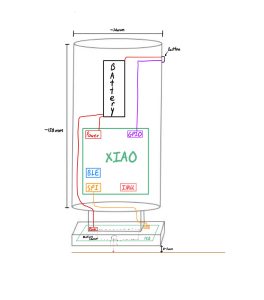
There have not been any changes to our design of the system since the proposal presentation on Wednesday. Here is our current design we are thinking of implementing:

This week we have spent time searching for all of our components plus vendors to buy those components from and compiled them all into a spreadsheet: Components – Sheet1

We updated our schedule dates a little bit to account for the time it took to design our slides for the proposal presentation and look for parts for the design so we are pushing back the PCB and CAD design by a week. Here is the updated schedule: 18-500 Gantt chart – Gantt Chart