This week I was able to get the first physical 3D print for our stylus housing and start on the next iteration, as well as update our conversion module plan.
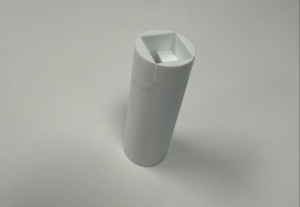
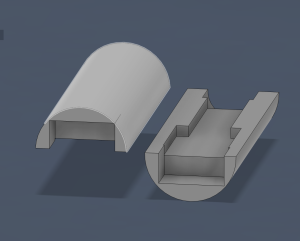
Our current stylus housing is a bit short, but the thickness of it sits comfortably in the hand. Even though we don’t have our MCU yet, I personally have a different MCU model from the same company that has the same dimensions, so I was able to test the fit of the housing with that. Within this next week, in addition to making the stylus longer, I am splitting the body in two to make it easier to insert and remove parts. I will also rearrange the positioning of the parts some to account for our IMU needing to be tested in variable positions to get the most accurate reading in relation to hand motion.
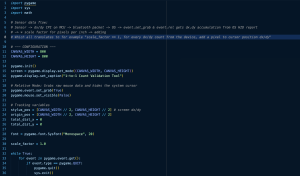
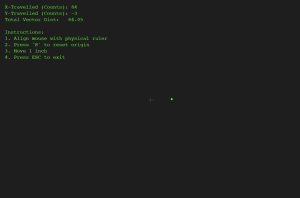
In terms of the conversion module, I came upon a really great Python library called pygame that natively works with the OS to use pixels as its measurement distance and directly grabs dx/dy data from the Bluetooth device buffer before it’s optimized by the OS. This simplifies the work needed to be done for our conversion module, and allows me to focus more on helping make sure our MCU and sensor outputs the optimal CPI for our application so that our users have a smooth drawing experience. I used Gemini to help with making a test program that measures x and y differences of CPI and pixel counts using the pygame library.
Progress is going well, I just need to send in the next iteration of our 3D print this weekend.