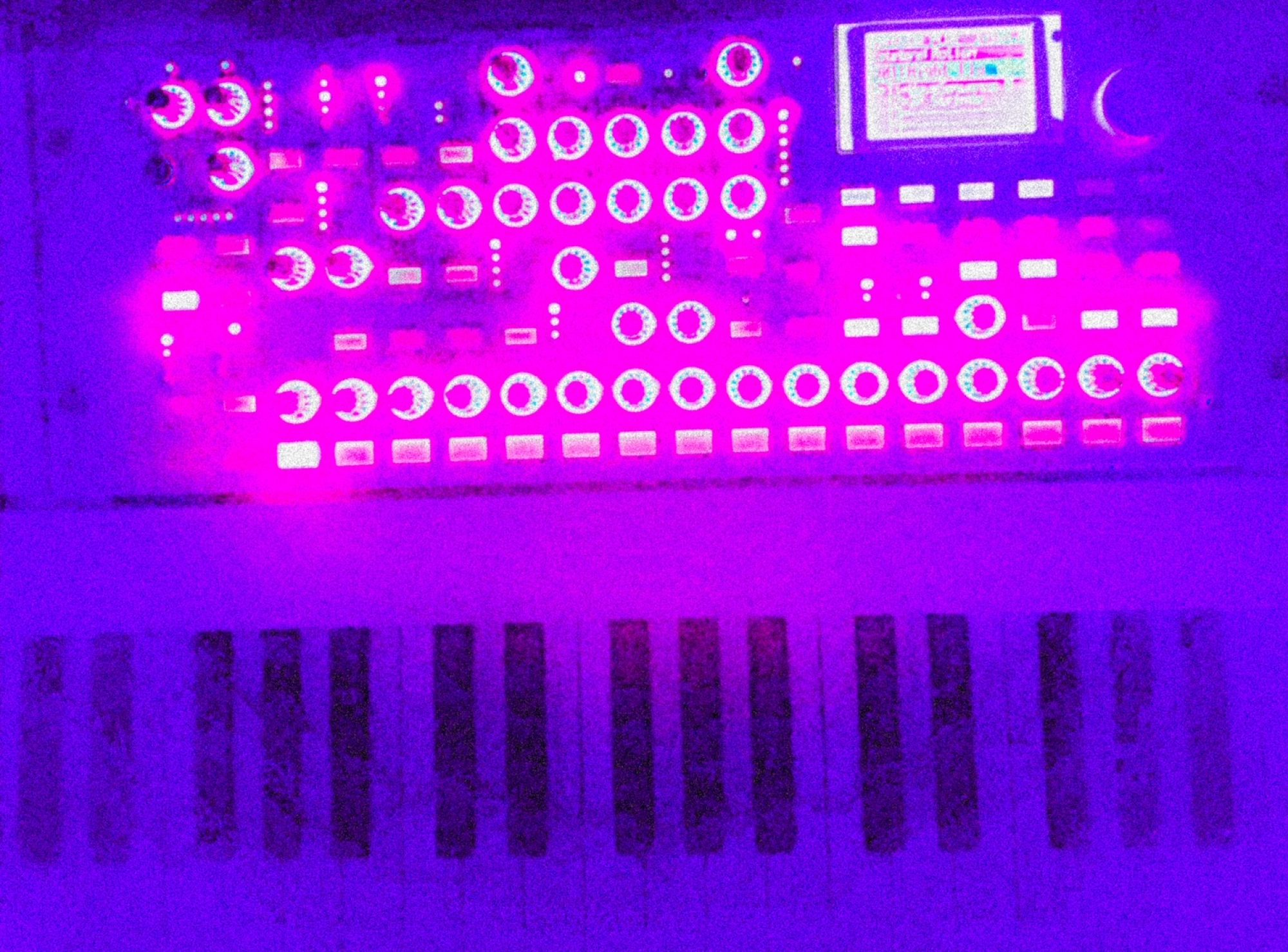
This week we met with Tom Sullivan and Daniel Zhao to discuss our plans. We decided upon the Terasic DE10 FPGA to begin synthesizing and testing our modules ASAP. Shayaan wrote a saw in Verilog, and visualized it in VCS, as detailed by his report. Jake tried something similar with a square of arbitrary duty. Daniel focused on distinguishing between host versus participant in USB I/O communications between the Waveshaper, PC interface, and MIDI controllers. Jake investigated the on-board codec to decide if it’s suitable for our purposes in live audio.
(A) One public safety concern related to our project is excessive sound exposure. Prolonged exposure to sound levels above 85 dB can cause hearing damage. Therefore, if we include headphone peripherals, it is important to ensure that the output does not exceed safe listening thresholds.
Additional safety considerations include proper power regulation, adequate electrical insulation, and thermal management. Any components that could pose even a minor hazard should be properly enclosed or isolated from the user. By prioritizing these safety measures, we aim to ensure that our digital synthesizer remains safe and accessible to all users.
(B) Musical synthesizers do really well to serve social factors, simply because music is an innately social and cultural thing. People both make music together, and go to venues expecting to hear live music. We use music to help create the cultural moment we’re living in, whether we’re playing or just listening. The Waveshaper’s minimal feature set serves on two fronts: first, the musician is forced to be intentional about the sound they’re making, as there aren’t unlimited tools, and second that this robust feature-set allows a broader set of users to access the device. A more streamlined feature-set means the portability increases, and price comes down, because the hardware isn’t bogged down supporting features not every patch will use.
Secondarily, this project serves as an educational tool. Implementing on a dev-board means that there will be verilog to share. A musician needs awareness of the control-path to make music, but it might be useful for an engineer to see a device that is so explicitly tied up with the concept of inter-connected modules. The musical synthesizer is a very externally visible implementation of very ubiquitous design concepts in hardware. This visibility of path makes it a great educational tool perhaps for extendability.
(C) From the get-go, the WaveShaper was set out to meet particular cost criteria. As a project targeting hobbyists and experimentalists, keeping a low economic barrier to entry was a priority in the design process. This goal was not only considered for the choice of on-board components and associated manufacturing expenses but also in how the device would be used once in the hands of the end user. This secondary aspect is twofold. For one, by ensuring that the ports and interfaces were as generic as possible, a variety of peripherals and computing devices can be used. This opens the door to the use of secondhand markets and even so-called “libraries of things” to customize the user experience. Moreover, we aim to leverage the use of an FPGA and its dedicated sound synthesis as an accessibility feature. To achieve the same real-time performance on a general-purpose computing device in software would be much more expensive and would compete with possibly limited compute and I/O bandwidth for graphics, web tutorials, etc. A less powerful desktop PC, laptop, or even a single-board computer like a Raspberry Pi could be used as the interfacing device.
Part A was written by Shayaan Ghandi. Part B was written by Jake Tarin. Part C was written by Daniel Abujaber.