Harrison’s Status Report 4/25/26

Continued work on individual game finalization and system integration.

Game board swapping and final code implementation for subunits finalized. Ensured accurate movements tested with our final magnet-modified pieces.

Finishing up the final algorithms and connecting the P2 online interface to the Raspberry Pi and STM32 motor control systems.


Harrison’s Status Report 4/18/2026

Worked on the Final Presentation presented by Chris.

Started work on the finalization of ML and algorithm (special chess movements) integration. This includes the movement of pieces out of the way when moving pieces like the knight and tracking of taken pieces to be used for promotions.

Very simple design to make the outside of the machine look nice (black cloth) around the edges, while elevating the machine.

Extra Questions:
1. I have had experience coding motor control code in the past, but I have never used an STM32. Chris was a big help as a knowledge base for using the STM32 since he took Embedded. Along with this, setting up the software connections and getting to the point where I could run code off of the STM32 after installing drivers, YouTube tutorials and AI were helpful in my learning of setting up the IDE and updating the system.

2.
Harrison’s Status Report 4/4/2026

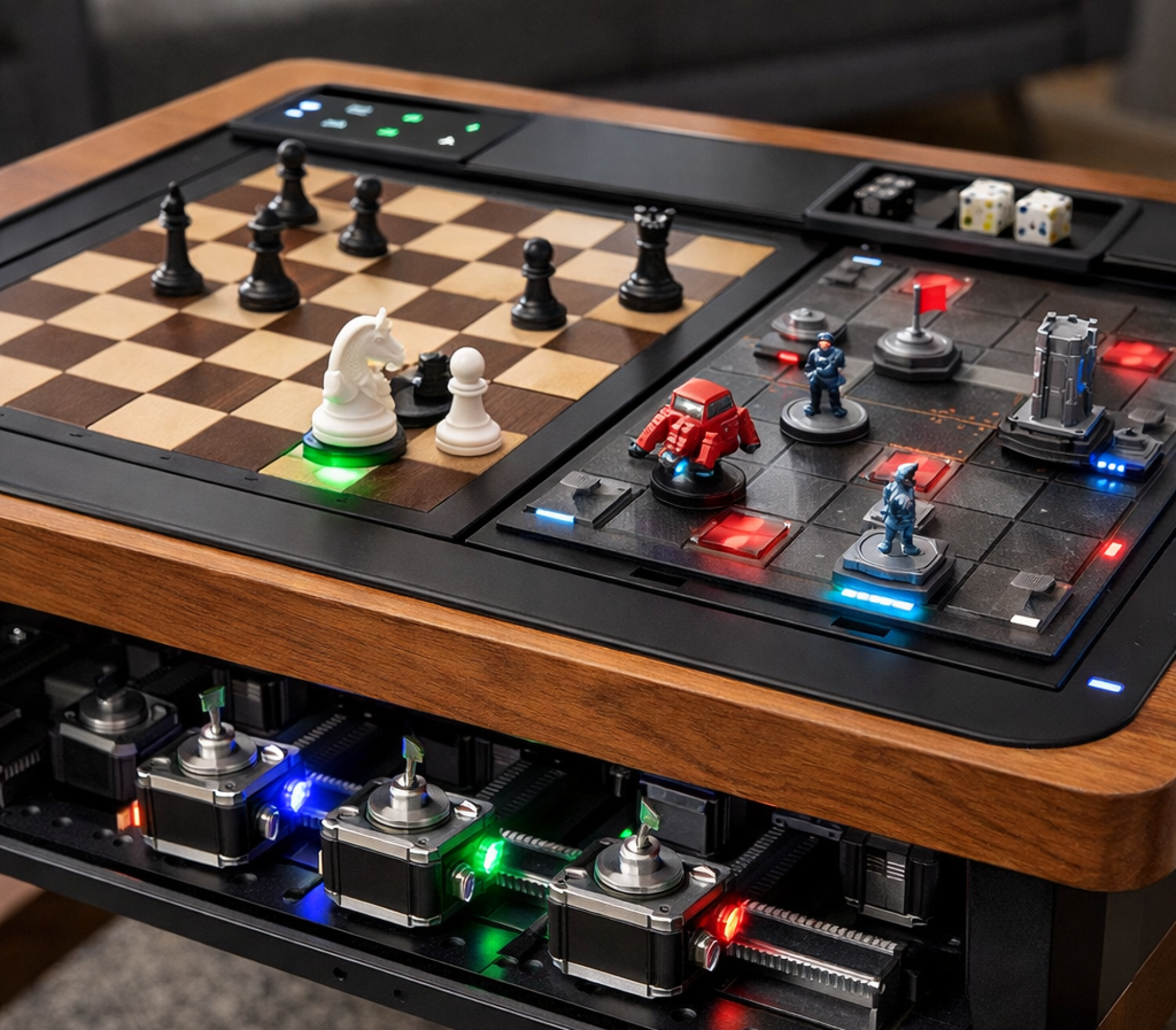
Completed our Intrim Demos this week, spending a lot of time to get the system working and presentable. Fixed some parts of the gantry which were coming loose after modification. Focusing on ML model and CV refinements to distinguish between pieces for games like chess. Also focusing on integrating the gantry with a table and tabletop to have a more standard board game playing experience.

Extra Questions:

  1. For our verification and testing phase, we want to focus on consistent accuracy over the course of a board game’s piece movements. For testing, we will have multiple users of different backgrounds play the three board games we support, and they will report whether each of the movements made by the gantry is accurate or not accurate in a survey. Along with this, they will also report the accuracy of the CV in detecting their moves correctly in the same way. We want to ensure the enjoyment and playability of FlexyBoard as described in our use-case requirements.

The subsystem I worked on was the microcontroller code for the stepper motors. We have found that slower gantry movement leads to more accurate movements, and we adjusted the speed to have an arbitrary balance of accuracy and speed. Based on the tests, I will be able to either increase the speed for faster movements if it is already accurate or decrease the speed to increase movement accuracy if it is too inaccurate.

Harrison’s Status Report 3/28/2026

Worked heavily on the gantry. Wired up all motors and drivers to STM32 and tested all of their movements. Calculated maximum number of steps to take advantage of the full gantry space and calculated the ratios between the checkers board squares and converted them to steps to accurately move pieces to different locations on the board.

Working on sending Raspberry Pi data to STM32 to control movements now.

Harrison’s Status Report 3/21/2026

I started working on connecting our motors up to the gantry with Chris. Our goal is to get all the movements working during our first meeting on Monday, work on setting up the camera system on Tuesday,  combining these two aspects on Wednesday, and meeting for extra time if we are not finished during the rest of the week.

Harrison’s Status Report 3/14/2026

This week we figured out what we are going to start doing and where we will be working. We will be using a space in the ECE wing of hamershlag which has ample room to store our project. The gantry is already very large, and we wanted storage space to accommodate it when our project gets even bigger.

Also ordering extra magnets for pieces.

Harrison’s Status Report 3/7/2026

Worked on Introduction, Architecture, and Design Requirements as part of the design report. We now have a concrete plan for testing and have put into words the design and implementation of the parts we glossed over during our presentations.

We will be moving forward with our plan to set up the gantry movement to software connection alongside the first runs of the CV for piece tracking.

Harrison’s Status Report 2/14/2026

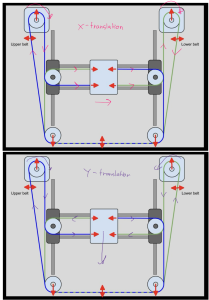
While working to finish our design implementation presentation, I have created a concrete list of parts we will need to build the gantry. Along with this, I have found a physical design that I hope to use to control the gantry. We also have the opportunity to buy a gantry that was used by some of our friends who needed it for one of their previous projects. We will look into this but we are going full speed ahead with designing/planning to make the gantry on our own:

Harrison’s Status Report for 2/7/26

Researched and created a list of parts and a plan for the hardware integration here:

https://docs.google.com/document/d/1WYpTOrNcngCf4Nct7qL6G8xHJe6kZDWd2HevZ8-3mHM/edit?usp=sharing

We are looking into the creation of both the gantry and the CV algorithm for the implementation. We are discussing the pros and cons of finding a low-cost premade gantry with enough working area to support games, versus making a custom one. This is also the case for developing a CV algorithm, versus finding a premade one that will work for our purposes.