Team Status Report for Feb 21st

This week we continue to each work on our part of the project. We also received the items we ordered at the end of the week, so we have escaped part of this bottleneck. Overall we are making good progress and finalizing the design as we try things and see if they work or not.

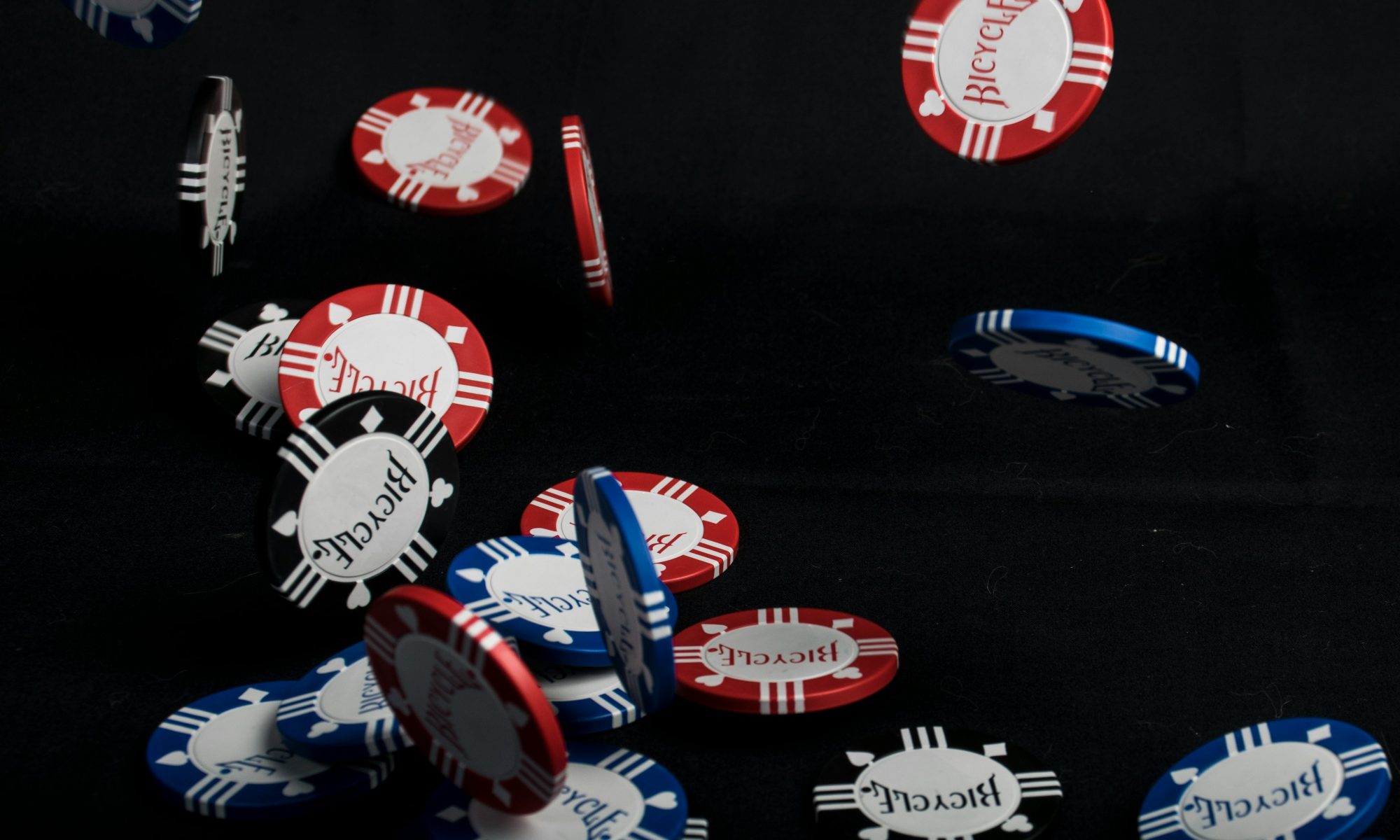
The chip return is taking shape with 3d models of the starting funnel and track with color sensing is being worked on.

The auto card dealer came in on Thursday and from initial tests seems to have the basic functionalities necessary for this project. Throughout this coming week we will be dismantling it and seeing if we can control the autodealers actions ourselves.

One of the most significant risks is how well the RFIDs work. We really need to have access to them to test, as if they do not meet our specs as expected, it could cause significant redesign. We are trying to build the chip return system in a way that it could work with only color, but RFID is needed to make everything run faster and smoother. We are also trying to mitigate this by doing this testing early, so if it doesnt work we can change designs pretty easily.

The ML framework on which to train the poker AI is in progress. The system to run Monte Carlo simulations is done, and we are working on implementing stochastic node selection for training.

Our schedule is overall the same, we are making good progress and haven’t hit any significant speed bumps

Andrei’s Status Report Feb 21st

After completing the design presenatation I finally recieived the auto card dealer and was able to test its basic functionalities. It works very well and has all the settings necessary that we could be using. I now have to dismantle it to see if I can slow down the dealing and manually control the start and stop of the dealer. This will be my goal for this coming week. In addition I am still attemtping to understand and figure out what rfid i will be using for the chips and cards at the moment. I will be speaking with Theo on monday to complete this sidequest. We will then complete the design report by friday before spring break.

Sam’s Status Report for Feb 21st

This week I’ve been finalizing the design for the chip system for our design report and the document we are writing to help outline how everything will work.

At the center of our table we will have a funnel that looks like the image above, I am actively 3D printing this. This puts the chips into a sequential order, which can then be fed into the color sensing that I showed last week. To gain height from the collection in the center of the table, I am also building a track that will act as a vertical conveyor belt. The chips have a metal weight inside them so I will be using magnets to pull them up along this track. At the top of this track the actual color sorting will happen with the use of gravity, into the container imaged below.

Behind each of these stacks I am working on putting a solenoid to push out individual chips onto each players return track.

Overall I think I am near on schedule. 3D design of all these unique parts has been taking longer than I want, but I haven’t done something requiring this much fabrication before so thats sort of expected. We have also had some things we ordered arrived finally, so we can start making progress on things like the RFID scanning and dealer.

This week I would like to have the funnel and color sensing working together.

Ben’s Status Report February 21st

This week I’ve begun writing the ML framework on which to train the poker AI. I’ve implemented a system to run Monte Carlo simulations, and am working on implementing stochastic node selection for training. In addition, I’ve implemented the core of the CFR portion of the algorithm which will determine the model weights.

Andrei’s Status Report Feb 14th

Andrei worked on collecting knowledge on the rfid product classifications to make sure to purchase the correct types, In addition I am currently waiting to receive the autocard dealer to be able ot hack it to follow game mechaniccs. This coming week I will purchase the RFIDs to test them out and in addition I will be testing the auto card dealer capabilities.

Ben’s Status Report Feb 14th

This week I got into developing the base poker game software, and working on making sure that it is reasonably optimized to be able to run large scale simulations on it effectively. In addition, I spent a lot of time working on the design presentation for next Monday.

Team status report for Feb 14th

Right now our biggest risk is the reliability of all the pieces we have ordered that we haven’t gotten to test yet. The automated dealer may be very difficult to integrate or the RFID may not be reliable enough to track chips or cards. We have backup plans to build our own simpler dealer, and reading chips by color without RFID, but hopefully back up plans will not be needed once we get our items.

No changes to our schedule right now, we are mostly waiting for some critical parts to be delivered, and making progress on the things we can like the chip return system.

Part A: Since this project is to provide casual players at home with a realistic gameplay to either practice against ai bots or friends and bots there is likely no large psychological problems. That does not mean that on an individual basis users could not find themselves gambling using this product and therefore could pose a psychological impact on those who gamble using our product. There are otherwise no affects on a users welfare or safety using this product. (Written by Andrei Da Silva)

Part B: For social factors, we are hoping that this project allows people to connect with their friends over an in person game, rather than being glued to your phones. We want to make poker more accessible for groups that may not know exactly how to play or struggle to find a dealer, but are looking for this kind of activity for connection. (Written by Sam Istvan)

Part C: Our product will hopefully be economically much more reasonable for a majority of the target audience – people who want to have a functional automated home poker system.  Currently, competing products are enormously expensive, running $5000+ per table, and don’t have physical chip and card integration. We hope that our product would be able to target more casual audiences that appreciate the physical experience of poker and don’t want to spend exorbitant amounts of money for the convenience of a dealer.

Sam’s status report for Feb 14th

This week I have been working on the design of the chip return. I have started printing small 3d printed prototypes to test how my mechanism will work. Below is an image of two of the pieces I’ve made. One is a track that lets a poker chip roll through it past the color sensor I am using to sort the chips. The other is a wheel that I will use to break up a bulk input of chips into a sequential order. I am currently designing the way chips will enter my sorting system, I am trying to do a similar idea to a basic coin separating machine but by color as all the poker chips are the same size. I am a little behind as we haven’t received our poker chips yet so I dont know they’re exact dimensions, which is important to some of my prints, so hopefully that will be delivered soon.

https://www.youtube.com/watch?v=7ILHtAPY29I&themeRefresh=1

Ben’s Status Report for Feb 7th

This week I went more in-depth researching advanced poker algorithms and their implementation, and made decisions on what I should actually implement. The goal is to have a model that can be competitive vs casual or amateur poker players, not necessarily to be able to beat professionals. Thus, the basic idea is to take portions of the Libratus and Pluribus papers and either simplify or implement features in a less granular way, so that the model can both be simpler to implement and take less time to train. At the moment, the simplifications are likely to be a much less refined subgame solving protocol similar to the Pluribus one, as well as rounding bet amounts, and other simplifications. I am on schedule, and next week I will be looking to implement the base of the poker game on which I can begin to implement monte carlo methods.

https://www.science.org/doi/10.1126/science.aao1733

https://www.science.org/doi/10.1126/science.aay2400

Andrei’s Status Report for Feb 7th

After completing the proposal, I begun doing research on auto shufflers and auto dealers to be able to find out which parts are better off purchase and which parts should be made by hand instead. As of right now I am considering purchasing the entire auto dealer and shuffler and hacking it to work the way we want but I am still not 100% sure.