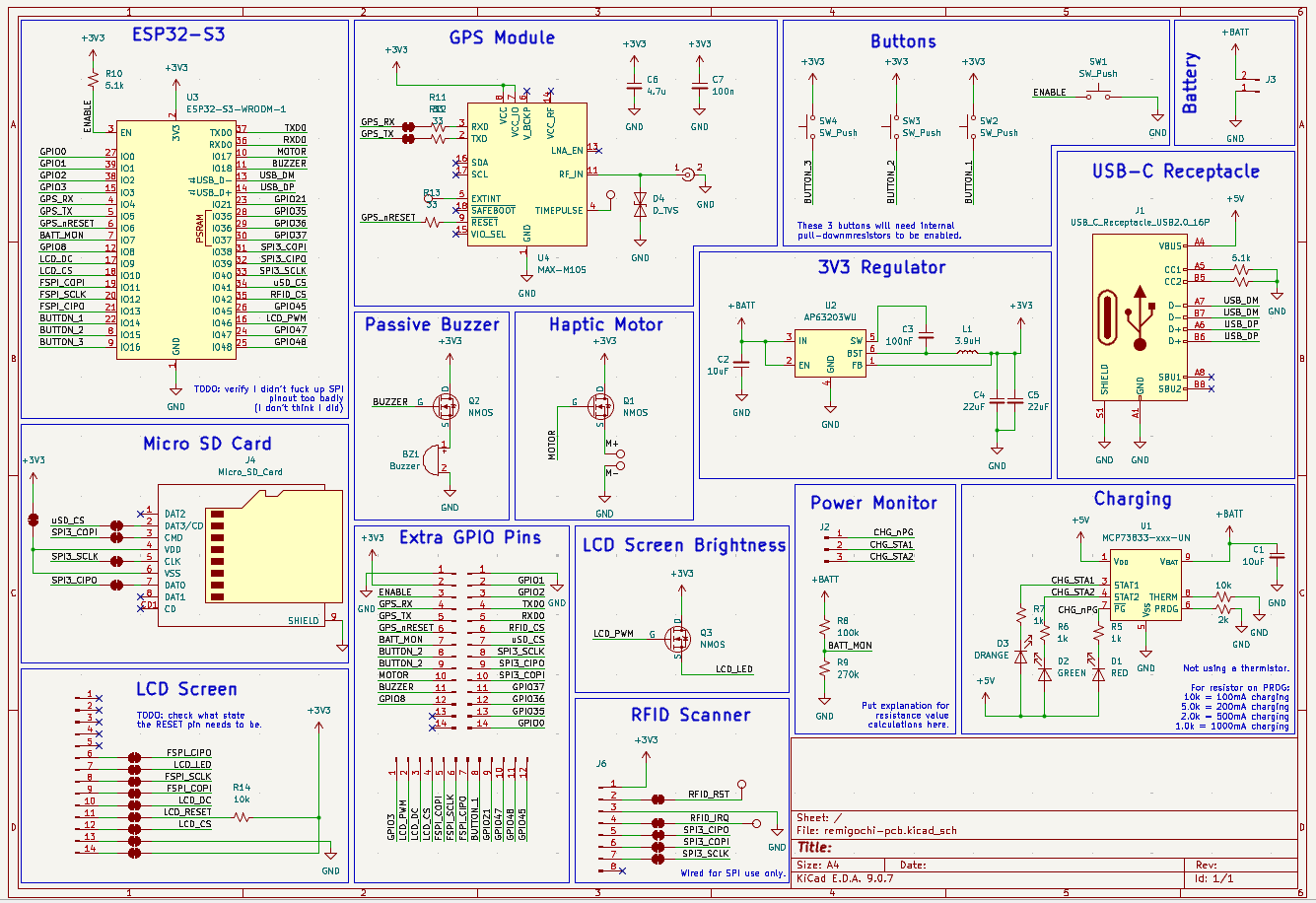
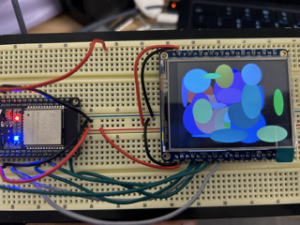
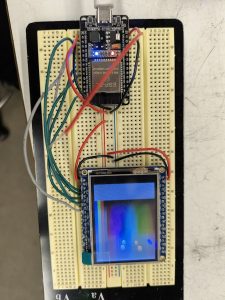
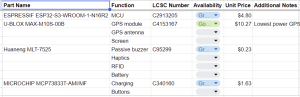
This week, our team spent the majority of its time preparing for the design review presentation this coming week. It was decided that Felipe will be giving this presentation, whose slides will be posted to the design review section once they are completed.
Those slides represent the main physical deliverables as we are still waiting for physical parts to arrive, meaning we have little hardware to show off. This is well within our scheduled expectations, so this is not an indication that we are behind schedule.
While we do not have much physical work, all team members have been able to complete research into their aspects of the project, including many key design decisions like PCB design and software libraries, which puts us on track and in a solid position for the coming week.
As of now, we have made few changes to our design, but I predict that will change once we receive feedback from our design presentation and finalise our design review document.
With respect to public health, safety, and welfare, Remigochi will preserve users’ privacy by not uploading or sharing the schedules they programed in to any online servers. The data will live on users’ devices locally, mostly likely solely on Remigochi’s micro SD card and the applications local files. In addition the user has control of the name and description of the events they put in the schedule, meaning that they can control how much information is included in the schedule. For example, a user could create an event called pain medication one as opposed to naming it ibuprofen if they don’t want it known in the schedule that they are taking ibuprofen. We believe that this should provide sufficient security and privacy for most users as medical devices are generally trusted if they are proven to provide some benefit to the user even at the cost of some PII. However, should feedback from the design review prove that additional methods are necessary, the team will look into encryption libraries that seek to protect the user uploaded schedules.
As for other physical aspects of health, we will make sure the Remigotchi undergoes thorough testing to minimise the risk of it reminding users to take a medication at the wrong time leading to a health accident.
Another thing that This project will need to balance in terms of health and psychological needs is how much motivation in the device is motivated through reward and how much is motivated through punishment of the digital pet. In a nightmare scenario the user missing reminders will cause the pet to be sad which in turns makes the user feel worse and lead them to making even poorer health decisions as they feel bad for failing their “pet”. Possible solutions are twofold. First we can remove negative displays for missing reminders and hope that the positive displays will provide sufficient motivation, and secondly we can try and make sure that the negative displays are cartoony enough that while they trigger a users sense of guilt they don’t not actively worsen their mood. Both methods have their advantages and disadvantages and it may be possible to survey potential users in the CMU community to determine which method would be more motivating without being damaging.
With consideration of societal factors, we will design our Remigochi character(s) to be almost universally cute such that the widest range of users are motivated to take care of this small digital creature. Our device will be designed to consume no more power than necessary to function under mild to moderate daily use, when it comes to environmental and economic factors.
Parts A was in part written by Felipe and Delaynie, B, and C were written by Delaynie.