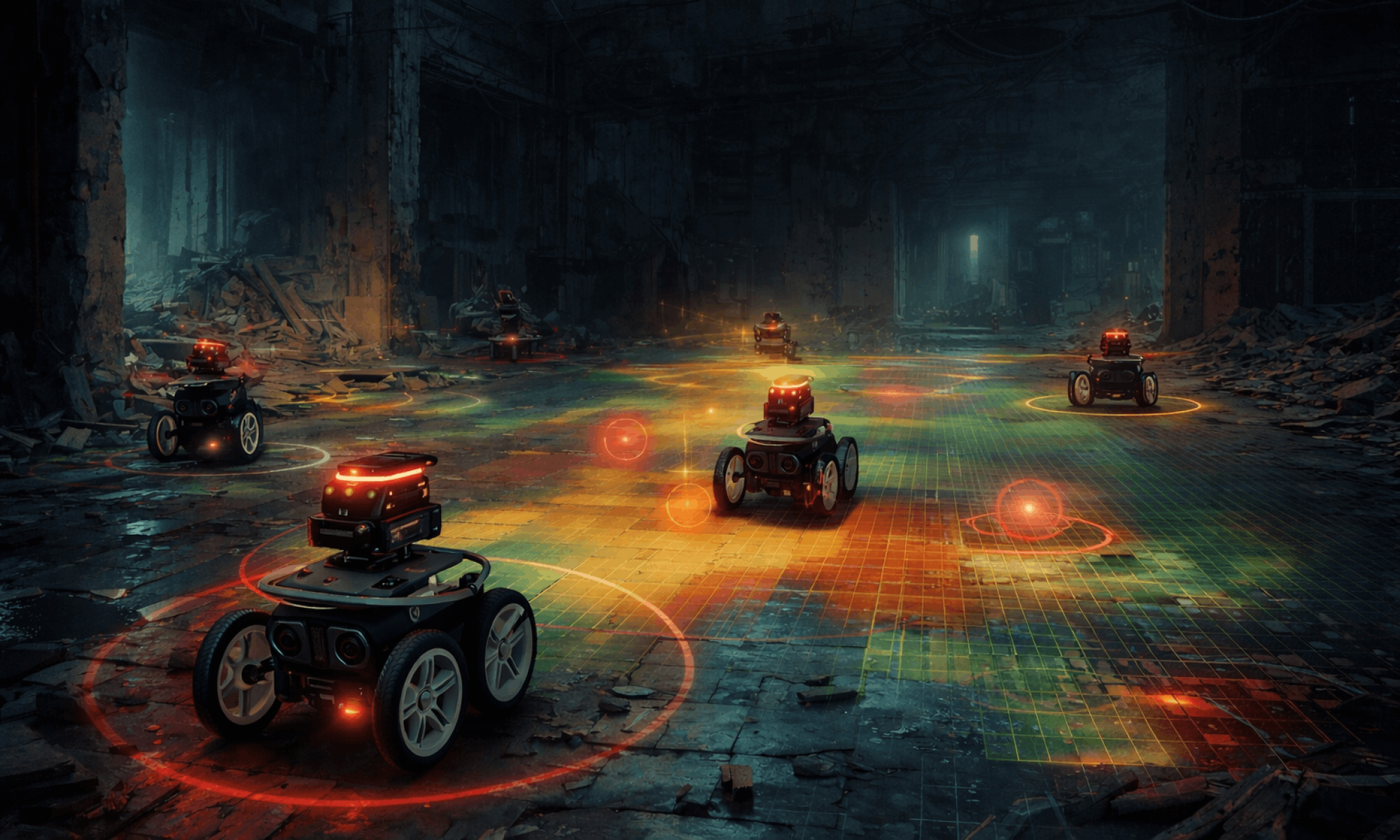
Accomplishments:
This week, after our team narrowed the project scope from general search and rescue to urban search and rescue on a single building floor, we split responsibilities by subsystem. My role was to evaluate the viability of ultra-wideband (UWB) as a localization method to correct accumulated error from dead reckoning and to choose a UWB hardware path that we can realistically prototype within our timeline. I researched how UWB behaves in indoor, floor-level environments (multi-room layouts, reflections/multipath, and possible non-line-of-sight), compared integration options with a focus on practical bring-up and documentation quality, and ultimately decided on the DWM3001 as the module direction. While working, I made some rough illustrations regarding our communications stack and how it will work to explain my thoughts to the rest of my group.

Progress:
Overall, we are slightly behind schedule, primarily due to constructive feedback after our proposal presentation that required a meaningful restructure of the project goal. We shifted from a broad “general search and rescue” framing to a more concrete demonstration of the value of multi-robot search in an urban environment, specifically, a single building floor, so some of this week’s effort went into revising scope and re-planning deliverables. To catch up, we are locking the narrowed scope so we stop burning time on requirements, pushing to complete the BOM and place orders immediately to avoid delays in purchases, and parallelizing integration work using the development hardware we already have so software progress isn’t blocked while we wait for parts. My time this week reflects that split: roughly 4 hours on UWB research, 4 hours in group planning meetings, 2 hours on module comparison and selection, and 2 hours reading general communications/distributed systems/networking papers to inform our coordination assumptions.
Scheduling:
Next week, our team’s goal is to complete our BOM and have all parts ordered so the build phase can begin without further slowing our schedule. As for me, I plan to start hands-on work with the borrowed ESP32-S3 devkit to begin bringing up the core software environment and laying the groundwork for integrating our stack (including micro-ROS on top of FreeRTOS), and I will convert the DWM3001 decision into a practical integration direction—how we’ll interface the module, what data we expect to use, and how those updates will be used to correct dead-reckoning drift during our floor-level demo. I’ll also keep the communications graphic updated as the architecture solidifies so we have a clear, consistent reference for how robot-to-robot and robot-to-base interactions are supposed to work.