A was written by Yoyo, B was written by Charlie and C was written by Claire Lee.
A: As of safety perspective, our hardware designs minimizes physical risks by enclosing all electronics inside the board, so user interaction with the electronic components are limited. Users will only be interacting with their phone and the acrylic chess pieces. As of welfare aspect, our product will provide guidance and feedback to beginners who are frustrated when learning Chinese chess. Users will understand and learn from their mistakes, which will support positive cognitive development and give them motivation and confidence to keep learning.
B. Our project relates to social factors by supporting cultural preservation. Xiangqi is deeply embedded in Chinese and East Asian communities and serves not only as a competitive game but also as a social and cultural practice that connects generations. By building a guided engine that explains moves and strategies rather than simply optimizing for winning, the project supports knowledge transfer across cultural and age groups, making the game more accessible to beginners and diaspora communities who may not have access to in-person mentors. From a broader social perspective, the system also addresses educational equity and access.
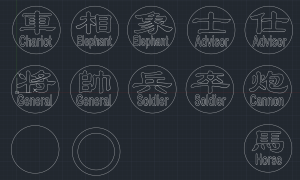
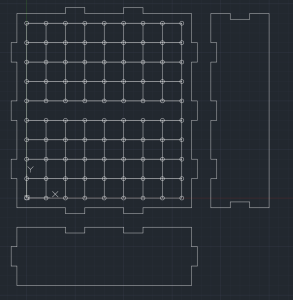
We changed the material and design for our chess pieces this week, from 3D printing to laser cutting frosted acrylic. It will make LEDs under the pieces easier to see by user. It will be easier for rapid prototyping because it takes less time to make new pieces. We haven’t printed anything out yet so making this change won’t cost anything more.
C: Our system aims to be relatively affordable since it is a learning tool for households or children at schools. The goal would be to distribute it as a fully assembled consumer product to classrooms or houses. We are on track to making the production cost feasible for our audience since our project doesn’t require too much hardware. We need the LEDs, a Raspberry Pi 4, power source, camera, and laser-cut board. If our project were to be produced at scale, these components are relatively inexpensive and the most costly piece may be the wiring of the LEDs since that could potentially be a bit complicated. We were able to cut costs and use inexpensive materials because our project doesn’t require any sophisticated data like a very high frame rate from the camera. We also believe our product to be able to keep sustainable demand long term since buy a reusable, flexible, portable board is a more personalized experience than hiring a teacher since the player can set the pace of the game and the pace of their learning. Even if the player may not need assistance from the guided part of the product, they can still use the board and piece of play at leisure and if we wanted to launch any updates, we could allow the firmware to be updated over USB so older models can still have the new features.
The most significant risks that could jeopardize the success of the project is the board state detection accuracy. We are aiming for above 95% accuracy but that is 1 wrong move in 20 total moves and each game is around 40-60, which we believe is a non negligible amount of misreads that could potentially affect the game. We hope to obviously beat this 95% accuracy and we will come up with a robust testing metric to see when it is specifically failing, if it does at all, like not being able to read specific pieces or in specific conditions. Once we pinpoint the issues, we will come up with a solution on how to manage them like maybe building proper lighting into the board itself.
We changed the existing design of the system to specify that the voice command portion of our project was a stretch goal and not part of the MVP. This change was necessary because we realized it was not crucial to the experience of guided learning and we would have to build a UI anyway so we might as well make it accessible to the user. No cost was incurred because we didn’t buy any parts for this subsystem or spend any time building it since we knew that the majority of our project was through the other subsystems, which is what we were focusing on.
For individual status reports, see:
Yoyo’s Status Report for 2/14
https://course.ece.cmu.edu/~ece500/projects/s26-teamd3/2026/02/15/charlies-weekly-report-for-2-14/
Claire’s Status Report for 2/14