Matthew Kwee – Status Report for 10/11

This week, in addition to writing the Design Review document with my team, I started work on the performance history utilities for the web-app, drafting databases and Django templates.

Much of my contribution to the Design Review document involved putting existing, unrefined ideas into clear, concise terminology, particularly deriving the quantitative Design Requirements and Trade-Offs from qualitative ideas such as “user comfort/convenience” and “low-maintainance systems.”

Additionally, I assisted Jeffrey in assembling the wearable prototype, soldering the power shim to the RPi Pico* and covering as many sharp edges with hot glue as possible – the glue is necessary because we will be testing the prototype device in the CUC pool during free swim hours and would like to minimize the risk of water leaking into the plastic bag housing the device.

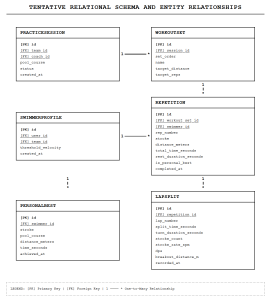
Below is the tentative database relational schema for the site:
 

I am still on schedule. Next week, I plan to complete the web-app’s View History functions and move on to setting up the Raspberry Pi that we will use as the base station, so that we can begin testing ASAP.

*If anything goes wrong with the Pico’s connections, I accept full responsibility and apologize in advance I am confident that my ability to solder connections was adequate for this task – there should be no issues.

Jeffrey’s Status Report for 10/11/2026

Status Report for Oct 4-11

Accomplishments:

One of the major tasks I worked on this week was to reevaluate our team’s decision to use an FPGA, based on feedback from the design review presentation as well as additional research. To get more information, I ran a C testbench on the Linux core of the Ultra96, simulating the workload using mock data. The results showed that the Ultra96 was able to produce a low enough latency to where we don’t need to utilize an FPGA. To further solidify the decision, I also created a testbench and ran it on the Raspberry Pico, which was also able to perform our workload with a low enough latency. The results from the testbench and the prototype device are pictured. 

Additionally, some parts for the wearable prototype arrived, so I was able to work with Matthew to start assembling the wearable prototype. We have successfully connected the Pico with the power shim and the battery, so we are just waiting on some other components like the transceiver to arrive.

Additional work went into writing the design review document, which included doing further research to expand on our requirements and solution approach as well as the writing involved to document our project. Specifically, that included researching some of the last few small parts/connectors involved on our system to have a complete bill of materials. 

My progress is on schedule. Next week I hope to get the prototype wearable completely assembled, and possibly begin writing the firmware for it.