One of the significant risks we identified in our previous progress reports was a delay in ordering the PCB, and this risk has now occurred. When we looked at the price of the PCB, we realized we could not afford to order two boards (in case the first one did not work). This created an additional risk, since it left us with no buffer. We had to weigh the tradeoff between two options, sending the PCB out on schedule and risking a mistake that we could not recover from, or sending it out a bit late after checking it thoroughly. We ultimately chose to send the PCB out one week later than initially planned. Although this may set our integration back slightly, we decided it was the safer choice for the project.
No changes were made to our design. This week we finalized the design spec of digital hall effect sensors, which is represented in our PCB design. This decision will require a working CV element to the system to detect specific types of pieces. However, this is still in line with our current design.
Schedule Update:
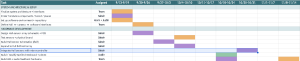
We moved the integration back by two weeks in consideration of the PCB delay.
Photos from Sensor Testing:
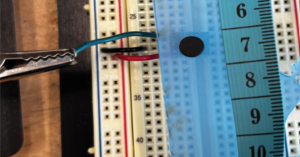
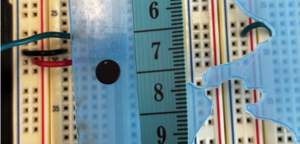
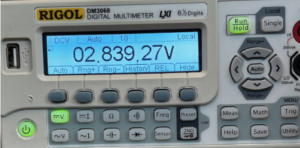
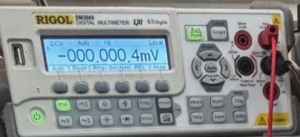
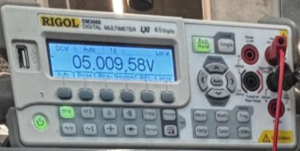
For both Analog and Digital Sensors we ran some distance testing (as cross-talking was our main concern). We ran each sensor with the magnet on top and in a 1/2cm distance.
Directly on top of sensor (7cm = 0cm):
1/2cm away from sensor (7.5cm =0.5cm)
Analog Results respectively:
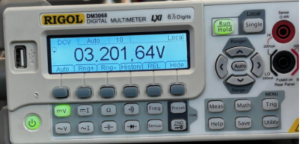
Digital Results respectively:
A was written by Justin, B was written by Kevin and C was written by Sabah.
Part A: The product solution we are designing will meet a specific need with consideration of global factors.
Our project, while offering a much more accessible way to play chess for the visually impaired, is still limited in the global scope. Mainly because the braille and audio feedback features will be in English. This is a tricky barrier to cross in a single system because all major languages use a different writing system for the visually impaired. We suppose translated versions of the project may be created with little difficulty, although we aim to only help the English speaking visually impaired play chess more effectively. However, we do not require our users to be very tech savvy. The user interface on the web will be accessible to everyone on the local network, and on the device, we will have automated scripts that connect to known internet hosts upon startup. There will be equal accessibility to nearly everyone in the US and English speakers with minimal tech experience and access. With consideration to all global factors, language is a clear barrier that our project currently will not seek to expand on. Although with our target audience in developed, English speaking countries, we aim to provide a much more accessible way to play chess.
Part B: The product solution we are designing will meet a specific need with consideration of cultural factors.
Our project is aimed to make chess more accessible to visually impaired individuals while also considering different cultural backgrounds and experiences of our different potential users. Chess is a pretty famous game played all around the world. While the rules are standardized, players may have different levels of familiarity with assistive technology and different preferences to how they would interact with the game. Additionally, players might even have different experiences and expectations for how chess is played. This may include how the chess community values fairness, independence, and equal opportunities. But in our current state of the world, because technology has progressed so much, online chess has become a popular mode of play. However, virtual play can often be limited to visually impaired players since they cannot see the screen or have any physical contact with the game. With the values of fairness, independence, and equal opportunities in mind, we are creating an accommodation for visually impaired players by incorporating tactile features so that they can participate in the same game as sighted players. Since chess is often played in a social environment, reducing these barriers between visually impaired and sighted players can help with play between friends, family, or even competition. By doing so, we are maintaining the social aspect of chess and encouraging inclusion within the chess community.
Part C: The product solution we are designing will meet a specific need with consideration of environmental factors.
In consideration of environmental factors we choose materials and designs to limit waste and conserve natural resources. The board surface is acrylic, which is both durable and scratch resistant, hence the board can last for years and be recycled at the end of its life. We are also considering 3D-priniting our chess pieces, in this case we will use a PLA. PLA is extracted from plant-based renewable resources and can be composted in industrial facilities. Our overall system is built with a modular design which allows users to replace the PCB, camera, speaker, or LEDs (neo pixels) individually instead of discarding the whole product. This design choice saves the raw materials used to manufacture these electronic pieces and additionally keeps the electronic waste to a minimum. Finally, the system uses little energy as the Jetson can run in a low-power mode, and the neo pixels only light up when giving feedback. Lower electricity use means fewer fossil fuels burned to power the board, which helps conserve natural resources.