Team Status Report for 3/8

Team Status Report

Risk Management:

Risk: Cosine Similarity Algorithm not yielding satisfactory results on complex dances

Mitigation Strategy/Contingency plan: We will continue working on the algorithm to see if there are improvements to be made given how the CV algorithm processes landmark data. If the Cosine Similarity Method will not work properly, we will fall back to a simpler method using Euclidean distance and use that to generate immediate feedback.

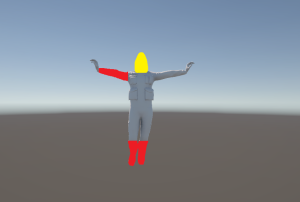
Risk: Color based feedback not meeting user expectations

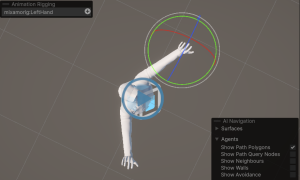
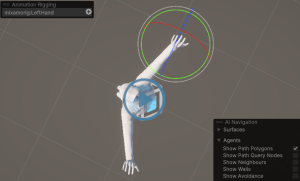
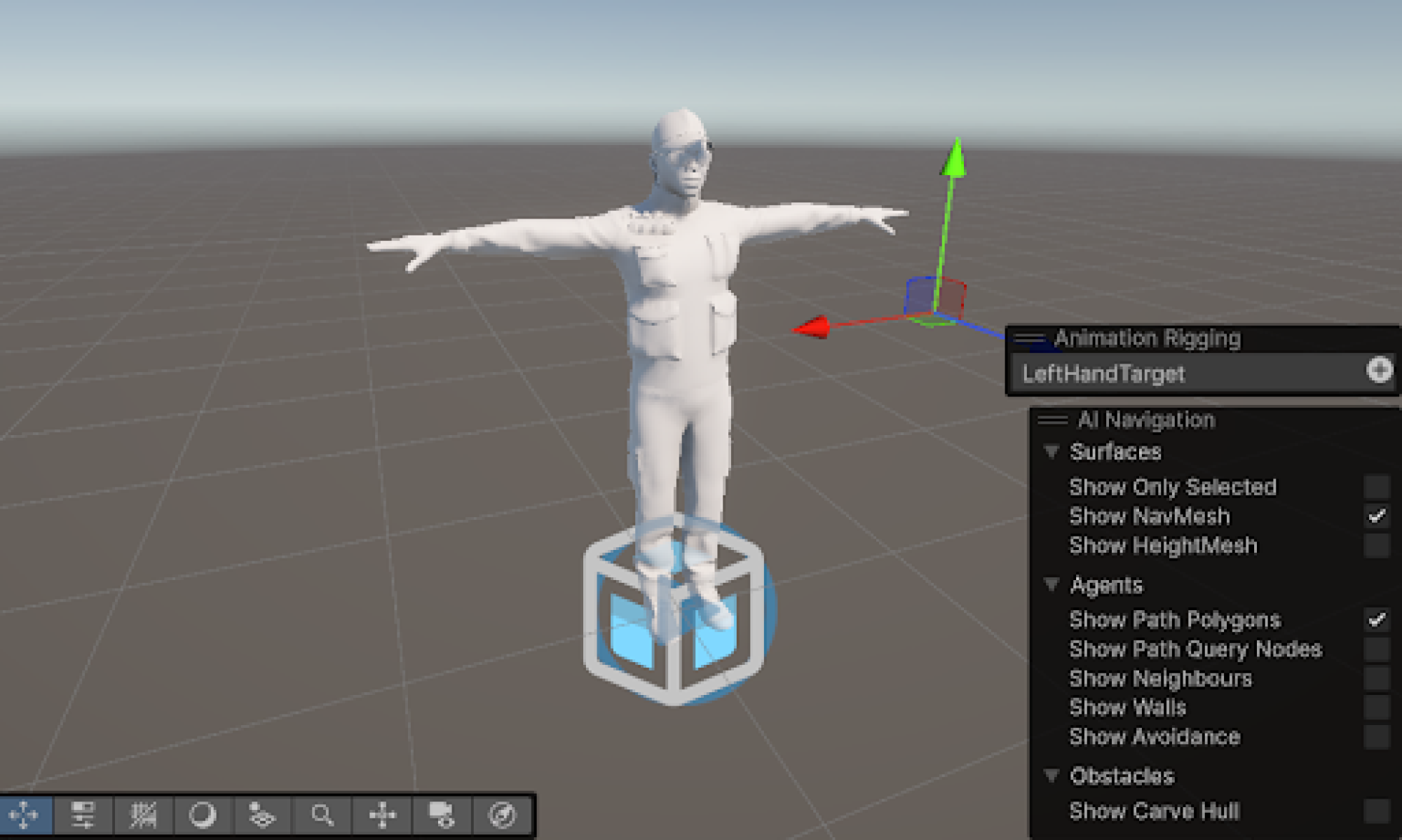
Mitigation Strategy/Contingency plan: We plan to break down our Unity mesh into multiple parts to improve the visual appeal of the feedback coloring, so that users can more immediately understand what they need to do to correct a mistake. We also plan to incorporate a comprehensive user guide to help with the same purpose.

Design Changes:

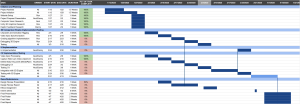
There were no design changes this week. We have continued to execute our schedule.

Part A:


DanCe-V addresses the global need for accessible and affordable dance education, particularly for individuals who lack access to professional dance instructors due to financial, geographic, or logistical constraints. Traditional dance lessons can be expensive and may not be available in rural regions. DanCe-V makes dance training more accessible, as anyone with an internet connection and a basic laptop is able to use our application. Additionally, the system supports self-paced learning, catering to individuals with varying schedules and learning speeds. This is particularly useful in today’s fast-paced world where flexibility in skill learning is becoming more and more important.


Furthermore, as the global fitness and wellness industry grows, DanCe-V aligns with the trend of digital fitness solutions that promote physical activity from home. The system also has potential applications in rehabilitation and movement therapy, offering value beyond just dance instruction. By supporting a variety of dance styles, DanCe-V can reach users across different cultures and backgrounds, reinforcing dance as a universal form of expression and exercise.


Part B:

One cultural factor to consider is that dance is deeply intertwined with cultural identity and tradition. DanCe-V recognizes the diversity of dance forms worldwide and aims to support various styles, with possibilities of learning classical Indian dance forms, Western ballroom, modern TikTok dances ballroom, traditional folk dances, and more. By allowing users to upload their own reference videos and not just including a constrained set of sample videos, the system ensures that people from different cultural backgrounds can engage with dance forms that are personally meaningful to them. Additionally, DanCe-V respects cultural attitudes toward dance and physical movement. Some cultures may have gender-specific dance norms or modesty considerations, and the system’s at-home training approach allows users to practice comfortably in a private setting.

Part C:

DanCe-V is an eco-friendly alternative to traditional dance education, reducing the need for transportation to dance studios and minimizing associated carbon emissions. By enabling users to practice from home, it decreases reliance on physical infrastructure such as studios, mirrors, and printed materials, contributing to a more sustainable learning model. Additionally, the system operates using a standard laptop webcam, eliminating the need for expensive motion capture hardware, which could involve materials with high environmental costs.

Furthermore, dance is a style of exercise that does not require extra materials, such as weights, treadmills, or sports equipment. By making dance accessible to a larger audience, DanCe-V can help reduce the production of these materials, which often have large, negative impacts on the environment.

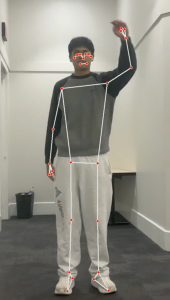
Procrustes Analysis Normalization demo:

Before Normalization
After Normalization
Reference
Test Footage
Reference Footage

Cosine Similarity comparison results:
Akul’s Status Report for 3/8

Over the past week, I focused on two main components: the design report and our single frame comparison. For the design report, I spent time developing the quantitative design requirements, the design trades, and the system implementation. With that, I conducted research into requirements for our design, finding specific reasons as to why we want to make any design decisions. For example, to mitigate latency within our system, we decided to choose only a certain subset of points in the MediaPipe output to decrease latency while maintaining accuracy in our points. I decided to go with just 17 points, as many of the points crowd at the user’s head and toes which isn’t necessary for our specific use case. Additionally, we had an idea of how we would implement our system, but I spent time creating block diagrams to put all of our thoughts together for each aspect of the system. Consequently, throughout the rest of the semester, we will have these diagrams to refer to and continue to adapt if we make any changes, so both us and viewers can better understand our system. For the design trade study, I focused on making sure that all of our decisions were fully intentional in terms of the algorithms/libraries/protocols that we were using. I explored tradeoffs between these aspects and provided concrete reasoning as to why we chose one or the other. 

This week, we also made the goal to get a working MVP of the single frame comparison, where we can take a user input and a reference video to see whether or not their dances are similar, when doing a frame-to-frame comparison. We split up the work into normalizing the points, doing the actual comparison given normalized points, and providing the Unity output. My task was to compute whether or not a frame was similar or not based on two provided jsons that represent the user input and the reference input for that frame. 

The overall algorithm that I used was pretty simple. I first created a helper function to find the euclidean distance between two points in space, which will be given in the json inputs. Then, I loop through each of the points in the jsons, computing the distance between each of them. If the distance is less than a certain threshold (.05 for now), then the similarity for that point is true. I do this for each joint that we are computing, then if 80% of the joints are “similar” enough, then the overall output for that frame is true. These metrics I decided on are very arbitrary, and I think that we will first need to integrate the code fully and test these metrics to get a better idea of what we need for our final project.

Our progress is currently on schedule. By the end of spring break, we will have a MVP of our real-time feedback system, and once that is complete we will begin to work on our multi-frame analysis and overall integrating our system together. 

Akul’s Status Report for 2/22

Over the past week, I focused on developing the dance comparison engine. For looking into the DTW algorithm, Danny and I looked into how people have already used DTW to compare human movements, including different variations of the algorithm. For example, some research papers have proposed using extensions of DTW such as generalized time warping, forward plotting DTW, or canonical time warping. Danny found a couple more variations, but one problem we found was not exactly about the algorithm itself but instead the complexity of the algorithms to be run in python code over an entire video. With that, we plan to test multiple of these variations in Python, allowing us to see which ones may be best for our comparison engine while still maintaining efficiency and minimizing latency. 

Another problem I wanted to look at with the comparison engine was how we plan to normalize the points between the reference video and the user inputs. Although we are getting the MediaPipe points in a similar manner for both the reference video and the user inputs, the coordinates of the points will be different, so our challenge lies in normalizing these for accurate comparisons. One thing that we plan to do is use the angles between the joints as part of our comparison, so I developed a python algorithm that can properly measure the angles between two joints based on the dot product and geometry of certain points. I attached some pictures of how it works using my right elbow, but this can be applied to any joint on the body that we would want to measure the angle of. 

Our progress is on schedule. In the next week, I hope to do a few things. First, continue working on the comparison engine and try to get a MVP of the engine so we can iterate and improve on it. Second, I am going to talk to people who know more about dance or who are dancers themselves and get a better understanding of what we could add to the project to make it as useful as possible for the users. 

Danny’s Status Report for 2/22

This past week I was responsible for presenting our project during the Design Review. As a result, I spent most of the time during the first half of the week refining the presentation as well as practicing my delivery. After that, since we are ahead of schedule in terms of the CV system implementation, I focused on doing research into the specific algorithms and optimization methods we can use to construct our 3D comparison engine. Since we want to provide feedback in a timely manner, whether that’s after the entire dance or real-time, computation speed is a big problem for us since our chosen algorithm (DTW) is extremely computationally intensive. Therefore, I spent time looking specifically into optimization methods that include papers written on PrunedDTW, FastDTW, SparseDTW, etc.


Illustration of DTW:

Implementation of standard DTW:

Example of SparseDTW:

Al-Naymat, G., Chawla, S., Taheri, J. (2012). SparseDTW: A Novel Approach to Speed up Dynamic Time Warping.

Olsen, NL; Markussen, B; Raket, LL (2018), “Simultaneous inference for misaligned multivariate functional data”, Journal of the Royal Statistical Society, Series C, 67 (5): 1147–76, arXiv:1606.03295, doi:10.1111/rssc.12276, S2CID 88515233

Team Status Report for 2/22

Team Status Report

Risk Management:

Risk: While our proposed solution may achieve accurate comparison on a technical level, our feedback system design carries the risk of not being exactly what our targeted users what/need.

Mitigation Strategy/Contingency plan: We plan to reach out to a variety of potential users of this system, including serious dancers, tiktok influencers who record dances regularly, and regular people who may record a casual dance or two once in a while. We will then use the feedback gathered from these potential users to better inform the specific design of how we generate our feedback.

Design Changes:

There were no design changes this week. We have continued to execute our schedule.

Danny’s Status Report for 2/15

This past week, as outlined on the schedule, I primarily focused on processing reference video inputs with OpenCV. I spent time exploring both MediaPipe and Open Pose as different ways to process and label the reference input video. After spending a substantial amount of time experimenting with both, we as a team decided that MediaPipe was a better fit for our needs. I then proceeded to test the MediaPipe pipeline with video inputs, initially with just a simple recording of myself. This initial test yielded unsatisfactory results, prompting me to continue to fine tune the MediaPipe library and OpenCV capturing.

The MediaPipe library comes with several base models. It also has a variety of options that includes:

  • min_pose_detection_confidence (0.0-1.0):
    • Controls how confident the model needs to be to report a pose detection
    • Higher values reduce false positives but might miss some poses
    • Lower values catch more poses but may include false detections
  • min_pose_presence_confidence (0.0-1.0):
    • Threshold for considering a pose to be present
    • Affects how readily the model reports pose presence
  • min_tracking_confidence (0.0-1.0):
    • For video mode, controls how confident the tracker needs to be to maintain tracking
    • Lower values make tracking more stable but might track incorrect poses
    • Higher values are more precise but might lose tracking more easily
  • num_poses:
    • Maximum number of poses to detect in each frame
    • Increasing this will detect more poses but use more processing power
    • Default is 1
  • Output_segmentation_masks:
    • Boolean to enable/disable segmentation mask output
    • Disabling can improve performance if you don’t need masks

After experimentation, I found that the parameters that affected our detection the most was the min_pose_detection_confidence as well as the min_pose_presence_confidence parameters. After fine tuning these parameters, I was able to achieve much better tracking on not just my own simple testing video, but also a relatively complex YouTube dancing short. As we continue to work on this algorithm and integrating the systems together, I will also continue to experiment with the options to try to optimize the performance while keeping tracking confidence as high as possible.


Testing with recorded footage from webcam:

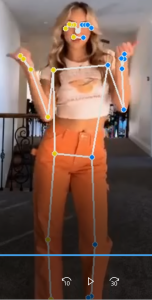
Testing with YouTube shorts dancing video ():

Akul’s Status Report for 2/15

This week I was able to set up the joint tracking from a computer camera. I utilized the Python libraries OpenCV and Mediapipe in order to complete this task. With that, I had to learn key features of the libraries, going through the documentation for each and understanding the syntax. After I had a better understanding of how to use the libraries, I went and coded up an algorithm that will naively display your computer’s web camera and capture the different landmarks and points on the player’s body. Once I had this ready, I wanted to test out the feasibility of our application to be played by a regular user, so I went to multiple different locations and ran the script. With that, I found that it is definitely feasible for the player to play from the comfort of their own camera, but the user needs to stand pretty far from the computer (i.e. the user needs a decent amount of space to actually play the game). This isn’t really a problem but is just something we need to consider. 

After that, I worked with Rex to see how I should send the coordinates of the user to the Unity system to showcase the user’s joints within our game UI. I first had to figure out how to print out the coordinates of the 32 points that Mediapipe provides for us. After I did that, I organized that data into a JSON that Rex is able to actually interpret in his Unity game. We have already tested our capability to send data from a Python script to a Unity server, so now we have the capability to translate a real-life human’s moves to a character in the game.

In terms of our progress, I feel that we are on a good track. We now have a better understanding of what the capabilities are of our project and how we can go about completing it. We ran into some slight high-level setbacks when it came to switching our project from a game to an application for learning, but I believe we are moving in the right direction. 

Next week, I hope to explore further into the algorithm we will use to detect differences between a user’s dance moves and a reference video. At this point, Danny, Rex, and I have worked on different aspects individually, so next week we will focus on incorporating everything we have together and taking the next steps to actually help people learn dance moves from a reference video. 

Team Status Report for 2/15

Team Status Report

Risk Management:

Risk: Losing movement details in the transition from MediaPipe to the Unity inputs. This is something we are noticing after running some initial experiments this week in trying to push simple movements through MediaPipe into Unity.

Mitigation Strategy/Contingency plan: Unity has different kinds of joint options (either choice of Two-Bone Inverse Kinematic Constraint/Multi-Aim Constraint/Damped Transform/Rotation Constraint), so testing between these 4 types of joint options and finding what looks the most natural, and is most coherent with our MediaPipe data.

Design Changes:

  1. Specific Design Updates:
  • Change: Selecting MediaPipe as our library of choice as opposed to Open Pose
    • Why: More detailed documentation, ease of use, better match with the amount of details we require
  • Change: 3D Comparative Analysis Engine to be done in Unity
    • Why: Unity’s detailed avatar rigging allows us to display the dance moves with accuracy and compare the webcam footage with the reference video with sufficient detail


  1. Cost Impact and Mitigation:

– No direct costs incurred these changes were a part of the planned exploratory stage in our schedule

Updated Schedule:

Part A was written by Danny   Cui, Part B was written by Rex Kim, Part C was written by Akul Singh
It is possible, though probably unusual that the answer to a particular question would be “does not apply.” In such a case, please describe what you have considered to ensure that it does not apply.

Please write a paragraph or two describing how the product solution you are designing will meet a specified need…


Part A: … with respect to considerations of public health, safety or welfare. Note: The term ‘health’ refers to a state of well-being of people in both a physiological and psychological sense. ‘Safety’ is the absence of hazards and/or physical harm to persons. The term ‘welfare’ relates to the provision of the basic needs of people.

  • From a physical health perspective, the system promotes regular exercise through dance, which improves cardiovascular fitness, flexibility, coordination, and muscle strength. The feedback mechanism ensures users maintain proper form and technique, reducing the risk of dance related injuries that could occur from incorrect movements or posture. This is particularly valuable for individuals who may not have access to in person dance instruction or cannot afford regular dance classes.
  • From a psychological health and welfare standpoint, the system creates a safe, private environment for users to learn and practice dance without the anxiety or self-consciousness that might arise in group settings. Dance has been shown to reduce stress, improve mood, and boost self-esteem, benefits that become more accessible through this technology. The immediate feedback loop also provides a sense of accomplishment and progression, fostering motivation and sustained engagement in physical activity. Additionally, the system addresses safety concerns by allowing users to learn complex dance moves at their own pace in a controlled environment, with guidance that helps prevent overexertion or dangerous movements. This is especially important for beginners or those with physical limitations who need to build up their capabilities gradually.


Part B: … with consideration of social factors. Social factors relate to extended social groups having distinctive cultural, social, political, and/or economic organizations. They have importance to how people relate to each other and organize around social interests.


  • Our computer vision-based dance-coaching game makes dance training more accessible and engaging. Traditional dance lessons can be hard to find, especially in remote areas and especially if one does not want to consistently pay for the classes. Our game removes these barriers by letting users practice at home with just a camera and computer setup. Using Mediapipe and Unity, it analyzes an input video and compares the user’s movements to an ideal reference. Real-time feedback helps users improve without needing an in-person instructor. This makes dance education more available to people who may not have the resources or opportunities to attend formal classes.
  • Beyond accessibility, our game also fosters cultural exchange and social engagement. Dance is deeply tied to cultural identity, and by incorporating a variety of dance styles from different traditions, the game can serve as an educational tool that promotes appreciation for diverse artistic expressions. Users can learn and practice traditional and contemporary dance forms, helping preserve cultural heritage while making it more interactive and engaging for younger generations. Additionally, the game can create virtual dance communities, encouraging users to share their performances, participate in challenges, and interact with others who share their interests.


Part C: … with consideration of economic factors. Economic factors are those relating to the system of production, distribution, and consumption of goods and services.

  • Since our application relies only on a webcam and computer processing, its economic impact is primarily related to accessibility, affordability, and potential market reach. Unlike traditional dance classes, which require ongoing payments for instructors/studio rentals, our application offers a cost-effective alternative by enabling users to practice and improve their dance skills from home. This affordability makes dance education more accessible to individuals who may not have the financial means to attend in-person lessons, thus reducing economic barriers to learning a new skill.
  • Additionally, our application aligns with current technological trends in society, where software-based fitness and entertainment solutions generate revenue through app sales, subscriptions, or advertisements. The fact that danCe-V only requires a computer webcam also reduces the financial burden on users, as they do not need specialized equipment beyond a standard webcam and computer. This makes it an economically sustainable option for both consumers and potential business models, allowing the platform to reach a broad audience while keeping costs low.


Images:

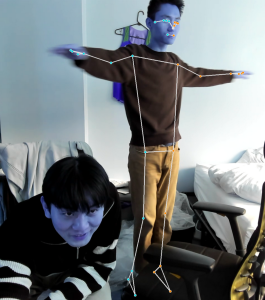
Testing from video input: 

Testing from direct webcam footage:

Team Status Report for 2/8

Team Status Report for 2/8

Risk Management:

Our project faces several significant risks that we are actively managing:

  1. Historical Risk – Project Scope Alignment:

After submitting our abstract and speaking with our faculty advisor, we identified that our initial project scope (fall protection/detection for elderly) was potentially misaligned with course requirements. We mitigated this by immediately scheduling emergency meetings with our faculty advisor (Professor Hyong Kim) and Professor Tamal to ensure alignment with course expectations. This led to successfully pivoting to a computer vision-based dance coach, which better matches course requirements.

  1. Current Technical Risks:

The primary current risks are:

– Computer Vision Accuracy: Our system’s effectiveness depends on precise pose detection and movement analysis. To manage this risk, we are planning to develop a fallback algorithm that focuses on key body points if full pose detection proves unreliable. In addition, we plan to start testing with several pre-selected videos to test the robustness of the algorithm before moving on to a wider range of content. 

– Real-time Processing Performance: The system needs to process video streams with minimal latency. Our risk management approach for this issue includes:

– Establishing performance benchmarks early in development

– Implementing hardware acceleration where possible

– Having a contingency plan to reduce analysis complexity if performance targets aren’t met

Design Changes:

  1. System Concept Changes:

– From: Gaming-focused dance system with haptic feedback

– To: Educational dance coach with reference video comparison

– Why: Better alignment with course expectations, personal goals, and technical feasibility

  1. Specific Design Updates:

– Requirements Changes:

  – Removed: Game engine development, haptic feedback hardware

– Added: Reference video processing pipeline, comparative analysis algorithms

– Why: As our product is now branded as a coaching software and not a purely entertainment based game, we removed the haptic feedback system which was designed to add immersion for gamers. We also no longer needed to develop a sophisticated game engine since it is not expected for a dance coaching software to have a complex 3D interface. Additionally, we now need to be able to process the reference video separately from the user video and compare the two inputs, which are both new modules that were not previously included in our plan. 

  1. Cost Impact and Mitigation:

– No direct costs incurred as hardware components weren’t yet purchased

– Development time reallocation:

  – Planned game development time redirected to CV algorithm refinement

– Haptic system development time allocated to comparative analysis algorithm development

Updated Schedule: