This week, I focused on formalizing the user interface requirements and metadata needed to support our refined use case as discussed in the team status report. I established four main questions that the UI must address for the operator in real-time:
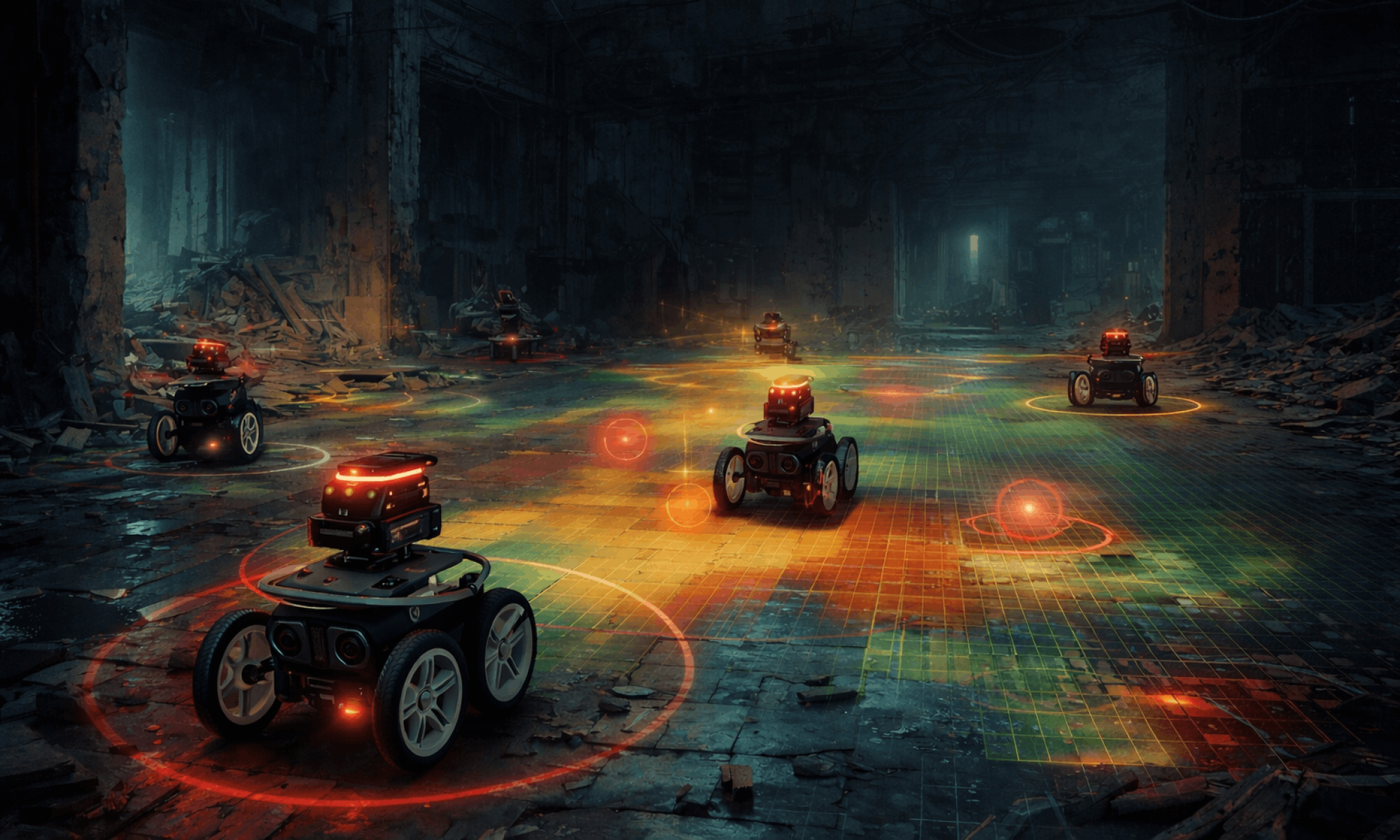
1. Where exactly have we searched? Instead of using a complex SLAM map, the UI should render past positional data as “spheres,” which would create a lightweight visual history of where the bots have been. We use a 2D density heatmap that will overlay these trails to indicate search thoroughness in order to highlight gaps in coverage.
2. Where do we suspect the target is? The UI should only focus on the global view of the map with all the bots, which includes the operator’s position as the origin. This would provide immediate context for the operator to understand where the bots are relative to themselves.
3. Are the bots healthy and coordinated? The operator should hover over each bot and see its battery level, comms status, and cluster formation.
4. What should be done next? The target alert payload should likely include that map location (x, y), confidence score (0-1), and sensor rationale (e.g. RF/UWB reflection) to give the operator some actional intelligence rather than pure raw data.
I also thought highly of the data constraints and refresh rate the UI needs to satisfy to ensure smooth performance for the operator. The target UI refresh rate should be 1-5 Hz, which should be sufficient for our “dead reckoning” approach and reduce the computational overhead compared to the 30 FPS required for full visual SLAM, aligning with our low-cost and low-power constraints.
I have successfully translated our updated use case into specific UI requirements and potential data schemas. The design specifications are fairly detailed enough to begin designing the frontend mockups. For next week, I should be able to create a visual mockup of the dashboard layout/wireframe and start thinking further about the data schema that should be present to the operator for communication between the bots and the base station laptop.