
The main risks at this stage are mechanical stability and system integration. As more components are added, the arm must support increased weight and handle external forces like wind. We are managing this by testing the structure under load and evaluating reinforcement options. If needed, we will strengthen the arm or adjust the design, even if it slightly increases weight. Integration is another risk, so we are beginning full system testing early to catch issues.
The project is on schedule with a revised version; the physical design and assembly were the main things keeping a lot of things behind, but with almost all of the major subsystems now functional, we’re more effective in parallelizing testing and validation. We are moving into integration.
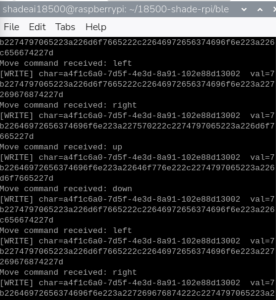
We have several working components, including BLE-based motor control, a functioning user detection system on the Raspberry Pi, and a semi-completed physical assembly.
For validation, we are running end-to-end tests from user detection to motor movement and will measure tracking accuracy, response time, and system reliability against our design requirements.

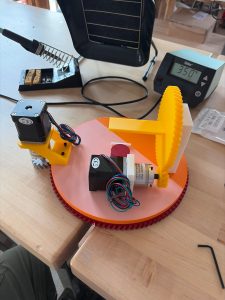 as soon as possible for hardware testing and also for demonstration for the interim demo. Manufacturing the test bench required a lot of 3D printing as well as waiting for some screw hardware to come in along with heat set inserts. Luckily all the parts fit together on the first try so no extra printing was needed. By the time of this post there still needs to be some work in terms of hardware testing/integration including with the stepper motors and the 9-DoF sensor but I plan to finish that with my group by tomorrow.


