
Nicholas’s Status Report for 4/25/26

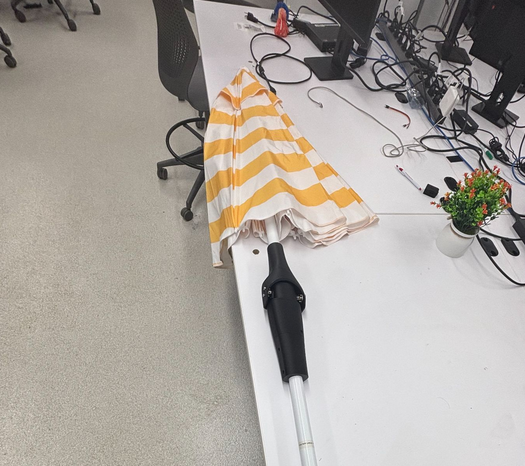
Finalizing parts of the physical housing took a lot of additional time. There was some issues with the sizing of bevel gears in the design which required some reordering of parts. Some parts of drilling holes in the umbrella as well took some additional planning and such but I managed to complete it. I was worried about the prospect of drilling centered holes into a curved surface but using the prints as guides made the process go pretty smoothly. Since then I have worked on helping integrate the motors into the final assembly and as we approach the final deadlines all that is left to do is more validation/verification testing of the motors integrated into the assembly.
In terms of unit testing, the most complete testing that I have been able to accomplish for my portion has been in terms of the IMUs which determine the umbrellas and as such the RPI’s orientation awareness, which is crucial for the control loop. At first most of the testing was just verification that the software was working, especially given that we moved to different ICs given the board failure that we had to contend with. This also required additional testing when I introduced interrupts into the orientation tracking so eliminate polling in the process. This was all to reduce the CPUs load dramatically during the execution of the position scripts. In order to test the accuracy of the orientation sensing at first I was testing things just by eye during the process of getting it working, but once that was verified I moved into using my phones compass for reference. The roll and pitch measurements were immediately already accurate (~1%) but the Yaw measurement took some more time. This mostly had to do with getting more accurate values for the magnetometer which over time continually comparing the calculated true north with the phone I was able to get ~5% accuracy there which was around what we were hoping for and good enough for the application within our project.
Nicholas’s Status Report for 4/18/26

This week as well as part of the last was the final push for completing CAD designs as well as IMU debugging/integration. Starting with the IMU I had some pretty bad circumstances to overcome. When coming in to tune the current 9-DoF LSM9DS1, I found that the RPi was not able to talk to it over I2C like it was previously. I tried to debug the hardware for hours over 2 days but nothing was working and I came to the conclusion that the board must have failed somehow maybe due to a short but I never came to a definitive answer. Given the short deadlines an also that that particular breakout board was out of stock from Adafruit I had to quickly pivot. Luckily enough I remembered I had some leftover boards from a previous course/project which combined had all the sensors I needed to compute absolute orientation. So I reworked all the code to work with the new boards as well converting the system to use interrupts to remove polling from the code. After some additional testing I was able to get the tolerance to ~1 deg.

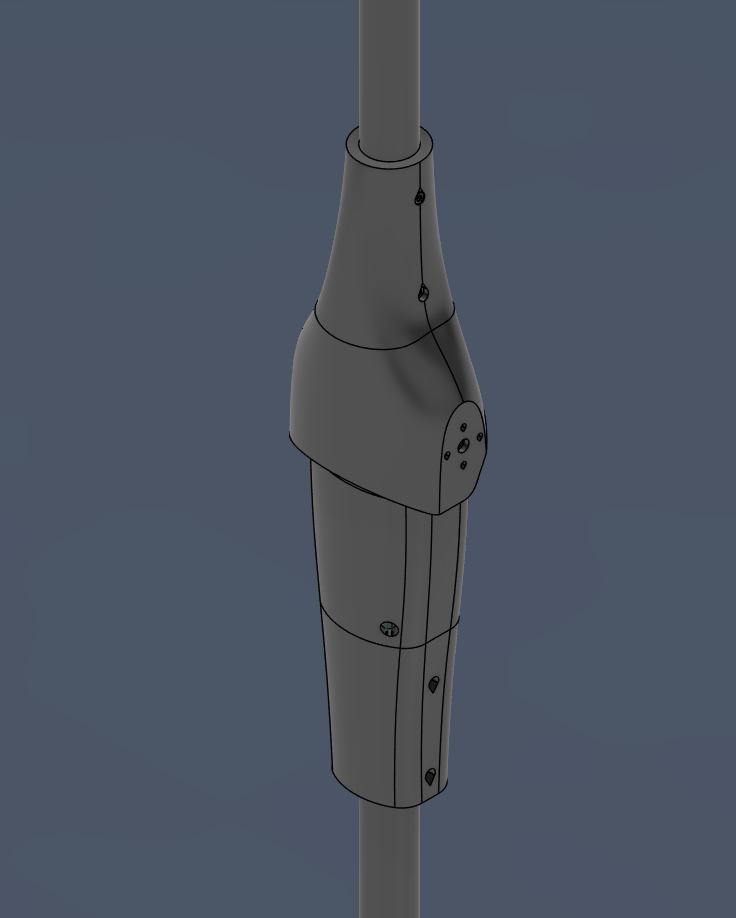
In the past week the CAD was fully finished in terms of the umbrella assembly and the parts were 3D printed. The design as mentioned later ended up being much more complicated than initially anticipated and required ordering additional hardware to make work. With the design I also tried to optimize it for 3D printing meaning minimizing overhangs.
Due to my delays in finishing the design I have been slightly behind where I would have liked to be in terms of building the umbrella assembly out with enough time for testing.

Next week will be left for any additional testing/validation that needs to occur before the Final Demo. Due to falling behind schedule in areas, particularly when it came to the assembly mechanical design. Particularly, I just haven’t had much time to consider the ingress protection of the parts. Due to either failures or other things I will likely design 3D print new revisions hopefully with parts that we can fully test for the standards we would like to hit for our use-case requirements.

As you’ve designed, implemented and debugged your project, what new tools or new knowledge did you find it necessary to learn to be able to accomplish these tasks? What learning strategies did you use to acquire this new knowledge?

We recognize that there are quite a few different methods (i.e. learning strategies) for gaining new knowledge — one doesn’t always need to take a class, or read a textbook to learn something new. Informal methods, such as watching an online video or reading a forum post are quite appropriate learning strategies for the acquisition of new knowledge.

Definitely the hardest learning curve was working with Fusion360. I chose the software over Solidworks (which I have worked briefly with previously) because I perceived it as being easier to use and simpler. I have also had limited experience using it, but the design requirements of the project required me to quickly gain experience with it. The biggest help in the process was looking at free released other 3D models with similar design goals to gain inspiration, as well as lots of youtube videos. I definitely learned a lot, and there is still a lot I would like to improve, although the timeline of the project did not afford much wiggle room.

Nicholas’s Status Report 4/4/26

This past week I completed work on the sensory and motor foundations for the project. I programmed a full inertial orientation tracking system based on the RPI’s connection to the LSM9DS1 IMU and helped in setting up basic motor functionality the rest of which was completed by my project partners.

Working with the LSM9DS1 9-DOF IMU required communicating with the device via I2C using python libraries. Once all the raw data could be processed I implemented a Mahony AHRS filter which combined the data from the three sensors on the breakout I was using. Combing those three readings can give accurate readings for the absolute orientation of the sensor relative to the earth. This will enable the umbrella to understand where it is relative to the sun and the user which is tracked through the camera. I now need to finish up with the assembly manufacturing that will go on the actual umbrella as we move into the final phases of the project.

The verification that will come later is testing the stability and truthfulness of the LSM9DS1 IMU. Its orientation should not only be accurate but be resilient to motor noise and tuned to the local magnetic interference. The bias values which control its ground truth also nee to be tuned and verified.

In terms of the motors as we complete the final assembly the main verification that will be required is testing of the PID of the motor system. If we were to give the motors a specific orientation to turn to which marking to denote where it should be we can measure the error of how far it is away from its desired orientation and as well how long it takes.

Nicholas’s Status Report 3/28/2026

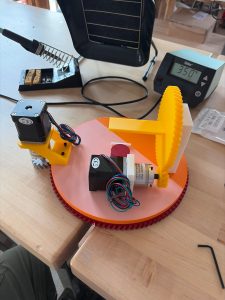
This week I made a lot of progress in terms of manufacturing and hardware testing. As mentioned last week this week I really needed to get the test bench fully 3d printed and assembled so that it was ready as soon as possible for hardware testing and also for demonstration for the interim demo. Manufacturing the test bench required a lot of 3D printing as well as waiting for some screw hardware to come in along with heat set inserts. Luckily all the parts fit together on the first try so no extra printing was needed. By the time of this post there still needs to be some work in terms of hardware testing/integration including with the stepper motors and the 9-DoF sensor but I plan to finish that with my group by tomorrow.

So far we remain on schedule with our goals and the last major steps that I have will be doing the control systems for the motor, tuning the 9-Dof sensor, and completing the integration with the actual umbrella. Next week I plan to finish any CAD design related to the physical design and have all necessary parts ordered by the start of the week. While I wait for those parts to come in I will continue to work on my aspects of hardware integration/testing.

Nicholas’s Status Report for 3/21/26

This week was mainly focused on 3D printing a basic test 3D print to allow so preliminary testing of some of the components including the stepper motors, to motor drivers, their interaction with the Raspberry Pi, and the IMU. I was not able to fully complete the printing and assembly of the test rig but I was able in the meantime to work on some of those peripheral devices and their interaction with the RPi.

I would have liked to complete the 3D printing and assembly, so given that I am slightly behind on that I am going to move forward with attempting a first iteration that will go onto the actual umbrella. Some of the CAD design and specific part selection for the parts that will interact with the 3D printed components (screw hardware, bearings, shaft collars, etc) has also taken longer than I would have liked so I need to really move forward with this next phase. This coming week the plan is to have a first iteration of the pan and tilt gimbal system on the umbrella complete.

Nicholas’s Status Report 3/14/26

This past week I mad a lot of progress on the physical design of the actuation assembly. I have moved forward with a gimbal design with 2 rings one concentrically rotating the other to provide the two axes of rotation that we need to accomplish our designs goals. Crucial to this design was figuring out the different shaft connectors we needed in order to deal with the rotating and non-rotating parts of the assembly. I also realized that given that in the final design the battery will be positioned on the non-rotating part of the pole, while its wires will be connected to the rotating servos, we will need a specialized slip ring wire part in order to ensure that the wires do not get continually twisted.

Next week will be all about 3D printing an iteration of the assembly which doesn’t use the umbrella at first so that we can test the hardware and software. I will be using the TechSpark 3D printers to accomplish this and will also use this as an opportunity to test the strength of a PLA based print and see if we might require a higher strength material for the final assembly.

Nicholas’s Status Report 3/7/26

Most of our work recently was finalizing decisions for the design document which took a big push due to the fact that we were slightly behind on research because of our project pivot. Some of the decisions I worked on are listed. We selected the majority of the BOM and ordered our parts which we should receive by the end of the week after spring break.

We decided on NEMA 17 planetary gear stepper motors because their peak torque at 0 RPM provides the necessary mechanical resistance against coastal wind forces, which was a critical trade-off compared to the lower standstill torque of servo motors. Furthermore, we selected Lithium Iron Phosphate (LiFePO4​) for our power subsystem specifically for its thermal safety and stable voltage discharge, ensuring the system can operate reliably for a full 8-hour day in high-temperature beach environments.

Nicholas’s Status Report for 2/21/2026

I worked this week on selecting the motor components we planned to use with Ore based on the requirements of our project. We have currently selected NEMA 17 motors using a planetary gear set which we felt would best fit the project requirements. I have worked on preliminary designs of how the motors will interact with the umbrella but until we receive the physical umbrella.

The project is currently on schedule with our reworked schedule that we put into place post our project reconfiguration. We were also initially planning to use a Raspberry Pi 5 from the inventory but since they all have been reserved we will need to either buy one or transition back to using the Jetson that we already have. This week I hope that once we receive the umbrella I can make significant progress in the initial CAD designs of how the motors will interface with the gearing of the umbrella.

Nicholas’ Status Report for 2/14/26

A lot happened this week with the project. Our team was given critical feedback concerning the viability of our drone based proposal for providing shade that made us have to reconsider the entire approach. This required revisiting almost all of the decisions and research we did for the initial proposal. We divided these tasks up between us to try to accomplish this as quickly as possible.

We are slightly behind where we would like to be considering the setback with reconsidering our project idea. The design proposal offers a nice chance to get back onto schedule with the deliverables that are due. With all the documents that we prepare for the proposal we can update our gantt chart with updated tasks, deliverables and dates. We might have to slightly eat into our slack time but I am confident we will be able to get back on target.

Since we were not able to do it this week we need to ensure that our entire list of critical materials are ordered by the start of next week. Most should be chosen in the design proposal creation process, but any decisions that are not made should be made by this point. After that I can begin more specific CAD design on the important physical components of the umbrella.

Nicholas’ Status Report for 2/7/26

I met with my team members this week to discuss that remaining research that needed to be done. I was tasked with figuring out what parts were needed for the UWB Tracking, 2D/3D Obstacle Avoidance, and the micro controllers we would need on the drone. Since it was the most new to me I focused most of my time looking into the requirements for generating 3D coordinates using UWB base stations. My initial assumption that it would be possible using trilateration although after further research the amount of base stations required to get accurate data for this may be prohibitive for our project. After we meet again this Sunday, we plan to put in an almost complete order of all the parts we can.

I am currently up to schedule with what I have been assigned so far so there are no worries there currently. After we meek this weekend again we plan to put in order in for parts some of which should arrive this coming week. As soon as I have parts relevant to my assigned tasks I can begin work but if I’m not able to get those parts I will either continue to research any additional parts we didn’t make in the initial order and begin preliminary design in CAD software of the drone assembly.