This week my main focus was mounting our system onto our printed glasses. I worked with Todd this week to move one set of hardware onto our printed glasses and testing its functionality. This involved attaching the LED, Receiver, LCD, and lens to the glasses as well as attaching and organizing all the respective wiring. We also attached and hooked up the Pico and the two arms of the glasses to the frame. Finally we confirmed that the system does work by testing it with our other half still on the breadboard, and we confirmed that our lens does allow for good readability of the screen.
Because of the limited flexibility of our glasses arms, we also decided to shift to a single handle attached to the frame for our second pair of glasses to allow for easier compatibility with multiple users at the final demo.
We are still on schedule.
Next week we intend to finish mounting the second half of the system onto the other pair of glasses, and we plan on continuing our tests for our use case and other requirements.
For this project I had to learn a lot of things related to working with the Raspberry Pi and Pico. This includes learning to interface with the GPIO pins and deciding how to transmit data over USB between the two components. This involved reading through a lot of documentation for different libraries to determine if they would meet our speed and accuracy requirements, as well as looking through forum posts to see other people’s feedbacks on libraries performances.
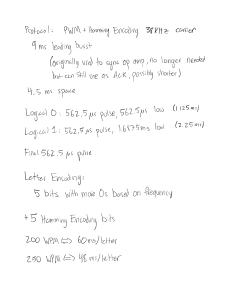
I also had to learn about serial communication and transmission protocols when I was designing that aspect of our system. To do this, I read through several sites and articles talking about IR communication in general and specific protocols like NEC to pick the best aspects to incorporate into our protocol.