Team Status Report for 04/25/2026

What are the most significant risks that could jeopardize the success of the project? How are these risks being managed? What contingency plans are ready?

  • The mobile app is working with communicating between the shank mounted LRAs and the foot mounted IMU, however it hasn’t been formally tested with the mocap system and the treadmill yet. This risk is being managed as we are going to be conducting another data collection session to test the functionality of the app during treadmill walking this upcoming week. If we run into any issues with the app during the experiment we will adjust the code as necessary. 

Were any changes made to the existing design of the system (requirements, block diagram, system spec, etc)? Why was this change necessary, what costs does the change incur, and how will these costs be mitigated going forward?

N/A

Provide an updated schedule if changes have occurred.

N/A

List all unit tests and overall system tests carried out for experimentation of the system. List any findings and design changes made from your analysis of test results and other data obtained from the experimentation.

FPA Accuracy: 

  • Compared IMU-based FPA with mocap ground truth 
  • Findings
    • Normal walking speed + Treadmill: RMSE is 2.24, which is within the acceptable error boundary for accurate vibration feedback
    • Fast speed (20% faster than normal) + Treadmill: RMSE is 11.93, 5x more than acceptable error
    • The FPA algorithm relies on heading measurement from the swing phase of walking, the faster one walks, the shorter their swing phase = less accuracy.

We now know the exact limits of our device, which is that we can only hold adequate FPA accuracy at the patient’s normal walking pace or slower. When we increase beyond the patient’s normal walking speed, error dramatically increases. This is completely fine for our use case, however it is good to know concrete limits of this device from testing.


Intuitive feedback testing: 

  • Compared FPA after receiving verbal instructions vs. FPA after receiving vibrotactile feedback 
  • Findings:
    • Without device: With only verbal instruction to point toes inward, patient was avg. 4.4° away from target FPA (-10 degrees from their baseline FPA
    • With device: With haptic feedback, patient was 0.1° away from target FPA

We saw that haptic feedback greatly improved patient ability to meet their target FPA goals during gait retraining, showing that the feedback was intuitive enough that the patient was able to make considerable progress towards getting their FPA to align with the recommended angle. With this in mind, we are able to confidently say that our device would greatly help patients train by themselves at home, since our data shows a marked improvement in using the device versus the alternative, which would be a reminder from a physician to a patient to point their toes more inward. 

Perceived Feedback Testing

To test if different levels of intensity of the vibrations were distinguishable while walking, we tested 3 different levels of vibrations: 100% intensity, 50% intensity, 20% intensity of pulsed vibrations. After asking the participant which level of intensity they were feeling on their shank, the participants were not able to determine any differences between the 3 intensity levels. Instead, they were only able to distinguish if the vibration was present or not. This could be due to the MCU only being able to drive 3.3V, so that the LRAs are not able to produce a strong enough vibration. This changed our device design such that we are no longer planning on implementing the scaled feedback based on the degree of error. If another MCU that could drive a higher voltage, then this could result in more distinguishable differences in the intensity levels to allow for scaled feedback. 

Intuitive UI Testing: 

To test our app’s UI, we asked participants to fill out a short survey (google form link: https://forms.gle/dZCPrsvuKGisoiJm7) locating and explaining information present on the interface. We’ve so far tested with one participant, and one change we made is ‘hiding’ the bluetooth connection pipeline from the user, and having it automatically start when the user presses ‘start’ and disconnect when the user presses ‘stop’. Furthermore, we separated the ‘calibrate’ and ‘export csv’ buttons to an admin section of the tab since they are not directly user-facing. Besides the active session workflow improvements, the participant accurately identified other elements of our UI such as data visualizations and recommendations. 
Rhea’s Status Report for 04/25/2026

What did you personally accomplish this week on the project? Give files or photos that demonstrate your progress. Prove to the reader that you put sufficient effort into the project over the course of the week (12+ hours).

I made the surveys for the device usability and comfort, and collected responses from different participants to get an idea of whether or not the shank-mounted device met our use case requirement of being unobtrusive while walking. I also worked with Iqui to make more of the soft cases for the shank-mounted device for use during the demo – I fabricated 3 sets of cases just in case one of them rips during the demo.

Is your progress on schedule or behind? If you are behind, what actions will be taken to catch up to the project schedule?

My progress is on schedule; all that is left to do this week is final assignments (video, poster, paper). 

What deliverables do you hope to complete in the next week?

  1. Finish final poster
  2. Prepare for demo
  3. Finish final report
  4. Finish final video

Team Status Report for 04/18/2026

What are the most significant risks that could jeopardize the success of the project? How are these risks being managed? What contingency plans are ready?

  • The App can currently receive FPA measurements as well as send vibration commands, however we are still currently working on having those vibration commands automatically send based on the FPA. We will need to convert the Python script to TypeScript (like previous iterations), but we’ll need to debug and ensure the pipeline is functioning properly. Additionally, we still need to test that the calibration and data logging functions work (and debug if necessary). 
  • The FPA accuracy dependent components of the device, such as vibration feedback error range, need to be finalized while still staying in line with previous research error ranges (i.e. no vibration for correct FPA +/- 2 degrees). Currently, our error range is +/- 4 degrees to prevent “noisy” feedback for toe-out training, and +/- 2 degrees for toe-in training. We need to be more certain about this fluctuation in error range between toe-in and toe-out training through further testing.
    • The goal of our device is toe-in gait retraining, so we do have a good error range for this. 

Were any changes made to the existing design of the system (requirements, block diagram, system spec, etc)? Why was this change necessary, what costs does the change incur, and how will these costs be mitigated going forward?

N/A

Provide an updated schedule if changes have occurred.

 N/A

Rhea’s Status Report for 04/18/2026

What did you personally accomplish this week on the project? Give files or photos that demonstrate your progress. Prove to the reader that you put sufficient effort into the project over the course of the week (12+ hours).

Finished fabricating cases for both the foot mounted and shank mounted components. These components are currently adhered to the user using tape, but the next iteration of the case will have a slot for a velcro strap for the foot mounted device. I also finished soldering the MCU/IMU component with the battery and on/off switch. I had to resolder the MCU for the shank mounted device since the battery was not soldered on the right pins to allow for charging capabilities through the MCU usb-c port. 

Started testing the device with Lakshmi, Kaitlyn, Vu, and Iqui. We conducted the following tests: 

  • FPA accuracy testing: 
    • Treadmill walking at baseline walking speed with the foot mounted device 
    • Treadmill walking at 20% slower than baseline walking speed 
    • Treadmill walking at 20% faster than baseline speed 
    • Overground walking 
  • Intuitive feedback testing: 
    • Treadmill walking at 20% slower speed, verbally instructed participant to walk with their toes pointed inward 
    • Treadmill walking at 20% slower speed, verbally instructed participant to walk with their toes pointed outward
    • Treadmill walking at 20% slower speed, participant walked with their toes pointed inward based on vibrotactile feedback 
    • Treadmill walking at 20% slower speed, participant walked with their toes pointed inward based on vibrotactile feedback 
  • Gait retention testing: 
    • Treadmill walking with toes pointed inward immediately after receiving vibration cues on how to walk toe in 
    • Treadmill walking with toes pointed outward immediately after receiving vibration cues on how to walk toe out 

The tests were done with the motion capture system as well – I preprocessed/labeled all of the motion capture data after each experimental session. After FPA accuracy testing, we compared the results from the device estimated FPA vs. the mocap ground truth. After intuitive feedback testing, we compared the FPA of the user without any feedback vs. receiving feedback to see if the vibrations were helpful to the user to learn how to adjust their walking. 

Is your progress on schedule or behind? If you are behind, what actions will be taken to catch up to the project schedule?

My progress is on schedule, as we have been conducting testing with the mocap system all of next week. 

What deliverables do you hope to complete in the next week?

  1. Conduct second round of testing with a new participant 
  2. Finish analysis of gait retention data 
  3. Finish slides for final presentation 
  4. Start working on final poster 

As you’ve designed, implemented and debugged your project, what new tools or new knowledge did you find it necessary to learn to be able to accomplish these tasks? What learning strategies did you use to acquire this new knowledge?

We recognize that there are quite a few different methods (i.e. learning strategies) for gaining new knowledge — one doesn’t always need to take a class, or read a textbook to learn something new. Informal methods, such as watching an online video or reading a forum post are quite appropriate learning strategies for the acquisition of new knowledge.

At the beginning of the semester, I wasn’t very comfortable with soldering (I had done it a few times before, but not as much as required for this project). So a lot of what I was learning (how to solder an on/off switch, how to solder a battery onto an MCU, etc.) were things I learned both through Youtube tutorials online as well as tutorials and suggestions online. 

The MCU for the shank component also ran into issues where it wasn’t being recognized as a device when I plugged it into a laptop. I realized that the MCU was bricked, and was able to find a forum post from 2020 where someone ran into a similar issue and was able to unbrick the MCU so that it could be recognized as a device to be programmed. 

This was also the first time I was making a soft case, so I learned the methodology of making a case using liquid silicone. With Iqui’s guidance, I learned how to use the centrifuge to mix the liquid silicone materials together to then cast it into a mold for the soft case. 

A lot of the learning strategies I used to acquire this knowledge involved how to look things up effectively with different keywords/phrasing for the questions to get the best results I am looking for. I also asked for a lot of help from mentors such as Vu and Iqui for guidance as they also had resources from previous experiences that could help me when I got stuck or had questions for design decisions. Most of what I was working on required a lot of trial and error. 

It was also necessary to learn the background information related to gait retraining and how vibrotactile feedback cues work/are perceived by humans. This required an extensive literature review to understand the fundamental background knowledge to be able to apply it to the project. I went through and read the recommended papers sent by Dr. Halilaj and also conducted some of my own literature reviews. 

Rhea’s Status Report for 04/04/2026

What did you personally accomplish this week on the project? Give files or photos that demonstrate your progress. Prove to the reader that you put sufficient effort into the project over the course of the week (12+ hours).

I finished soldering the MCU/mux component with the battery and an on/off switch to take it off the breadboard and make the vibrotactile component fully wearable.

I also worked on writing up an experimental protocol for us to start testing next week and met with Vu to get his feedback on the protocol. 

I met with Iqui to fabricate more cases – we ended up changing the fabrication protocol such that the liquid silicone mixture will get run through the centrifuge twice (instead of once) so that it is fully mixed, since last week we had issues where the silicone wouldn’t cure even after 24 hours. The design of the mold was also adjusted as well to reduce the larger air bubbles. Instead of pressing the positive of the mold into the negative from the top, the positive will get pressed into one half of the mold and the second half is put in place on top of it (like a sandwich). 

Is your progress on schedule or behind? If you are behind, what actions will be taken to catch up to the project schedule?

My progress is on schedule, as we will begin conducting testing with the mocap system all of next week. 

What deliverables do you hope to complete in the next week?

  1. Solder the MCU/IMU component with a battery and on/off switch so that the foot mounted component can be worn without needing to be connected to the laptop. 
  2. Run experiment for testing FPA estimation accuracy 
    1. Label the motion capture data to be processed using Lakshmi’s mocap vs device FPA code 
  3. Make a case for the foot mounted device 
    1. If this does not get done before the experiment on Monday, we will fir

Team Status Report for 04/04/2026

What are the most significant risks that could jeopardize the success of the project? How are these risks being managed? What contingency plans are ready?

  • AWS lambda functions carry a lot of latency, so even though we are able to send IMU data through bluetooth at a rate of > 180 Hz, the actual processed FPA may be calculated at a much lower rate, causing issues with getting timely vibrotactile feedback. 
    • Mitigation: Instead of using AWS for processing, we isolate the AWS component to just data storage and have a secondary module for the app’s backend that processes the FPA. The FPA processing backend would be composed of the current python scripts we use for calculations that are currently on the laptop. 
  • There could be latency with communicating between two BLE devices (foot mounted wearable + vibrotactile device on the shank), such that the vibration feedback is not able to be sent within our range outlined in our design requirement for intuitive feedback
    • Mitigation: if there is issues with latency, we will just have one MCU on the foot mounted wearable and long cables connecting this MCU to the component worn on the shank so that there is only one BLE device communicating with the laptop and driving the LRAs 

Were any changes made to the existing design of the system (requirements, block diagram, system spec, etc)? Why was this change necessary, what costs does the change incur, and how will these costs be mitigated going forward?

Since the FPA processing for an active session will be done on the smartphone, we are now implementing a backend for the mobile app as well rather than just having all the FPA processing be done using AWS. 

Provide an updated schedule if changes have occurred.

  • No changes to the schedule since the updated Gantt chart we made for the demo. We are going to start testing with the mocap system next week.

How will you analyze the anticipated measured results to verify your contribution to the project meets the engineering design requirements or the use case requirements?

FPA algorithm (Lakshmi):

One of the engineering design requirements was to keep the calculated FPA under a certain degree of error compared to ground truth. To measure ground truth FPA we used mocap markers on the right foot along with our foot based wearable. We then processed the mocap data after collection to determine ground truth FPA, and compared that with the online calculation of FPA from our foot based wearable. I will be running RMSE calculations on the FPA angles, and transforming them to normalize them to the baseline mocap FPA to determine the average degree of error and error per footstep between the ground truth mocap measurement and our foot mounted wearable.

User Comfort (Rhea):

One use case requirement for the device was user comfort, such that the device is unobtrusive and able to be worn while walking for prolonged periods of time. After each experimental session I will provide a user survey where the participant can rank how they felt while walking with the device on. The average score for each users response to the questions will determine whether the device and the soft case I fabricated is comfortable to wear or not. Another use case was to ensure the vibration is interpretable, as we intend to incorporate scaled feedback based on the degree of error. To test this, I will have the participants wear the device and send randomized vibration patterns and intensities and ask whether they can distinguish between the varying intensities. Based on their response to the survey, I will determine whether the percentage of intensity needs to be adjusted or not.

Mobile App (Kaitlyn):

The main use case requirement for the mobile app is that our UI is easily interpretable. In order to ensure the app is an effective and intuitive supplement for patients, we will ask individuals to participate in a short usability survey featuring questions that focuses on identifying certain info in the interface, identifying data points, and correlating recommendations and FPA data. This survey can happen after an experimental session with the physical device, but if necessary can be standalone assuming we give participants the context of our gait retraining device. Based on the survey results, we will adjust the app’s UI/UX accordingly. Particularly, our metric of success is if 92% of survey answers (across 6 trials) are accurate, then we will consider our UI intuitive and user-friendly.

Full Device Testing:

The vibrotactile feedback should be intuitive such that the user can adjust their gait based on the vibrations they feel. After each active session, we will compute the number of steps the user was able to correct after receiving the feedback as a quantifiable metric for the interpretability of the feedback. By taking the percentage of steps that were either accurate or appropriately corrected after feedback out of all steps taken, we can see how well users responded to the feedback.

Our final test for testing the entire device is gait retention, where we will have the user (outfitted with mocap beads) walk on a treadmill with the intent to follow the corrected gait, without the device. By taking the percentage of steps with the correct FPA, we can see how useful this device is for long term rehabilitation.


Team Status Report for 03/28/2026

What are the most significant risks that could jeopardize the success of the project? How are these risks being managed? What contingency plans are ready?

  • Not able to demo the FPA angle live next week, we can only demo the vibration being wirelessly sent to the LRA/HD 
    • Updating the gantt chart accordingly 
    • Cutting down on the amount of tests we are going to conduct with the device due to time constraints
  • Risks with the soft case not curing well in the mold / lots of air bubbles 
    • Making more iterations of the mold until there is one that provides the best results consistently 
  • The parts we ordered were missing for most of this week (we have since found the parts) 
    • Put us behind track on taking the MCU/mux off the breadboard to start user testing
    • We ordered a third round of parts that should be coming early next week so we can finish that in the first half of the week 

Were any changes made to the existing design of the system (requirements, block diagram, system spec, etc)? Why was this change necessary, what costs does the change incur, and how will these costs be mitigated going forward?

No changes were made to the system design. 

Provide an updated schedule if changes have occurred.

  • We are still behind on integrating the FPA code onto our mobile app. We plan on finishing this up this weekend and early next week. 
  • Still behind on testing the device with the mocap system, we plan to start that in the second half of next week 
    • We are also cutting down on the amount of tests we’re going to conduct. We are aiming to only complete the FPA estimation vs. mocap ground truth as well as the gait retention tests (we are getting rid of the tests involving participants outside the 3 of us as well as the marked treadmill test) 
  • We have also decided that for our 3 page UI we want to focus on getting the FPA integration down first (the real-time session page) and then getting to the other two pages (long-term data, recommendations). If we don’t have time to implement them fully, we plan on building UI with no backend integration to show what our planned interfaces would look like.

Rhea’s Status Report for 03/28/2026

What did you personally accomplish this week on the project? Give files or photos that demonstrate your progress. Prove to the reader that you put sufficient effort into the project over the course of the week (12+ hours).

I met with Iqui multiple times this week to fabricate 5 more soft cases made out of the liquid silicone. I was running into issues where a significant number of air bubbles would get trapped in the mold, resulting in holes in the liquid silicone after it cured. 

I worked on fabricating a new mold for the case based on Dr. Halilaj’s feedback (rounded edges, slightly thicker) and have been working on trying different methods for the case to get rid of the large air bubbles. 

I also discussed with Vu different options for the device adhesive. The wig tape I was intending on using did not stick to the soft silicone material well – it was easily peeled off and removed. As an alternative, I proposed using adhesive/tape used for attaching glucose monitors onto an individual’s arm instead of the wig tape we originally proposed. The glucose tape seemed to work well and stuck to the soft case. 

Is your progress on schedule or behind? If you are behind, what actions will be taken to catch up to the project schedule?

My progress is behind since the soft cases I have been fabricating are not ready yet for the device to be fully wearable. This weekend I am planning on making more soft cases such that the whole device can be taped onto the shank for testing. 

I am also slightly behind with resoldering the MCU/mux component with the battery to take it off the breadboard since the parts we ordered went missing for a few days, however I found the parts so I will work on that early next week. 

What deliverables do you hope to complete in the next week?

  1. Prepare for demo 
  2. Resolder the MCU/multiplexer and attach the battery with the switch so that I can take the MCU off the breadboard 
    1. Print a case for the MCU+mux+battery to make it fully wearable
  3. Make new versions of the soft case and find a way to remove bubbles from the silicone 
    1. Make enough cases for both the left and right LRAs 
  4. Write up experimental protocol for the user testing of the device 

Rhea’s Status Report for 03/21/2026

What did you personally accomplish this week on the project? Give files or photos that demonstrate your progress. Prove to the reader that you put sufficient effort into the project over the course of the week (12+ hours).

I met with Iqui multiple times this week for assistance on designing the mold for the case as well as learning the fabrication process. We made 3 different versions of the case using 3 different materials and fabrication methods. 

  1. Hard Case: 3D printed TPU 
    1. This version was the most rigid out of the three, so it absorbed a lot of the vibration when testing different vibration sequences
    2. It is the most sturdiest and most reusable material
  2. Hard flex case: 3D printed soft resin 
    1. Semi hard/semi flexible case 
    2. Also still absorbed a decent amount of the vibrations, making it harder to perceive 
  3. Soft case: liquid silicone that was cured/casted in a separate mold 
    1. The most user friendly/comfortable out of all the cases due to the squishy material
    2. Also the most fragile since it is so soft, which means it could end up tearing/ripping even during one session 

After meeting with Dr. Halilaj with the group, she suggested that we focus the most on the soft case since it is the most wearable out of the three options. 

Is your progress on schedule or behind? If you are behind, what actions will be taken to catch up to the project schedule?

My progress is on schedule since I planned on finishing the case fabrication for the LRA+haptic drivers by the end of this week. 

What deliverables do you hope to complete in the next week?

  1. Resolder the MCU/multiplexer and attach the battery with the switch so that I can take the MCU off the breadboard 
  2. Print a case for the MCU+mux+battery component to make it fully wearable 
  3. Print different versions of the soft case with varying thicknesses 
    1. Make enough cases for both the left and right LRAs

Rhea’s Status Report for 03/14/2026

What I accomplished this week:

The majority of my time for the first half of this week was spent working on the ethics assignment.

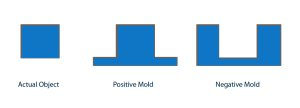
I also further discussed with Iqui about creating the soft case on Thursday; specifically, he gave me suggestions on how to design the mold for the case. I plan on making a case similar to this design:

I have never 3D printed anything before, so I spent a lot of time this week doing research on how to get started with 3D printing and making a CAD design for a mold that can get 3D printed. I went through multiple beginner SolidWorks Tutorials as well as a LinkedIn Learning introductory tutorial to become familiar with the software to use it for making a CAD of the mold.

On schedule? 

No, I am behind schedule for prototype fabrication. The plan was to finish developing a few different versions of the case by the end of this week, but I was set back due to the learning curve of how to use CAD and 3D printing, since I have never done either before. To catch up, I have already done multiple tutorials on how to use SolidWorks, so I feel more confident in being able to easily make a design for the mold. I will meet with Iqui again earlier next week (Monday or Tuesday) to get feedback on the mold design and 3D print it by Wednesday so that the soft case can be completed by Friday.

Objectives for next week:

  1. CAD 3 different versions of the soft case mold to be printed by Wednesday
    1. Meet with Iqui to get feedback on the deign for the mold before printing
  2. Fabricate the soft case using the molds and the liquid silicone that was delivered last week
  3. Write up an official experimental/testing protocol for the prototype testing (treamill walking, motion capture, overground walking scenarios)
    1. Get feedback from Dr. Halilaj if any adjustments need to be made for the experimental protocol before officially conducting tests