- What are the most significant risks that could jeopardize the success of the project? How are these risks being managed? What contingency plans are ready?
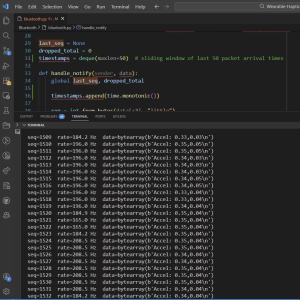
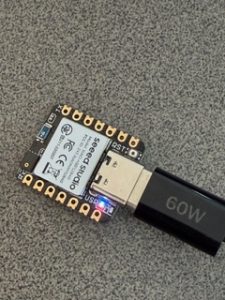
- Our ESP32 with embedded IMU may not have the capability to send IMU data at a high enough sampling rate. We will test our ESP32’s current capabilities early next week. We currently have another dual-core ESP32 that has arrived from ordering as backup. This will not require any change to the IMU programming code.
- Our current template for the FPA estimation algorithm may not have enough accuracy needed for helpful gait training feedback. To remedy this, we have identified sources of error in FPA estimation through discussions with PhD students from CMU’s Biomechanics and Haptics lab (position of IMU on foot, sampling rate, speed of walking). We will integrate the following tests to ensure we get maximum accuracy and understand how to finetune parameters needed for processing the IMU data
- IMU position on foot test (top of foot, toebox, and medial side of foot)
- Determine max sampling rate of current ESP32 and determine gate stage accuracy (the preprocessing step before calculating FPA)
- Change participants speed of walking (via treadmill settings) and compare calculated FPA with mocap (ground truth)
- Our current LRA set up may not have the intensity needed for recognizable scaled feedback. We have been researching different LRAs and discovered our current LRA has the highest peak intensity, so we are now planning on integrating a separate battery into our circuit to provide more power to the LRA. If this still doesn’t provide enough intensity, we plan to integrate multiple LRAs on each side of the device. This will not require large changes to the IMU programming code.
- Were any changes made to the existing design of the system (requirements, block diagram, system spec, etc)? Why was this change necessary, what costs does the change incur, and how will these costs be mitigated going forward?
- Met with Iqui and Vu (PhD students from the CMU Biomechanics Lab and Haptics Lab) with all group members to discuss FPA estimation algorithm testing and finetuning. We now:
- Aim for at least 30 samples/second for IMU measurements to ensure accurate gait stage detection
- Allow for +/- 5 to 10 degrees of error for FPA (2 degrees of error estimation algorithms has not been verified in the literature yet. Current reliable test results have up to 15 degrees of error.)
- Allow < 300 ms latency for the vibration command to deploy
- Plan to test orientation of IMU on foot’s effect on device accuracy
- Provide an updated schedule if changes have occurred.
- Our original plan was to start building the sleeve for the LRA+MCU system this week and next week, however, we are holding off on putting the sleeve together until we finalize how many LRAs we need on each side of the device. Furthermore, we also need to consider adhesive for the LRA components versus a sleeve for better feedback reception.
- This is also the place to put some photos of your progress or to brag about a component you got working.
(Rhea) Part A: … with respect to considerations of public health, safety or welfare. Note: The term ‘health’ refers to a state of well-being of people in both a physiological and psychological sense. ‘Safety’ is the absence of hazards and/or physical harm to persons. The term ‘welfare’ relates to the provision of the basic needs of people.
From a public health perspective, the wearable haptic device promotes physiological wellbeing by helping users who have knee joint pain to modify their gait pattern to reduce the strain on their knee joints, potentially reducing the risk of chronic injury and long-term mobility loss. The system’s portability, along with its capability of providing real-time, interpretable feedback can increase patient confidence and engagement in rehabilitation and allow users to feel more empowered to independently manage their health. In terms of safety, the design of our device will minimize risks by using materials that are skin-safe/minimize skin irritation and LRAs that generate vibrations at an amplitude that is comfortable for the users. The device will be designed to be lightweight and unobtrusive such that users can maintain natural movements while walking. Our device will enable safer mobility, promote independence in daily activities, and reduce reliance on clinical supervision to improve overall quality of life for individuals undergoing gait rehabilitation.
(Lakshmi) Part B: … with consideration of social factors. Social factors relate to extended social groups having distinctive cultural, social, political, and/or economic organizations. They have importance to how people relate to each other and organize around social interests.
The design of LKR accounts for the demographic of patients using the device, which are mainly older adults who are the most vulnerable to chronic conditions that cause knee pain, such as osteoarthritis. For older adults mobility is directly tied to independence, and this demographic has an increased risk of isolation [1]. Furthermore, traveling frequently to a physical therapy clinic can be financially burdensome to older adults and their families, preventing low-income families from supporting elderly members knee health early on, leading to increased hospital costs from fall injuries [2]. This device supports aging in place and a greater degree of autonomy for elderly individuals by enabling gait retraining therapy from home, at their convenience.
(Kaitlyn) Part C: … with consideration of economic factors. Economic factors are those relating to the system of production, distribution, and consumption of goods and services.
SageMotion, a popular commercially available haptic biofeedback system, costs around $20K. In contrast, our system is meant to be low-cost ($110 for hardware components), allowing individuals who can’t afford SageMotion to still benefit from gait retraining. Another method for improving gait is attending physical therapy sessions, but session costs can be high and for individuals who live in rural areas, transportation methods may be limited (and also costly). Our system is designed to work effectively at-home with no professional medical supervision needed, offloading these expenses.