Weekly Status Report 4/25

Group: This week, we finalized our testing schedule and worked on creating our final presentation slides. We conducted testing on both the hardware and software components of the project. Additionally, we began preparing our poster while continuing testing over several days. For next week, we plan to complete all remaining testing, finalize the case and assemble the final device, and continue preparing the final video and poster.

Ines: This week, I primarily focused on preparing the final presentation slides for my presentation. I also worked on completing the scripts for the thermal camera and tested them with our plants under different lighting and environmental conditions. In addition, I’ve started integrating the completed system into the case. Next, Sanjana and I will conduct a full hardware system test, followed by end-to-end testing with the entire group.

Miffy:This week, I wrapped up the software side of the project by finishing debugging on the last remaining component of the app, bringing the mobile frontend to a fully functional state. I also created a user testing document — including a guide and questionnaire — and conducted user tests with three participants. Next week, I’ll support the group with end-to-end testing and contribute to finalizing the poster and video.

Sanjana:

As we wrap up the course, I focused on finishing testing this week. As we already completed any of the short term tests, I worked on some of the longer range tests such as testing for the 5-7 day early detection requirement. To do this, I started by making sure the entire system was functional, testing individual components and subsystems to ensure that everything was working for testing with the final assembly and enclosure. Once this was complete, I set up the system with our test plant. Over the course of several days, we placed the plant in suboptimal conditions to test unhealthy plant behavior. Over this time, we kept steady control conditions and recorded photos and notes every day. As we head into this last week, I plan to complete this testing for the hardware and final enclosure testing, any other small remaining tests, and the final video for demo.
Weekly Status Reports 4/4

Group: This week, the team focused on preparing for the demos held on Monday and Wednesday. We worked on integrating the hardware with the backend and enabling real-time updates on the frontend, allowing the full pipeline to function end-to-end. In parallel, we made progress on the physical design, including the case and stand for the devices. On the hardware side, we finalized the scripts for index calculations and Wi-Fi communication, and continued connecting all components to the microcontroller. On the software side, we worked on getting the backend and frontend updated to accommodate for multiple users. Next week, we will focus on developing a detailed testing and validation plan, completing the full device assembly, and beginning initial testing.

Inès: This week, I focused primarily on developing the index calculation scripts and the thermal camera integration. We received the thermal camera, so I worked on connecting it to the ESP32 and processing the incoming data. In parallel, we revisited the device stand design. I updated the 3D models and had them printed, so we are now ready for assembly. Sanjana and I also researched locations to purchase a real vine plant, which we plan to acquire this weekend for upcoming testing.

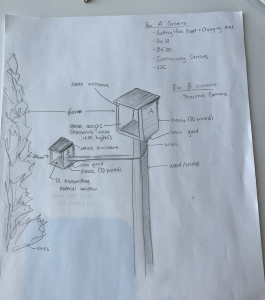
(new updated design of the stand)

Miffy: This week, I focused on finalizing the mobile application. I debugged existing functionality and implemented all remaining features, bringing the app to a fully working state across all components except LLM Analysis, which is still pending. The app is now ready to support the upcoming demos and testing phase.

APP Design:

Sanjana:

This week I worked on integrating the sparkfun spectroscopy sensor into our system. We received this component at the beginning of the week and since it’s arrival I’ve been working on connecting and debugging functionality related to collecting vegetation indices. Once I could reliably collect values from the component, I incorporated Ines’s script to use the values coming from the sensor to calculate the 4 vegetation indices that we decided to use. Into next week, I will continue to debug this functionality and make sure everything is running smoothly from the backend to the app which is now deployed.

Weekly Status Reports 3/28

Group: This week, our team focused on preparing for the upcoming demo by making progress on the software, and integration. On the hardware side, we began assembling available components, including soldering key parts like the battery and adjusting our 3D print design measurements. While we are still waiting on the spectroscopy sensors, we used simulated data to continue working, and we completed our indices computation script to process this data. We also made strong progress with the ESP32, successfully setting it up, interfacing it with the BME280 sensor to collect environmental data, and enabling WiFi capabilities to begin transmitting that data, including testing a temporary setup where the ESP32 generates its own network. On the software side, the frontend was tested and debugged to ensure it is demo-ready, while the backend was run and its interface with the hardware was defined and tested. Overall, this week’s work significantly advanced system integration and ensured that all components are aligned for the demo.

Ines: This past week was focused on preparing for the demo scheduled on Monday. Sanjana and I met to make progress on the hardware components of the project. Since our spectroscopy sensors have not yet arrived, I created simulated data to replicate their outputs and allow us to continue development. I also completed the indices computation script. In addition, we decided to modify the 3D print measurements, which I updated accordingly. Finally, I worked on soldering and assembling the hardware components currently available to us.

Miffy: This past week was also focused on preparing for the Monday demo. I tested and debugged the frontend, ensuring it was functioning correctly ahead of the demonstration. I then began running the backend and worked on defining and testing the interface between the backend and hardware components, coordinating to make sure the integration points were clearly communicated and validated.

Sanjana: This week I made solid progress on the hardware. Now that our components are mostly here,  Ines and I got started on assembly. As we had already planned, we soldered and connected the components that didn’t need to be tested such as the battery. Then I took the lead on working with the ESP32. First I set up the ESP32 and got it fully operational, which involved troubleshooting some initial setup issues and verifying that it could run my code reliably. I also connected the BME280 sensor to the ESP32 and was able to read environmental data including temperature, humidity, pressure, and altitude (we are not using all values for our project). In addition, I worked on enabling wireless communication by connecting the ESP32 to WiFi and beginning to transmit the collected sensor data. I also tested an alternative by generating WiFi directly from the ESP32 to temporarily collect data.

Weekly Status Reports 3/21

Group: This week, we focused on both hardware assembly and software development as more components began arriving. We started putting together the available parts of the device and continued refining the case design to ensure it can withstand environmental conditions. In parallel, we worked on developing scripts for processing sensor data and began building out the backend to handle data flow and visualization. We also planned our upcoming field visit to better understand deployment conditions. Next week, we aim to continue assembly, integrate sensors, and prepare for testing and the demo.

Ines: This week I focused on finishing up the last details of the case for the device, along with further exploring the weather tests we should prepare for. As our hardware components are slowly arriving, Sanjana and I are also starting assembly. I’ve also written out the logic of a couple of scripts. This week we will finalize the assembly of all components, but the thermal camera and the spectroscopy sensors as they have yet to arrive. Sanjana and I will be spending this week preparing for the demo, this means getting all the components that we have assembled, and figuring out wifi transmissions for temperature and humidity sensors (as we have that sensor).

Sanjana: As we’ve been waiting for all of our components to arrive, Ines and I have started working on the parts of our project that can be done without needing the physical components. Ines took the lead on modeling the 3D printed case that will enclose our device. At the beginning of the week we worked together to ideate what we wanted this case to look like to prioritize safety of the device, especially with a variety of environmental factors. We decided to design the case to have three 3D-printed sides, to allow accessibility on the the last side. We will attach a clear piece of plastic on this side after the container is 3D printed. After deciding on the basic design of the container, Ines took the lead on its modeling. Next, I moved on to writing the python scripts that we will use to do all the in-unit computations. This includes calculating all of the vegetation indices we chose and preparing all the data for sending to the app for visualization. Towards the end of the week, we received most of our components so next week we are looking to begin assembling our device, especially the battery and environmental sensors.

Miffy: This week I focused on getting more involved with both the fieldwork and the backend development of our project. I will be joining the team in visiting the vineyard to better understand the real-world environment our device will operate in and to gather insights that can inform our system design. On the software side, I have been working on building out the backend infrastructure, including setting up data pipelines and structuring how sensor data will be processed, stored, and prepared for visualization in the app. In the coming week, I plan to continue developing the backend, integrate incoming sensor data, and support the team as we move into testing and demo preparation.

Weekly Status Reports 3/14

Group: After our meeting on Monday, we met as a group to discuss the feedback we have received and what we will do to fix some of the issues present in our design report. We have agreed on the graphs that will appear on the user interface, creating an overall plant health calculations (calculated by using different indices weights), the various indices over time, temperature, and humidity scores.  On the hardware side we have started developing the indices scripts, finished the hardware, and our waiting on the components to start assembly. We are also planning on visiting a farm next Friday (2/20) to see what kind of vines we will be working on.

Ines: This week, I finalized the 3D design for the device case and discussed with Sanjana about how to deal with various environmental concerns we have. We’ve decided to use a transparent plexiglass for on side of the box that will be able to slide right in our 3D printed box. The case will also have an opening at the bottom for the charging port. We will also seal the plexiglass to the case using some kind of glue (might end up using a hot glue bun) o make sure no water can come inside. Additionally, our components are starting to arrive. Sanjana and I will then be able to start assembly next week and begin collecting data of our sensors. This week and next week is also being used to start writing scripts for index calculations.

Sanjana:

Miffy:
This week, I implemented the full frontend design of the system interface. Based on the feedback we received last week, I met with the group to discuss improvements and updated the display layout for the different plant health indices. I also worked on adjusting how the indices will be shown on the interface so that users can easily view overall plant health, individual index values over time, and environmental data such as temperature and humidity.