Team Status Report for 3/7
A was written by Yoyo, B was written by Claire, and C was written by Charlie.
Part A – Global Factors (Written by Yoyo)
Our product aims to make learning Chinese Chess more accessible to users from different backgrounds and locations. By combining a physical chessboard with a phone-based interface, the system allows players outside of academic environments or those who may not be technologically experienced to interact with the system easily. The phone camera captures the board state while the application provides move suggestions and explanations, allowing players to learn strategies while playing on a physical board. This approach makes the learning process more intuitive and accessible to users worldwide, especially those who prefer physical gameplay over purely digital interfaces.
Part B – Cultural Factors (Written by Claire)
Chinese Chess is a traditional strategy game with deep cultural roots. Our project helps introduce this game to a broader international audience while preserving its cultural elements. The chess pieces include both the original Chinese characters and English translations so that players who are unfamiliar with the language can still understand the game while learning the traditional terminology. By supporting both language systems, the system helps users become familiar with the cultural context of the game while also lowering the barrier to entry for players who may not have prior experience with Chinese Chess.
Part C – Environmental Factors (Written by Charlie)
Environmental considerations are relatively limited for this prototype because the system does not require large-scale energy consumption or manufacturing. However, we still considered sustainability in our design choices. The board is constructed using durable materials such as plywood and acrylic so that it can be reused for extended periods rather than discarded after testing. Additionally, the system relies on a smartphone camera rather than requiring specialized imaging hardware, which reduces the need for additional electronic components. These design choices help keep the prototype relatively resource-efficient while minimizing unnecessary environmental impact.
Project Risks and Risk Management
The most significant risk to the success of the project is the integration of the system’s subsystems. The computer vision system must correctly detect the board state before the chess engine and LED guidance system can function properly. Because both the engine and LED guidance depend on the output of the vision system, errors in board detection could affect multiple components of the system.
Additionally, the LED guidance system depends on the chess engine for calculating the opponent’s moves. This creates a chain of dependencies between subsystems, which may make integration more complex than initially estimated.
To manage this risk, the team plans to begin integration earlier than originally scheduled so that potential issues can be identified sooner. If integration requires more time than expected, the team may reduce the scope of testing slightly. For example, instead of testing 100 random board states and 10 full games, we may test 50 board states and 5 full games while still ensuring that the system performs reliably.
Design Changes
At this time, no changes have been made to the existing system design, requirements, or block diagrams. The current system architecture—including the computer vision module, chess engine, LED guidance system, and mobile interface—remains consistent with the original project plan.
However, the team did make a practical adjustment related to hardware setup. Instead of building a custom phone mounting structure, we decided to purchase a phone holder with an integrated lamp. This change simplifies the setup process and improves lighting conditions for the computer vision system, which should improve image quality and detection accuracy.
Because this change replaces a custom-built component with an off-the-shelf solution, it reduces development time and introduces minimal additional cost.
Updated Schedule
The overall project timeline remains largely on schedule. This week focused primarily on development of the frontend interface and early testing of the computer vision system. Over the next week, the team will begin collecting image data to train the YOLOX model and continue developing the integration pipeline between the vision system and the chess engine.
While subsystem integration remains a potential challenge, no schedule changes are required at this time. The team will continue monitoring progress and adjust the schedule if integration takes longer than expected.
Progress and System Development
The team made several important steps toward completing the system this week.
The frontend user interface was developed using React, allowing users to interact with the chessboard and enabling communication between the frontend and backend systems. Integration tests were also started to verify that board state updates, move validation, and engine responses are correctly synchronized between components.
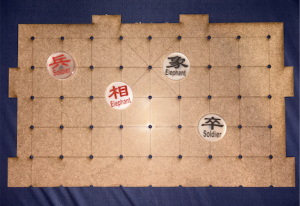
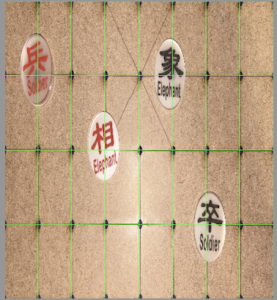
On the hardware side, the team constructed a prototype chessboard using plywood from TechSpark. Initial tests were conducted using cut-out chess pieces and a partial board to evaluate the performance of the computer vision system. These tests helped identify lighting and material issues that affect detection accuracy. For example, the plywood surface reflects light, which may interfere with the vision model.
To improve image quality, the team plans to use a phone holder with an integrated lamp to create more consistent lighting conditions for capturing images. The next step will be collecting approximately 100 labeled images of the board to train the YOLOX detection model.
These developments move the project closer to integrating the computer vision pipeline, chess engine, and LED guidance system.