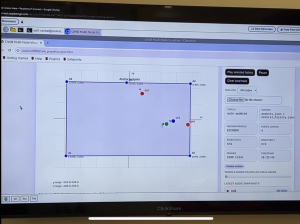
On the audio side, there are 2 significant risks, one related to the opera (music-based) portion and one related to the play (speech-based) portion. On the opera side, we need to ensure that the equipment that we’ll be using to obtain the MIDI recording is compatible with the off-the-shelf software that Professor Dannenberg designed. On the speech side, while Vosk is working pretty well with a single microphone, it remains to be seen how the performance will be with multiple actors, especially performers who are close to each other. There’s a worry that the interference caused by the audio being heard on multiple microphones could confuse Vosk and thus, mess up the processing and cue engine. This week allowed for major improvements to the tracking system overall. New firmware, updated software, and increased polling rate to the UWB sensors has allowed considerable system improvements. The central RPI 5 has also been configured to handle all processing needs offloading load from the four wearable nodes. The centralized system will allow seamless integration with our motors, CV camera, and audio cues. Communication from the wearable nodes has also been configured which will allow us to quickly send audio cues to the central pi to adjust the camera as necessary. Having this centralized system all communication goes to reliably initiates our full project implementation. Regarding the opera portion, a significant change has been made to the design, in that we’re now using an off-the-shelf system that was created by Professor Dannenberg. This software is based on MIDI files, and it enables high performance regardless of the presence of other performers and their vocalization. Our group is currently on schedule, as we look to complete the rail design by the end of the week and finish the audio and tracking subsystems too. We’ll look to integrate these different systems together in the coming weeks as our entire project comes together. There haven’t been any changes to our schedule.