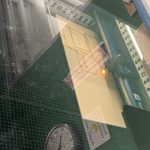
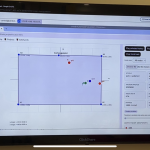
This week I focused on the communication and coordination pipeline for our UWB localization system. I set up MQTT (Mosquitto) based communication between the central Raspberry Pi and the four node Raspberry Pis. Now we can transfer raw distance measurements to the central Pi for processing and filtering. I also reworked the node sender and central logger architecture so that all filtering and localization logic now runs on the central Pi, which made the system much easier to manage and debug. Another note is that centralizing our system allows our nodes to have a much stronger battery life as there is now minimal processing done by the wearable nodes. The centralized system is additionally crucial when integrating our motors, CV camera, and audio cues later on. Having this centralized system all communication goes to reliably initiates our full project implementation. I also fixed several issues during integration, one in which was correcting the node shutdown and restart behavior. Originally I would send “stop” to each node when switching nodes to ping. This caused tons of overhead as it was costly to restart a node. Now UWB sessions properly stop and can be restarted cleanly without breaking serial communication. This was achieved through a custom firmware update, which I introduced “pause” and “activate” key words to allow our anchors to quickly ping node by node. Furthermore, I was able to manually configure the UWB nodes to reliably poll at 20Hz, up from the original, slow 5Hz (4x improvement!). At this point, single and multi node tracking is working reliably and I was able to confirm that the communication pipeline between nodes and the central Pi is functioning correctly. In addition to the software work, I also continued physical system implementation, and I assisted my teammate Ted with laser cutting, material searching, and verification at TechSpark. We are on schedule.