Design Change and Schedule: For design changes, our team tested out some of the options for mesh, namely Thread, BLE, and ESP-Mesh-Lite. In our study, we saw a lot more success in the implementation of ESP-Mesh-Lite.This was primarily because the system itself showed better promise for our use case over Thread and BLE alone. We also opted for a discrete additional antenna for our RESQubes since the onboard antenna showed disappointing results in range and stability. The new antenna is a low cost patch antenna with an approximate maximum 5dBi attenuation. In addition to this we progressed on track with our schedule, continuing testing for the RESQubes, working on the SLAM algorithm, creating prototype RESQube shells from PLA and TPU, working on the RSSI, and conducting trade studies based on our testing results to update our model. Along with this we have done some preliminary testing on compatibility between the camera, LiDAR, and Jetson by testing if they can communicate and recognize each other.
Risks and contingency: The main concerns we see with our future implementations is the size and weight allocation of an additional antenna to each RESQube. We are planning for patch antennas currently and are in the process of testing them, however if these are insufficient in supplying our needs there is a possibility to include a omnidirectional rod antenna. In our design, however, we have ensured that this worst case scenario would still ensure we are achieving our MVP for the size and deployment of the RESQubes.
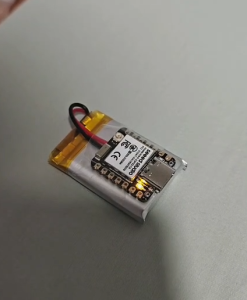
Below we have attached a picture of our testing platform for the RESQube we are currently using to test mesh capability and communication. The goal was to keep the system as simple as possible to test capabilities piecewise.