Kristina’s Status Report for 12/06/2025

Recollected Normal Condition Data

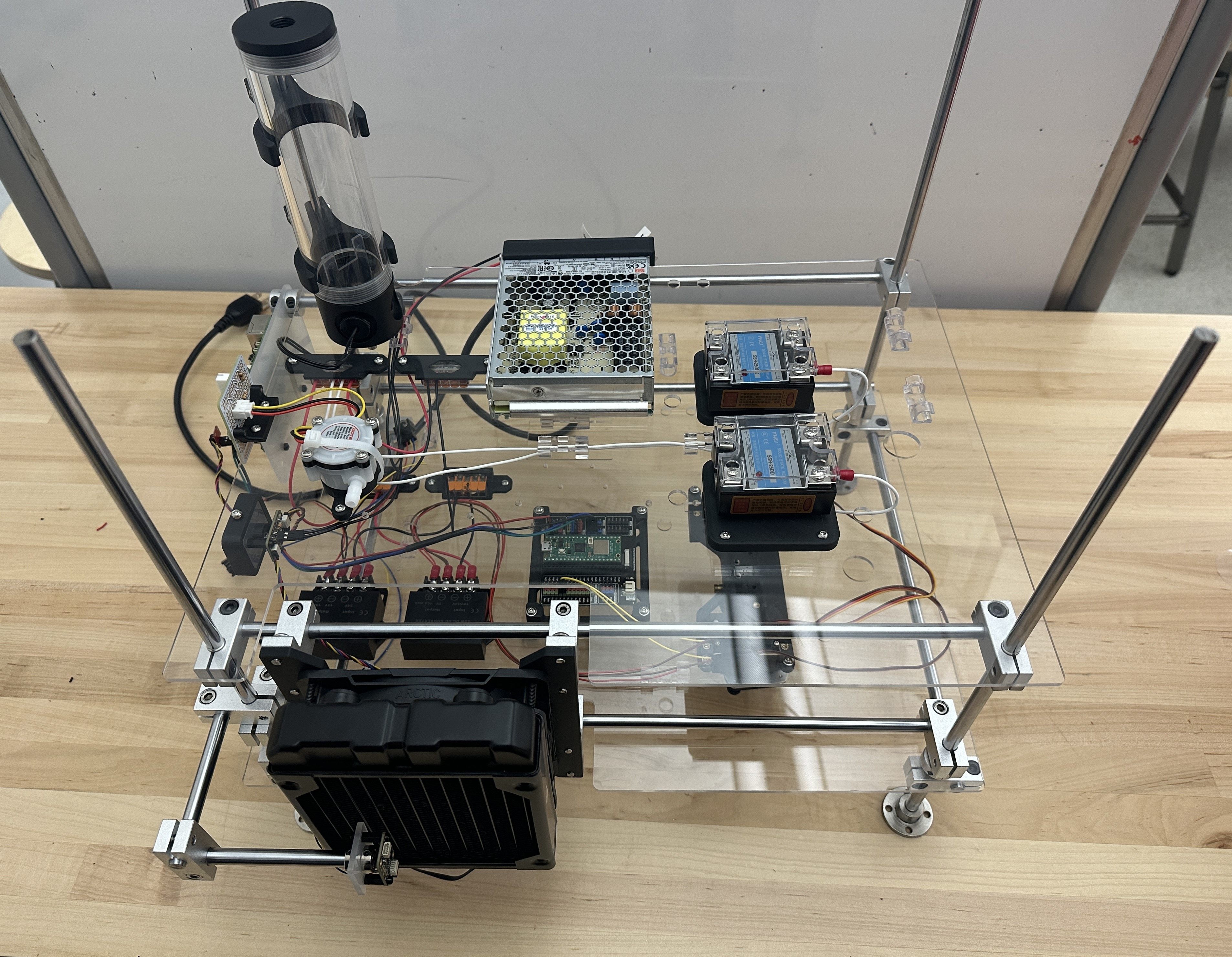
  • Ambient temperature shifted noticeably from previous data collection runs
  • Repeated full normal data collection loop to collect data at current ambient temperature

Full Flush of Cooling System

  • Coolant turned yellow and contained some kind of brown particles, likely residue from radiator
  • Fully drained the loop, flushed several times, and replaced water

Retrained Model with New Dataset

  • Updated preprocessing steps, retrained regression and autoencoder models using new data
  • Updated model architecture to use only delta temperature features
    • Reduce model sensitivity to ambient drift
  • Began integrating updated models into live inference loop

Schedule & Progress

  • On schedule for final demo

Next Steps

  • Finish testing live inference loop
  • Complete final report and final video

Kristina’s Status Report for 11/22/2025

Data Collection for Fault Cases

  • Completed power fault synthetic test patterns
  • Started reduced flow synthetic test patterns data collection loop

Regression Model for CPU Power Prediction

  • Finalized feature set and preprocessing for regression model
  • Validated regression model performance on synthetic traces and exported model for use in autoencoder

Autoencoder Anomaly Detection Model

  • Implemented sliding window AE on RF output
  • Tuned initial architecture (window size, latent dimension, dropout, batch size)
  • Ran verification sweep on fault windows
  • Found strong overlap between normal and fault windows causing inconsistent fault detection
  • Developing event based detection: detect at least once per fault event rather than per-window

Final Presentation

  • Started drafting final presentation slides

Schedule & Progress

  • On schedule: working on tuning ML model

Next Steps

  • AE tuning + final presentation slides

Learning Strategies

  • ML autoencoder: Learned to build autoencoder for anomaly detection
    • Used Medium blogs, GitHub examples, and other people’s AE projects to understand typical structures and tuning strategies
    • Referenced scikit-learn documentation and online tutorials for scaling, windowing, PCA plotting, and general debugging
    • Already had background from ML classes but needed to apply to actual sensor data
  • Testbed Assembly: Had previous experience with similar setup with Raspberry Pi 5 and sensors so integrating was familiar
    • Had to learn how to run long data collection loops
    • Communicate between Pi and Pico over UART
    • Learn to flash code and debug UART on Pico with online tutorials and datasheets
  • Practical Skills:
    • Crimping connectors and assembling hardware setup
    • Used YouTube videos, forums, and online guides
  • Overall, most new knowledge came from informal learning
    • Videos, online blog posts, GitHub repositories, datasheets, and example projects

Kristina’s Status Report for 11/15/2025

Hardware Updates & RepairsĀ 

  • Replaced previous PSU with a higher-wattage supply to start full-load heater tests
  • Fixed issue where screw heads completely de-threaded
    • Used pliers to remove and mount new PSU
  • Verified stable operation of power output with new PSU

Data Collection & Testing

  • Began running automated synthetic test patterns, including:
    • Ramp up and ramp down CPU power profiles
    • Step spikes
    • Holds
  • Debugged issue where tests suddenly stopped mid-run
  • Finished a complete sweep of synthetic data collection
  • Collected real CPU power traces using HWiNFO on my laptop to simulate realistic user workloads
    • Imported traces into power traces and successfully began running them on testbed

Schedule & Progress

  • On schedule

Next Steps

  • Begin processing data
  • Start building regression model to predict power output
  • Start fault-condition runs to collect fault data for anomaly detection

Kristina’s Status Report for 11/08/2025

Hardware Integration & Testing

  • Finished full testbed assembly
  • Started testing on actual hardware setup (pump, fan, heaters, sensors all active)
  • Verified operation of all components under load

SSR Calibration

  • Conducted oscilloscope testing to measure duty cycle vs. output power
  • Derived a linear equation relation PWM duty value to wattage output
  • Updated control code to use calculated duty values

Integration

  • Finished integrating UART communication between Raspberry Pi 5 and Pico
  • Verified that heartbeat and command messages correctly sent and received

Schedule & Progress

  • On schedule
    • Debugging hardware issues and calibration tasks from last week have been resolved
  • System now ready for automated data collection testing

Next Steps

  • Write and test automated data collection routines on the Pi 5
  • Begin extended test runs to log data continuously
  • Start ML code development

Kristina’s Status Report for 11/01/2025

Testbed Assembly

  • Assembled the basic testbed and power routing
  • Brainstormed alternative ways to mount pump
Partial Assembly

Schedule & Progress

  • Slightly behind schedule due to fit issues with the pump mount
    • Mounting holes did not align
  • Exploring alternative mounting solutions to get back on schedule

Next Steps

  • Complete water loop assembly with tubing
  • Begin SSR PWM control testing with Pico once loop is complete
  • Add resistor and water block assembly for load simulation

Kristina’s Status Report for 10/25/2025

UART Pi5 to Pico Communication Code

  • Successfully set up UART communication between Pi5 and Pico with wiring and code
  • Verified with test messages from Pi5 to Pico

Testbed Assembly

  • Assembled fan and radiator subassembly to prepare for full assembly next week
  • Mounted Pico and SSRs to 3d printed component mounts

Schedule & Progress

  • Slightly behind schedule for full system assembly since we are waiting on the custom cut boards expected to arrive Monday
  • Once they arrive, plan to finish assembling testbed early next week to catch up to schedule

Next Steps

  • Complete final assembly of testbed and water loop
  • Begin SSR testing with Pico

Kristina’s Status Report for 10/18/2025

UART Pi5 to Pico Communication Code

  • Began writing code for UART communication between Pi5 and Pico

Design Report and Research

  • Focused on finishing the Design Report and polishing all sections for submission
  • Strengthened justifications for system and model design tradeoffs

Schedule & Progress

  • On schedule:
    • All off-the-shelf parts have arrived
    • Custom part dimensions verified and adjusted to match real measurements
    • Plan to send out custom cut parts after Fall Break
  • Behind schedule:
    • UART Pi5-Pico communication delayed due to debugging
    • Minor delays from Pi5 setup and network configuration issues

Next Steps

  • Begin setup and partial assembly of testbed
  • Continue debugging UART communication
  • Assist with sensor integration and PWM control code

Kristina’s Status Report for 10/04/2025

Raspberry Pi Setup

  • Set up Raspberry Pi 5 for future UART communication with Pi Pico code development
  • Troubleshot several setup issues:
    • Broken mini-HDMI cable causing monitor display issues
    • Missing microSD reader, preventing Pi OS installation through the Pi Imager
    • SSH connection issues due to the wired ethernet network being different from CMU Secure wireless
  • Successfully imaged Pi OS onto the microSD card and completed initial configuration at home before bringing the Pi back to campus, which resolved network issues

Parts Procurement

  • Ordered off the shelf components listed in the BOM
  • Currently waiting for parts to arrive before verifying part dimensions and fabricating laser cut mounting plates

Design Report and Research

  • Worked on Design Report sections covering use case and requirement justifications
  • Found IEEE Xplore papers related to anomaly detection to reference for style and technical wording in the Design Report

Schedule & Progress

  • Currently slightly behind schedule due to:
    • Waiting for hardware parts to arrive before starting laser cut fabrication
    • Delays in Pi 5 setup and network access during initial configuration

Next Steps

  • Begin laser cut fabrication once parts (specifically the pump) arrive
  • Continue 3D printing remaining brackets and verify fits
  • Start Pi 5 to Pico UART code development
  • Finish Design Report as soon as possible to get feedback

Kristina’s Status Report for 09/27/2025

Completed CAD Model

  • Completed CAD model with water loop and other component models downloaded from online (e.g. SSRs, DC-DCs, etc.)
  • Adjusted radiator + fan position to reduce board size
  • Planned out and added power planes (24V power supply stepped down to 12V, 5V for fan/pump, servo)
  • Began 3d printing some parts from CAD design
    Full Assembly
    Full Assembly – Bottom View
    Water Loop
    Heater Complex (Power Resistors)
    Servo Valve Assembly (Blockage Fault)

    Power Distribution

Block Diagram

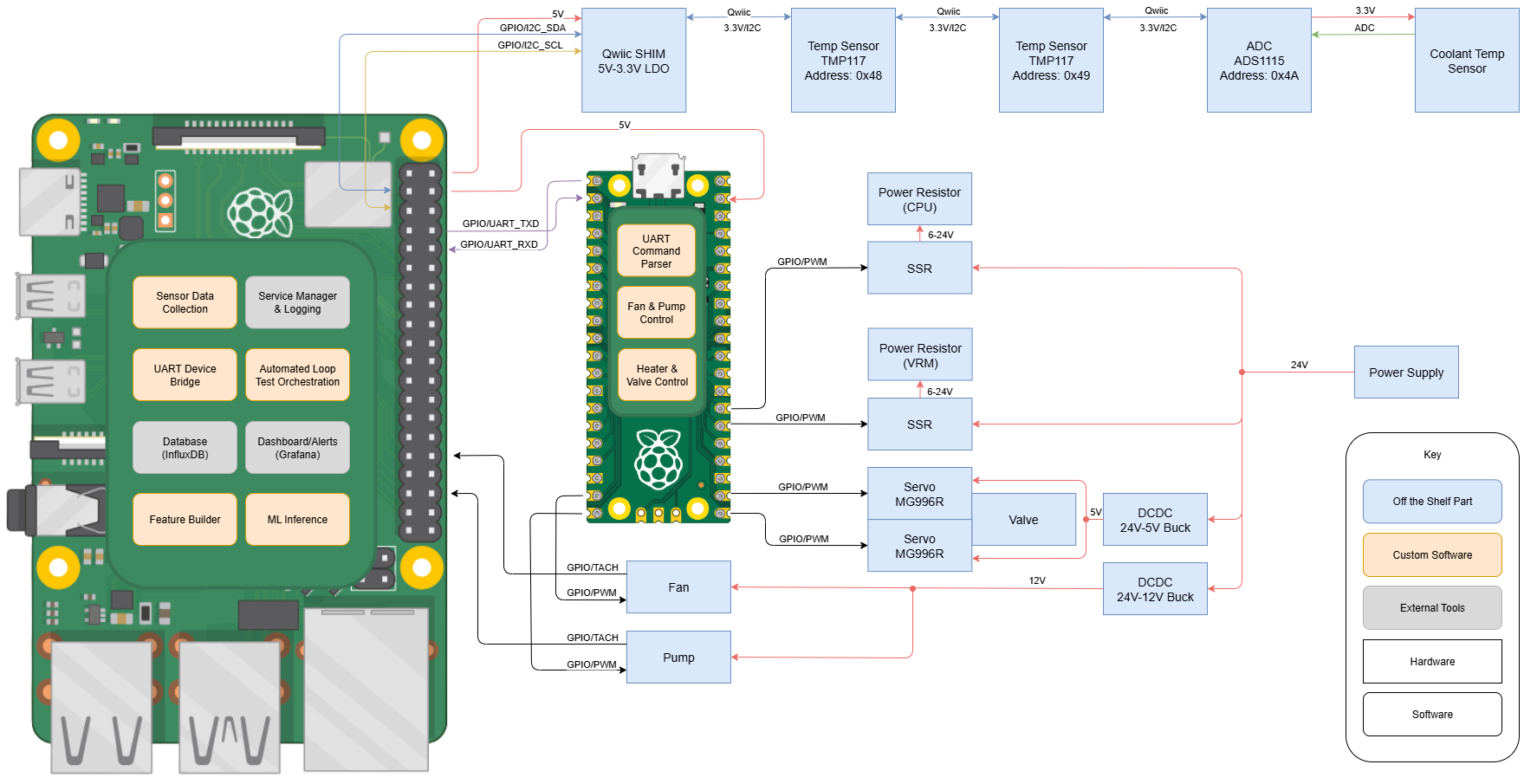
  • Finalized block diagram to add power supply and conversion
  • Adjusted coolant temp sensor connection to separate sensor data collection from controls (fan/pump, valve, heater)
  • Added software

    Block Diagram

BOM Draft

  • Completed BOM, added case components like linear motion rods and connectors
  • Added power components like DC-DC converter, power supply

Schedule & Progress

  • Updated schedule to account for part lead times
  • Need to order parts ASAP since fabrication for laser cut parts depend on dimensions of actual mounting holes

Next Steps

  • Begin ordering off the shelf components from BOM
  • Work on design report

Kristina’s Status Report for 09/20/2025

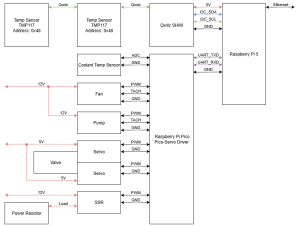
Block Diagram Draft

  • Made first draft of block diagram showing connections between sensors, Raspberry Pi 5, Pi Pico, SSRs, power resistors, servo valves, and cooling components
Block Diagram v1

BOM Draft

  • Made first draft of BOM listing major components based on block diagram and physical assembly, to be updated

CAD Models of Liquid Cooling Components

  • Found online CAD models of radiator, fan, and water block
  • Altered radiator model to better match actual part
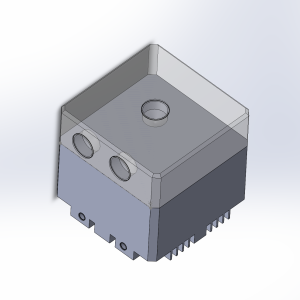
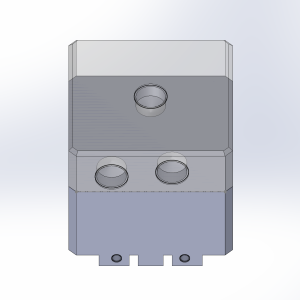
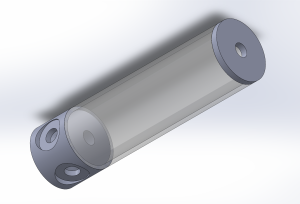
  • Created CAD models for pump and reservoir based on product photos and references
Pump CAD Model – Side View
Pump CAD Model – Bottom View
Pump CAD Model – Top View
Reservoir CAD Model

Initial CAD Assembly of Cooling Loop

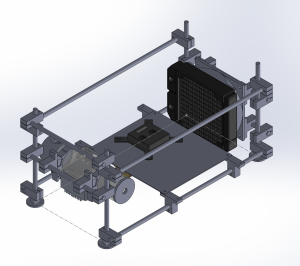
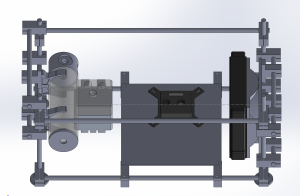
  • Built an initial CAD assembly of liquid cooling loop with component models
  • Used linear motion rods and connector system for structural frame
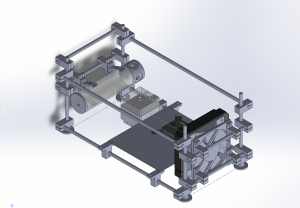
Case Assembly v1 – Left View
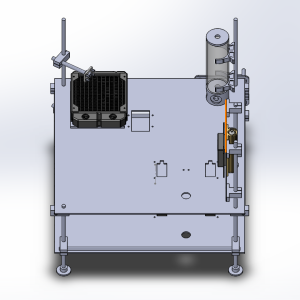
Case Assembly v1 – Top View
Case Assembly v1 – Right View

Revised CAD Assembly of Cooling Loop

  • Updated initial assembly to accommodate sensor placements, including radiator intake/exhaust temperature sensors and mounting space for Raspberry Pi 5 and supporting components
Case Assembly v2 – Front View
Case Assembly v2 – Side View
Case Assembly v2 – Back View

Schedule & Progress

  • Currently on schedule
  • CAD modeling, assembly, block diagram, and BOM align with Gantt chart

Next Steps

  • Iterate on block diagram
  • Expand BOM to include linear motion rod and connectors
  • Start purchasing off the shelf parts in order to update CAD assembly with corrected dimensions and order 3D print/laser cut parts