Team Status Report For 2/19/2022

This week, we reviewed our design process, and tested on an order of items that we received. The main progress includes the following:

Through talking to professor Gary and TA Joseph, we have added the use of arduino uno into our project. We will be using the arduino board to control both the ultrasonic sensors and the vibration motor disks. The updated design can be seen in the design review presentation, in which we will provide a detailed design on what our block diagram is now.

We have been able to test with both a single ultrasonic sensor and a single vibration motor disk with the arduino.  We have found that the sensor we have purchased seems to work best within a 4 meter range. We did some real life testing with walking obstacles, and concluded that 4 meters is a reasonable range for our product. The vibration disks can operate from 2.2v to 3.8 volts, providing different levels of vibration. We tested with 3 levels of vibration using PWM pins on the arduino board, and we can make clear distinctions between the different levels of feedback. We therefore believe that this is enough for our users to receive different information on the level of threat present.
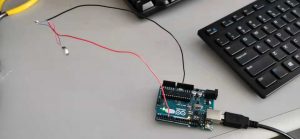
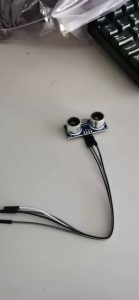
Setting up the main OS and testing the raspberry pi4. We were able to install the raspberry pi OS and test out its basic functionalities, mostly revolving around building python scripts needed. We also tested the serial communication between the raspberry pi and arduino. On a side note, when we were working with the raspberry pi4 in lab 1304, we were unable to properly connect the device to open network using CMU or CMU-DEVICE. For some reason, the internet always redirects us to the CMU-IT service network and we can’t navigate to outside networks such as google or Github, next week we will try to set up the environment with a home wifi instead.
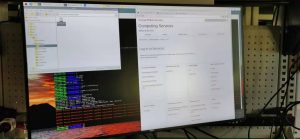
We also did some basic video processing test with the OAK-D camera to see that it operates correctly. Ning Cao have been looking through the documentation to find out how we can best use the existing camera modules and processing power to our benefit

Overall, we have been focused on a proof of concept test this week to make sure that we have chosen the correct components and our general design idea can be achieved with what we have. We are in schedule as we have finished most of our setups and unit testing according to plan. Next week, we will be mainly working in three areas: sensor and vibration disk control with arduino(Xiaoran), raspberry pi integration(Kelton), OAK-D camera integration(Ning). Our individual reports will further illustrate our plans.


Alex Lin’s Status Report for 02/19/2022

This week I was focused on testing and integrating Arduino with the HC-SR04 ultrasonic sensor and the vibration motor.

From the ultrasonic sensor test, I got a sense of the frequency and format of the collected data  and decided that it is feasible to process the data points with methods like moving average to adjust data rate as to suit transmission to Raspberry Pi while discovering that our original range specified in quantitative requirement has to be reduced from 5m to 4m due to the sensor’s tested accuracy. The sensor can provide feedback at a rate of more than 100hz, which is way more than what we need(our team will likely work with 20hz or 30hz). Furthermore, I tested the connection with 3 different sensors at the same time with a motherboard, and the connection is able to process data from all 3 sensors according to will, which proves that our original design with multiple sensor is feasible.

Meanwhile, for the vibration motor, I was able to control its vibration intensity with Arduino’s analog pin which is otherwise not feasible with Raspberry Pi. I tested runing several different disks with different intensity at the same time, and it was sucessful.

Another concern that was addressed this week was the pin assignment for the arduino UNO. We were originally woried that the UNO will be insufficient for our number of sensors and disk motors, but after examining the size of the motors and sensors, we have decided to limit the number of sensors used to 6 maximum. In which case, we will need 1 DIGITAL for sensor control(we operate all 6 sensors at the same time), 6 DIGITAL PINS for sensor feedback, 6 PWM pins for vibration motor control, which is exaclty the number of digital pins provided by the UNO model. Thus we will be sticking with the arduino UNO board.

Next week, I will integrate the control interface for multiple sensors and vibration motors in arduino. Further more, I will work with Kelton to implement a basic control script in python to run the sensors and vibration disk through communication between the raspberry pi and arduino.

Kelton’s Status Report for 02/19/2022

This week my work is centered around reviewing our design and checking if any technical incompatibility arises while building.

First, I drew the detailed block diagram, incorporated our revised requirements and designs based on TA and professor feedback (e.g. using Arduino to gather sensor data and control vibration motor while using Raspberry Pi for depth camera and control logic) into the design review slides. Then to verify design with the newly arrived parts, I helped Alex with how to test HC-SR04 ultrasonic sensor with Arduino and set up Raspberry Pi with help from Ning.

Next week, I will work on connecting Raspberry Pi online to test its integration with Arduino and the Oak-D depth camera.

Ning Cao’s status report 02/12/2022

This week, apart from peer-reviewing other projects and deciding the proper items to purchase, I’ve looked at tutorials for Raspberry Pi, primarily with regards to how to communicate with I2C and GPIO interfaces.

Xiaoran Lin report for 2/12/2022

This week, I have primarily been involved in deciding with the team what to purchase, and studying the OAK-D depth sensor camera modules online. We will be using the camera to process ground level information, and I am looking into online resources to help us utilize its functions

Team status report for 2/12/2022

Schedule update:
We have purchased and received most of our core components that we need to test, including the ultrasonic sensors, raspberry pi, and some various components. We are still waiting for our OAK-D depth cameras, but in general we are in time for testing our components.

No changes have been made to the schedule so far, next week, we will start testing our sensors and incorporating our raspberry pi into the system.

As for risks, the main part is whether the sensor models will be good enough for our purpose. This is something that we will be testing out next week, if they turn out to be insufficient, we have several backup sensors that we have been looking at, and we will purchase them immediately. If they do work, we will likely purchase more of the same sensors.

Team Status Report for 02/05/2022

This week, we finalized the general idea of our capstone project. Initially, we were weighing between building an embedded system that makes food or drinks e.g, eggs, cocktail, boba tea or something computer-vision based to guide the blind. After hours of discussion and feedback from the faculty, we settled on building a smart wearable belt that can give the visually-impaired users intuitively actionable feedback.

With this idea, we delved deeper and fleshed out more details : naming the project The Bat Belt as the product involves echolocation; comparing existing tech gadgets built by university lab, startups and another capstone team to the traditional cane and our concept; establishing a wider obstacle detection range with more granular haptic feedback as one of our core appeals …

We also recognize the challenges and risks that lie ahead (such as incompatible sensor and microcontroller, software integration with depth camera, mapping multiple sensor data algorithmically into a cohesive feedback) and planned accordingly as detailed in our proposal.

Kelton’s Status Report for 02/05/2022

This week I mostly worked on the proposal presentation with my teammates, researching and debating about problem definition, solution approach, sensor tradeoffs etc as we go. Additionally, I placed the orders for ultrasonic sensors and raspberry pi board and worked on formatting of the website. This coming week, hopefully as the parts arrive, I can get a sense of the data collected.