Leonard’s Status Report for 4/25

This week, my primary focus was on completing the final presentation and refining the project content based on feedback received during the design review. I worked on improving the clarity and organization of the slides, particularly in areas related to testing, validation, and system functionality. Adjustments were made to better align the presentation with the project requirements, including clearer explanation of quantitative design requirements and more structured testing methodologies.

In the upcoming week, my focus will shift toward conducting additional testing based on the guidelines. This includes validating performance across the four main features and ensuring that results are consistent and measurable.

Leonard’s Status Report for 4/18

This week, my primary contribution focused on developing the tester and moderator test guidelines, as well as creating a tester categorization form to improve the structure and usefulness of user testing. The tester guidelines were designed to standardize how participants interact with the system, ensuring consistency across trials. The moderator guidelines provide clear instructions for facilitating tests and recording observations. Additionally, the tester categorization form introduces a way to group participants (e.g., writing style, response length preference), allowing for more meaningful analysis of testing results.

In parallel, I also finalized the presentation slides for the upcoming Final Presentation, which will be the main focus next week. The plan is to make adjustments according to the comments in the presentation to prepare for the Final demo.

One key thing I learned from the project is designing standardized testing methodologies, including how to create controlled scenarios and measurable evaluation criteria. This involved understanding how to reduce variability in user behavior while still reflecting realistic use cases. Additionally, I learned how to structure user study documentation, including moderator scripts and participant instructions, which are critical for consistent data collection.

Another important knowledge is human-centered evaluation, specifically how to categorize users based on behavioral patterns (such as writing length, response style, and interaction habits) to extract more insightful results from testing.

Team Status Report for 4/4

This week, the team performed relatively well during the interim demo. The demonstration showed that the project is making solid progress, and the overall system was able to present its core idea effectively. The demo also helped confirm that the team is moving in the right direction while highlighting a few remaining areas that still need refinement. The communication between the Jetson and the Pico has been proven stable and full system integration is now nearly complete. Most of the major hardware and software components are working together, and the project is close to reaching a more finalized operational state. There are still a few features that are being polished or completed, but the system as a whole is much closer to the intended final design MVP.

The team’s main focus will now shift toward testing and verification. This includes developing and refining testing suites, making sure each feature can be evaluated in a structured way, and verifying that the system performs reliably under the intended use cases.

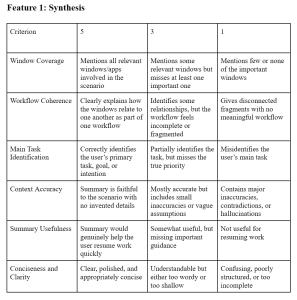
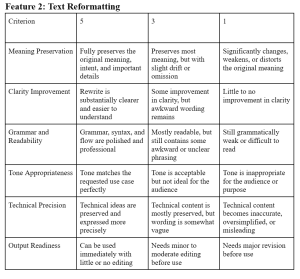
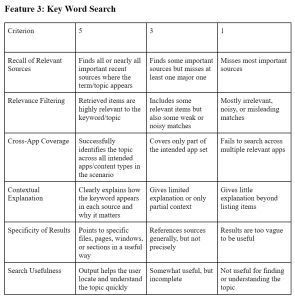
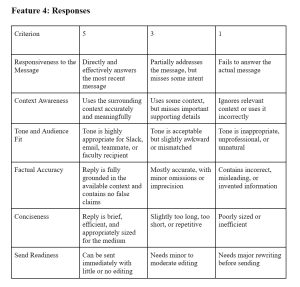
Currently, the testing plan consists of 4 grading rubrics for each of the main functions respectively and are attached below. The grading rubrics are on a 5-point scale and each feature has 6 criterions. A rough draft of user guide for the testers are also attached and will be refined later.

Next week, the team will continue finishing the remaining features while placing the main emphasis on testing and verification. The goal is to further refine the testing process and evaluate the integrated system more thoroughly.

Leonard’s Status Report for 4/4

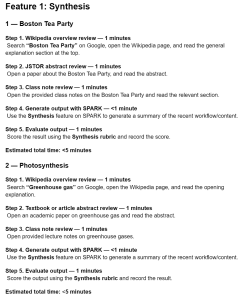
This week, my main focus is to develop structured testing suites for future SPARK testers. I worked on organizing the testing process so that evaluators can interact with SPARK in a more controlled and repeatable way. Instead of relying on open-ended testing, I created a set of guided testing cases tied directly to SPARK’s four main features.

A major part of this work involved defining the exact workflow for each testing case as well as estimating the timing of each step so that each case can be completed in a few minutes, making the testing process more practical. The current plan is to use two testing cases for each of the four SPARK features, giving a total of 16 combinations.

Next week, I plan to finalize the materials for each testing suite, prepare the rubric sheets for testers, and begin organizing how the testing sessions will be carried out.

Leonard’s Status Report for 3/28

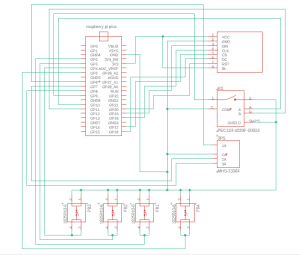
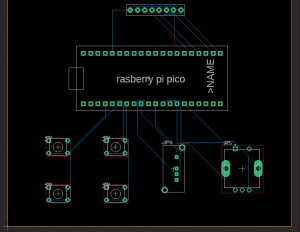
This week, I assembled the initial version of the SPARK PCB and began integration. During this process, several issues were identified in the current design, including layout limitations that affected integration. Based on these findings, I reviewed the schematic and PCB layout and implemented necessary design updates. These revisions aim to ensure smoother integration in the next iteration of the hardware.

In parallel, significant progress was made on the system testing and verification plan. I developed a structured set of 20 testing scenarios, aligned with the four main SPARK features: context summary, keyword search, text formatting, and response drafting. Each feature is supported by five realistic, standardized scenarios designed to evaluate system performance based on a rubric of 6 categories.

For the upcoming week, my main focus will be on preparing for the interim demo and also waiting for the arrival of updated PCBs and replacement components.

Leonard’s Status Report for 3/21

This week, the main focus is on the ethical considerations associated with the SPARK system. Worst-case scenario is considered as well as red teaming from other teams.

On the hardware side, additional components have now arrived. However, the PCB has been delayed and is now expected to arrive next week.

In the upcoming week, hardware assembly should begin once the PCB arrives. In parallel, focus should be shifted toward improving the software and testing framework. The plan is to organize smaller group meetings with Tatyana that is dedicated to discuss and develop the code testbenches required for system testing and verification.

Team’s Status Report for 3/14

This week, the team focused on reviewing the feedback received during the design review and identifying areas for improvement in the testing and verification plan for the SPARK system. Based on the comments from the reviewers, the team discussed ways to make the validation process more systematic and measurable.

For upcoming week, the team will work  to clarify how system performance will be measured, including accuracy of generated outputs and the effectiveness of the system in supporting user interaction scenarios.

The team will also have a ethics discussion related to the SPARK system. As part of this process, the team will hold a short discussion session to consider potential ethical implications of the product if it were widely used or misused. The results of this discussion will be summarized and shared within the team communication channel, and the ideas will later be refined and incorporated into the ethics section of the final project report.

Leonard’s Status Report for 3/14

This week, the hardware development of the SPARK system progressed from the design stage to the implementation stage. The final Gerber files for the PCB were generated using the CAM processor. These files were reviewed and successfully submitted to the PCB manufacturer JCLPCB, and the PCB boards have now been ordered. In parallel with the PCB order, most of the required hardware components for the prototype have already been purchased and delivered. Some remaining components are still in transit and are expected to arrive soon.

The focus for the upcoming week will be to refine the testing and verification plan for the SPARK system based on the feedback received for the design review report. The idea is to use another LLM to judge whether the results can be considered correct or not.

Leonard’s Status Report for 3/7

In this week, the hardware design for the SPARK system reached a major milestone. I finalized the schematic and PCB layout  using Autodesk Eagle. The hardware design portion of the project is considered complete and ready for fabrication.

For the design report, I mainly contributed in the hardware aspects of design requirements, principles, and design trade sections, testing and validation, bills of materials and budget, and risk mitigation.

The primary focus for the upcoming week is hardware assembly and testing. After the parts arrived, I will assemble the parts onto a breadboard for initial testing of the functions. After the system is validated, I will then solder the parts onto the PCB

Leonard’s Status Report for 2/21

This week, I completed the first draft of the circuit schematic for the SPARK hardware system. The schematic includes: RP2040-based MCU, SPI display, and function buttons.

For future weeks, the plan is to order the parts and assemble them on a breadboard first. Once the system is validated, the circuit will be designed on  PCB.